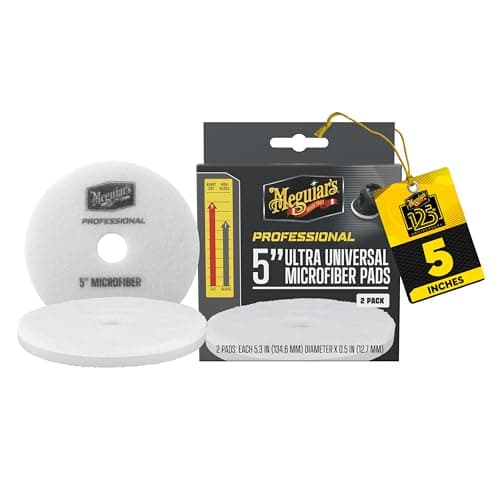
There is a point in most corrections where a foam cutting pad and a good compound stop making progress. The swirls fade but do not go, or the deeper scratches simply ignore another pass. The instinct at that moment is to reach for a more aggressive compound, or to think about a rotary. Both are usually the wrong move. The right one is to change the pad.
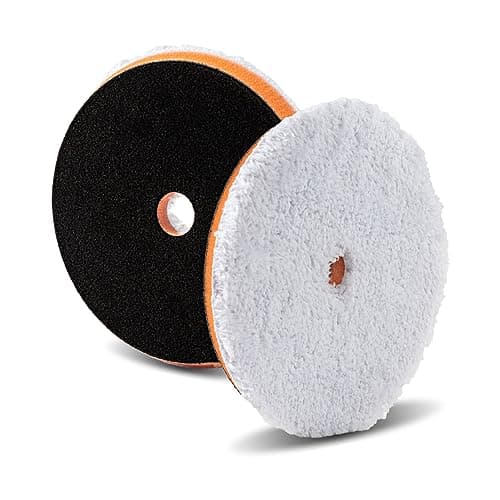
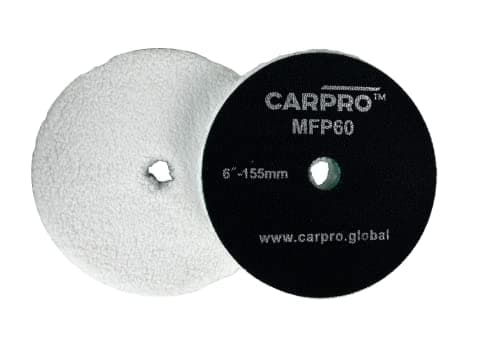
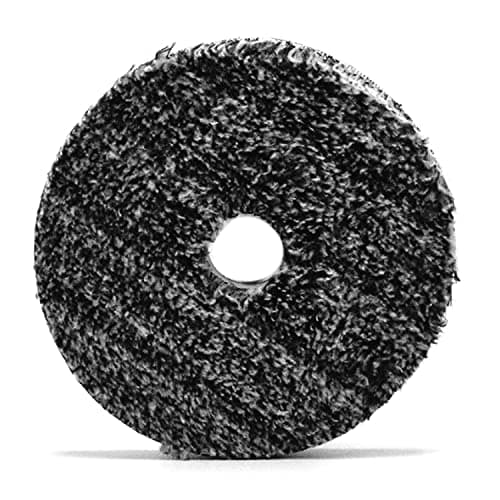
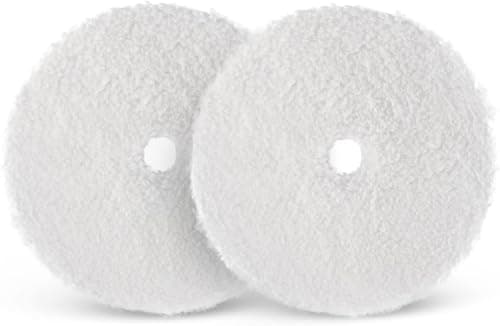
A microfiber cutting pad works differently from foam. Instead of a foam face pressing abrasive into the clear coat, thousands of short fibers each carry and work the product, which produces substantially more cut at the same machine speed. The practical effect is that an ordinary dual-action — the same beginner-safe machine that stalls rather than burning paint — starts clearing defects that would otherwise have needed a rotary in a trained hand. That is the whole reason this category exists.
The trade-off nobody should skip
Microfiber cuts harder and finishes worse. Those are the same property viewed from two ends. A microfiber cutting pass leaves a light haze that is more visible than what a foam cutting pad leaves, and on dark paint it is obvious. This is not a defect in the pads and it is not something a better compound fixes — it is inherent to how they work.
So a microfiber cutting step is always a two-step commitment. Cut with microfiber, then finish with a soft foam pad and a fine polish. If you are not prepared to do the second pass, do not start the first one; a foam cutting pad that leaves less behind is the more honest choice. Our finishing pad picks cover the second half, and foam vs microfiber pads lays out the full comparison if you are still deciding.
Heavy cut, light cut and one-step
The category is not uniform. Heavy-cut microfiber has a longer, coarser nap and is aimed at real damage — sanding marks, deep swirling, badly neglected paint. Light-cut or "one-step" microfiber is tuned to clear ordinary daily-driver swirls while finishing acceptably in the same pass, which is what most weekend corrections actually need. Choosing the aggressive pad when the mild one would have finished the job just buys you extra finishing work.
Work out which you need before ordering. If you are unsure, look at the paint in direct sun: fine spiderweb swirls are one-step territory, while scratches you can feel with a fingernail are not going to come out with any pad and probably need a proper cutting compound or a body shop.
They need more maintenance than foam
Microfiber loads up with spent compound faster than foam does, and a clogged microfiber pad does not cut — it glazes and skates. Blowing the pad out with compressed air or brushing it between sections is not optional the way it nearly is with foam, and the pads need washing after every job rather than every few. The routine is in how to clean polishing pads, and it matters more here than anywhere else in the category.
Nap life is also finite. Fibers flatten with use, and a flattened microfiber pad quietly becomes a mediocre finishing pad instead of a cutting one — which is why knowing when to replace a pad matters more with microfiber than with foam.
How to choose a microfiber cutting pad
Four things decide it: how much damage you actually have, what plate you run, how many pads a job will need, and whether you are committed to a finishing pass.
Match the cut to the damage
- Light-cut / one-step microfiber — ordinary swirls and light marring, finishes acceptably in one pass. The right default for a maintained daily driver.
- Heavy-cut microfiber — deep swirling, oxidation, sanding marks. Guaranteed to need a finishing pass afterwards.
- Neither — if the scratch catches a fingernail, it is through the clear coat and no pad will remove it safely.
Plate size and overhang
The same rule as foam: a 5-inch plate takes a 5- to 5.5-inch pad, a 6-inch plate takes a 6- to 6.5-inch pad. Microfiber pads are thinner than foam, which means the plate is closer to the paint and an oversized, folding pad is riskier than it would be with a thick foam face. Confirm the diameter before ordering.
Buy in quantity, or plan wash breaks
A single microfiber pad will not carry a whole car. It will load up somewhere around the second or third panel and stop cutting. Either buy a multi-pack, or accept that you will be stopping to clean and dry pads mid-session — which on a hot day is slower than it sounds because a damp pad does not cut properly either.
Speed, pressure and dwell
Microfiber wants moderate machine speed and consistent, moderate pressure. It does not want you leaning on it — extra pressure mostly generates heat and flattens the nap. Prime the pad properly the first time (work product into the fibers rather than just dotting it on the face) and re-prime lightly between sections. The general technique sequence is in how to polish a car step by step.
Who should stay on foam
If this is your first correction, if your paint is soft or a thin repaint, or if you simply do not want to commit to a two-step process, buy foam. Foam is more forgiving of technique, cheaper to own in quantity, and leaves less to clean up. Microfiber is what you escalate to when foam has demonstrably run out of ability on your particular paint — not the place to start.