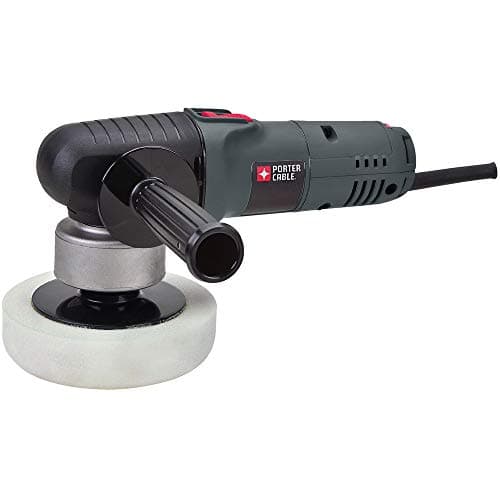
The PORTER-CABLE 7424XP is the machine that taught the internet to machine polish. For the better part of two decades it was the default recommendation in every forum thread and the tool in the frame in nearly every tutorial video, which is why it still matters even now that newer, more powerful dual-actions exist. This page is about whether that reputation still earns the purchase in 2026, or whether it is nostalgia with a price tag.
The necessary disclosure first: we have not stripped a 7424XP down or run one against a paint thickness gauge, because we do not operate a testing lab and will not pretend otherwise. What follows is built from PORTER-CABLE's published specifications, the mechanical behavior those specifications imply, and the very large body of consistent owner reporting this particular tool has accumulated. Our full method is on how we research.
What the 7424XP actually is
It is a corded random-orbital polisher with an 8 mm orbit and a variable speed range of roughly 2,500-6,800 OPM, supplied as a bare tool with a backing plate. Mechanically it is a free-spinning dual-action: the pad rotates on a bearing driven by friction against the paint while the head carries it through a small circle. Nothing forces that rotation, which is the entire safety story — when resistance rises, the pad stops turning rather than grinding heat into one spot. The same mechanism, and the rotary alternative that lacks it, is covered in dual-action vs rotary polisher.
The speed range is the underrated spec
A genuinely wide, genuinely variable speed dial matters more than most first-time buyers expect. Low speeds are for spreading product and for finishing polishes that want to be worked gently; high speeds are for cutting. A machine locked into one usable setting makes you compensate with pressure and dwell time, which is exactly where beginners get into trouble. The 7424XP's dial covers the range the products in our compound picks are formulated for, which is why so many product instructions read as though they were written with this tool in mind. Many were.
Where it is genuinely outclassed
Two places, and both are real. The first is motor reserve. Modern machines in the tier above hold their orbit better when you lean into a panel, and since correction depends entirely on the pad continuing to turn, that reserve translates directly into results on neglected paint. The 7424XP will bog if you push it the way a stronger tool tolerates. The fix is technique — lighter pressure, more passes — but it is a genuine limitation, not a preference.
The second is speed across a whole car. An 8 mm orbit is deliberately modest, and a 15 mm long-throw machine covers a hood in noticeably fewer passes. Over a full neglected vehicle, that difference compounds into hours. If your project is a whole car rather than a few panels, look at the long-throw options in the dual-action roundup.
The tutorial library is a real feature
This sounds like a soft benefit and is not. Machine polishing is a physical skill, and the fastest way to learn it is to watch someone do it with the exact tool in your hands, at the exact speed setting, with a pad you can identify. No other polisher has anything close to this tool's documentation depth. Every mistake a beginner can make on a 7424XP has already been filmed, diagnosed and fixed by somebody. For a first machine, that is worth real money, and it is a large part of why the tool keeps getting recommended.
The aftermarket matters for the same reason. Backing plates in multiple diameters, pads from every manufacturer, and adapters for small-pad work are all stocked for this machine specifically. It is very difficult to end up with an orphaned tool.
What it does not include
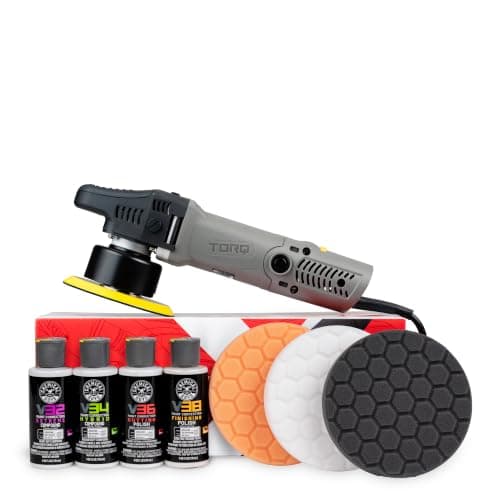
Pads and compound. This is a bare tool, and a bare tool corrects nothing. The most common way to be disappointed by a 7424XP is to run it with an unknown foam disc and whatever polish was in the garage. Buy pads built for a DA and a compound matched to the defects you actually have at the same time as the machine. If assembling that from separate listings sounds like work, the bundled kit ranked third below removes the entire decision.
Who should buy something else
Buy a stronger machine if you are correcting a whole neglected car, if you expect to be doing this for years and want a lifetime warranty behind the purchase, or if you simply want the tool to stop being a variable while you learn. Buy the bundled kit instead if you own no pads or compound and would rather not research three product categories before your first pass. And buy nothing in this class at all if what you actually want is to apply wax quickly — an orbital waxer does that for a fraction of the money.
The verdict
The 7424XP is still the cheapest machine that genuinely corrects paint, and it is still the easiest one to learn on because of everything that has been filmed with it. It is no longer the most capable tool at its price, and it never was the fastest. Buy it to find out whether you enjoy machine polishing without risking much; buy up if you already know the answer. Where it lands once value is the only criterion is laid out in best car polisher for the money.