Skip to content
Pad & Polish

HUB 01 · Machine Polishers

Can You Polish a Car With a Drill?

You can make a drill spin a buffing pad. What you cannot do is make it behave like a polisher — and the difference is exactly the thing that keeps a DA from marking your paint.

By Stephen V.Updated How we research
#ad

We earn a commission when you buy through our Amazon links, at no extra cost to you. It never affects our rankings, and we say so when the cheaper product is the better buy. How this works.

Short answer: you can, and for paint correction you should not. A drill drives a pad in one continuous direction with no orbit, no speed dial calibrated for polishing, and no flat contact with the panel — which is the exact combination that puts holograms into clear coat and, on an edge, takes the clear coat off. If the reason you are asking is price, the honest answer is the PORTER-CABLE 7424XP: the budget dual-action that taught a generation to machine polish, and the lowest-risk way into this. If you want pads and compounds in the same box, the Chemical Guys TORQX kit is the one-purchase version.

This is not snobbery about tools. It is one specific mechanical difference, and it is worth understanding before you spend money either way.

What a polisher has that a drill does not

 Cordless drillDual-action polisher
Pad motionFixed rotation, one directionRotation plus a free orbit
What happens under pressureKeeps driving — heat concentratesOrbit stalls, cutting stops
Speed controlTrigger, by feelCalibrated dial, repeatable
Contact patchChuck offset — the pad runs at an anglePlate sits flat on the panel
Weight and balanceAll mass behind the chuckBalanced over the pad
Typical result on clear coatHolograms, uneven cut, edge riskEven correction, hard to mark

The second row is the whole argument. A dual-action is safe because it fails safely: press too hard and it simply stops cutting. A drill has no such mechanism, so the thing that stops it is you noticing — which, on a hot pad over a body line, is usually a second too late.

What a drill-mounted pad can legitimately do

There are real jobs here, and they are all jobs where the surface is not clear coat you care about.

  • Applying a wax or sealant. Protection only needs spreading, there is no abrasive involved, and a soft foam pad on a drill at low speed does it without drama.
  • Wheels, exhaust tips and bare metal. Different substrate, different risk. A drill with the right pad is genuinely useful here.
  • Headlight lenses. Polycarbonate, not paint, and the lens is replaceable if it goes wrong. We still rank a real machine for it in best polisher for headlight restoration because the sanding stage needs steadier speed than a trigger gives.
  • Interior and upholstery drill brushes. Nothing to do with paint, and a fine use of a drill.

What is not on that list: removing swirls, removing scratches, compounding, or any pass where an abrasive meets clear coat.

Why the damage shows up later

The frustrating part is that a drill pass often looks fine on the day. Compound residue and the oils in a cheap product fill fine marks temporarily, and a garage light will not reveal them. The holograms — a fine, repeating arc pattern left by continuous rotation — appear the first time the car sits in direct sun. At that point the fix is a proper correction with a real machine, so the drill attempt cost you the pads, the compound, and a layer of clear coat you cannot get back. The same pattern from the machine side is covered in dual-action vs rotary, because a rotary is a drill with all the engineering a drill is missing and it still leaves holograms in untrained hands.

If a machine is genuinely out of budget

Then correct by hand instead of with a drill. Hand correction is slow and covers very little area per hour, but it is safe, and a hand pass with a clear-coat-safe compound will remove light swirls — the method is in how to polish a car by hand. It is a better use of fifteen dollars than a drill adapter.

The short answer

Quick picks

#ProductBest forScorePrice
01
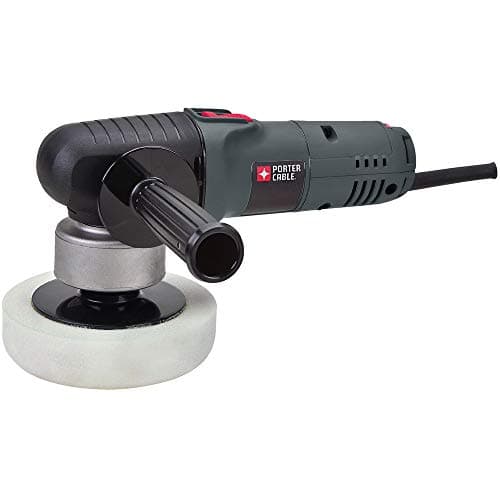
PORTER-CABLE PORTER-CABLE 7424XP Variable-Speed Polisher
PORTER-CABLE 7424XP Variable-Speed Polisher

The budget classic that taught a generation to machine polish — decades of tutorials use this exact tool, so every mistake you can make already has a video fix.

The lowest-risk way to learn machine polishing
8.3
$159.00Amazon
02
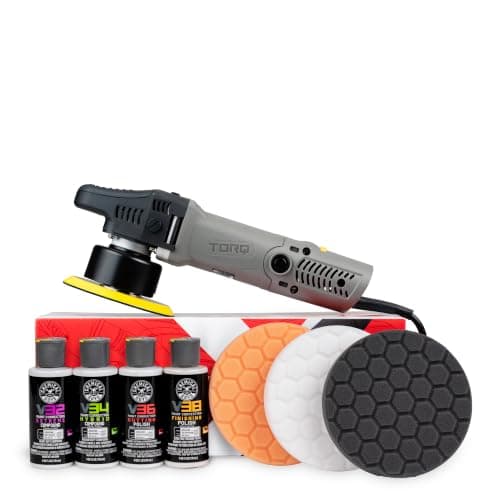
Chemical Guys Chemical Guys TORQX Random Orbital Polisher Kit
Chemical Guys TORQX Random Orbital Polisher Kit

A first-timer's whole starting line-up in one box — polisher, backing plate, pads and a set of compounds/polishes — so you don't have to assemble a kit from five listings before your first pass.

A first-timer who wants everything in one box
8.4
$219.99Amazon
03
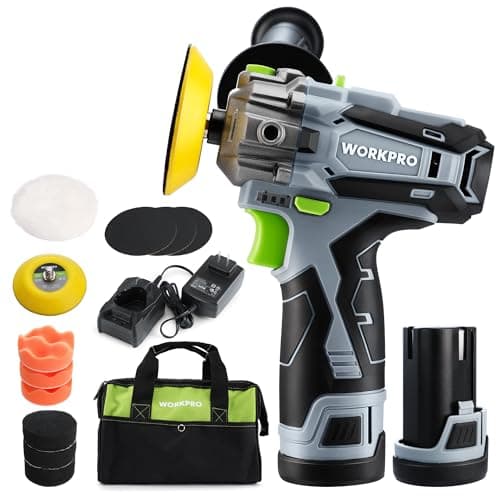
WORKPRO WORKPRO 12 V Cordless Mini Polisher Kit
WORKPRO 12 V Cordless Mini Polisher Kit

The cheapest complete way into small-panel work: a 3-inch head, two batteries, a fast charger and both backing pads in one box — bought for the awkward geometry a 5.5-inch pad cannot sit on, not for its finesse.

The tightest panels, on the smallest budget
7.7
$69.99Amazon
04
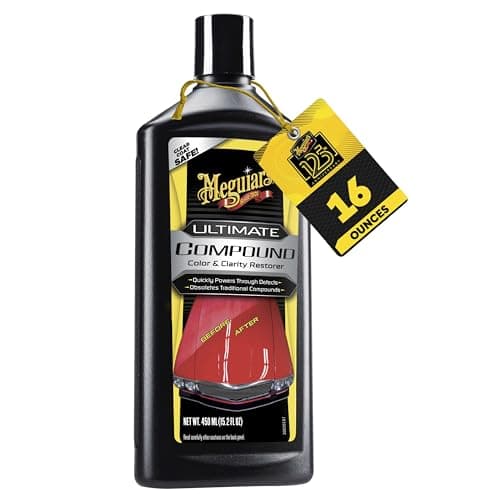
Meguiar's Meguiar's Ultimate Compound
Meguiar's Ultimate Compound

The compound to start with: clear-coat safe, works by hand or machine, and removes moderate swirls and oxidation while leaving a finish glossy enough that many people skip a follow-up polish.

Most swirl and oxidation removal, by hand or machine
8.6
$13.97Amazon

#ad · Live prices from the Amazon Product API, as of October 5, 2026. Where we have no verified live price, we show none — we would rather leave a gap than print a number that has rotted.

In detail

The picks, in full

01
PORTER-CABLE PORTER-CABLE 7424XP Variable-Speed Polisher

The lowest-risk way to learn machine polishing

PORTER-CABLE 7424XP Variable-Speed Polisher

6-inch pad2,500–6,800 OPM8 mm orbitVariable speed
8.3/10

The budget classic that taught a generation to machine polish — decades of tutorials use this exact tool, so every mistake you can make already has a video fix.

Ergonomics
7.8
Correction power
7.6
Beginner-safe
8.8
Value
8.8

Pros

  • The most-documented DA polisher ever made — endless tutorials
  • Cheap enough to learn on without fear
  • Huge aftermarket of backing plates and pads

Cons

  • Less torque than modern long-throw tools
  • Bare tool — no pads or compound included

Don't buy this if…

…you want to correct a whole car quickly — a 15 mm long-throw finishes faster.

$159.00View on Amazon

Price as of October 5, 2026. Prices change — Amazon's is the one that counts.

#ad · we may earn a commission from this link to PORTER-CABLE 7424XP Variable-Speed Polisher

02
Chemical Guys Chemical Guys TORQX Random Orbital Polisher Kit

A first-timer who wants everything in one box

Chemical Guys TORQX Random Orbital Polisher Kit

8 mm throwPads + compounds includedCordedBeginner kit
8.4/10

A first-timer's whole starting line-up in one box — polisher, backing plate, pads and a set of compounds/polishes — so you don't have to assemble a kit from five listings before your first pass.

Ergonomics
8.2
Correction power
7.9
Beginner-safe
9
Value
8.6

Pros

  • Everything to start correcting is in the box — no add-on shopping
  • Forgiving 8 mm throw that's hard to burn paint with
  • Chemical Guys tutorial ecosystem is huge

Cons

  • Motor is milder than the G9 under load
  • Bundled pads are basic starter foam

Don't buy this if…

…you already own good pads and compounds — buy a bare tool and save the overlap.

$219.99View on Amazon

Price as of October 5, 2026. Prices change — Amazon's is the one that counts.

#ad · we may earn a commission from this link to Chemical Guys TORQX Random Orbital Polisher Kit

03
WORKPRO WORKPRO 12 V Cordless Mini Polisher Kit

The tightest panels, on the smallest budget

WORKPRO 12 V Cordless Mini Polisher Kit

3-inch head12 V cordless0–2,800 / 0–7,500 RPM2 x 2.0 Ah batteries
7.7/10

The cheapest complete way into small-panel work: a 3-inch head, two batteries, a fast charger and both backing pads in one box — bought for the awkward geometry a 5.5-inch pad cannot sit on, not for its finesse.

Ergonomics
8.2
Correction power
7.4
Beginner-safe
6.4
Value
8.8

Pros

  • Two batteries and a one-hour charger in the box, so a mirror-cap session never stops to recharge
  • Buffing and sanding backing pads plus foam, wool and abrasive accessories are included — nothing else to order
  • Under 2 lb with the battery fitted, which is the whole point when you are holding it against an A-pillar

Cons

  • WORKPRO publishes rotary speeds and no orbit figure — this is a direct-drive head, not a stall-protected random orbital
  • Build quality is budget-tier next to the Griot's machine

Don't buy this if…

…you have never run a direct-drive head on paint — the dual-action minis above it are far more forgiving of a heavy hand.

$69.99View on Amazon

Price as of October 5, 2026. Prices change — Amazon's is the one that counts.

#ad · we may earn a commission from this link to WORKPRO 12 V Cordless Mini Polisher Kit

04
Meguiar's Meguiar's Ultimate Compound

Most swirl and oxidation removal, by hand or machine

Meguiar's Ultimate Compound

Clear-coat safeHand or machineNo fillers15.2 oz
8.6/10

The compound to start with: clear-coat safe, works by hand or machine, and removes moderate swirls and oxidation while leaving a finish glossy enough that many people skip a follow-up polish.

Cutting power
7.6
Finishing ability
8.6
Ease of use
9
Value
9

Pros

  • Genuinely clear-coat safe and beginner-forgiving
  • Corrects moderate defects yet finishes down glossy
  • Works by hand when you don't have a machine

Cons

  • Not aggressive enough for deep scratches or heavy oxidation
  • Best results still need a machine

Don't buy this if…

…your paint has heavy sanding marks or severe oxidation — step up to a dedicated cutting compound.

$13.97View on Amazon

Price as of October 5, 2026. Prices change — Amazon's is the one that counts.

#ad · we may earn a commission from this link to Meguiar's Ultimate Compound

The cheapest honest ways out of the drill question

A used or budget corded DA

The 7424XP has been the entry point for over a decade: 8 mm orbit, variable speed, a 6-inch pad, and so many tutorials filmed on it that every mistake you can make already has a video fix. It is the single purchase that makes this question go away.

A kit, if you own nothing else

Buying a machine alone and then discovering you need a plate, three pads and two liquids is how a cheap start gets expensive. A kit with pads and compounds included costs more up front and less in total; the field is ranked in best paint correction kit.

A 12 V mini, if the drill appeal was its size

Some people reach for a drill because a 5.5-inch pad does not fit where they are working. A 3-inch cordless mini polisher is the tool that actually solves that: a real variable-speed polishing head in a body about the size of a drill. It is the honest substitute if size was the reason, and best mini polisher ranks that field.

Spend the difference on the liquid, not the machine

A clear-coat-safe compound that works by hand or machine is the most forgiving thing in the pick list above, and it is the product that will still be useful whichever route you take. Where it sits against the heavier options is in best rubbing compound for cars.

What to do with the drill

Keep it for wheels, for drill brushes, and for spreading sealant. Those are genuine uses and none of them put an abrasive against paint you care about.
How we picked

We do not run a testing lab

We compiled published specifications, manufacturer data sheets and aggregated owner reviews, computed the cost of ownership from real sizes and coverage, then scored each product against a published rubric. The scores are judgments from documented research — they are not measurements we took, because we do not own a lab and we are not going to pretend we do. Where a number came from someone else, we name them and link them in Sources.

Questions

Frequently asked

Can you use a drill to polish a car?
You can physically attach a buffing pad to a drill, but it is a poor polisher: fixed rotation with no orbit, no calibrated speed control, and an offset chuck that keeps the pad from sitting flat. For compounding or swirl removal on clear coat it is a real risk of holograms and edge burn-through.
What can you safely do with a drill and a buffing pad?
Apply wax or sealant, work on wheels, exhaust tips and bare metal, run interior drill brushes, and — carefully — polish headlight lenses. All of those are either non-abrasive or on a surface that is not clear coat.
Will a drill burn through paint?
It can, at an edge or a body line where only part of the pad contacts the panel. A drill keeps driving when you press, so heat concentrates instead of dissipating, and there is no orbit to stall as a warning.
Is a drill the same as a rotary polisher?
Mechanically similar, practically not. A rotary has calibrated variable speed, a balanced body over the pad, and a plate designed to sit flat — and even a rotary leaves holograms in untrained hands. A drill has none of those and all of the same risk.
What is the cheapest real car polisher?
A budget corded dual-action with variable speed, which is where the PORTER-CABLE 7424XP has sat for years. If you own no pads or compounds yet, a kit that includes them usually costs less in total than buying the machine and the consumables separately.
Is polishing by hand better than using a drill?
For paint, yes. Hand correction is slow and covers little ground, but it will not put a rotary hologram pattern into your clear coat, and a clear-coat-safe compound worked by hand genuinely removes light swirls.

Keep reading

Receipts

Sources

We do not run a testing lab, and we do not pretend to. Where a measured number came from someone else's lab, we name them and link them. Where we could not verify something, we say so on the page rather than quietly leaving it out. Read our full method.