Skip to content
Pad & Polish

HUB 02 · Cutting & Polishing Pads

Foam vs Wool Pads

Wool is the fastest-cutting pad material you can buy and the hardest to finish with. Foam is slower, safer and enough for almost every car. Here is the line between them.

By Stephen V.Updated How we research
#ad

We earn a commission when you buy through our Amazon links, at no extra cost to you. It never affects our rankings, and we say so when the cheaper product is the better buy. How this works.

For almost everyone the answer is foam, and specifically the Lake Country CCS 5.5-inch foam pads — they fit the 5-inch plate nearly every dual-action polisher ships with, they run a documented cut-to-finish color scale, and foam is the only material that covers the whole range on one machine. Wool is not a better pad; it is a specialist. It belongs on a rotary, on paint that is genuinely neglected, in the hands of someone who has already accepted that a second foam pass is coming. If you own a dual-action and your car has wash swirls, you can stop reading and buy foam.

The reason the question keeps coming up is that wool's one advantage is enormous. A knitted lambswool face cuts faster than any foam pad at the same machine speed — not marginally, but by a margin that turns a two-day correction into an afternoon. The cost is equally concrete: wool leaves its own haze, it generates heat in a place a dual-action never does, and it needs the pass you were hoping to skip.

The comparison, from the real listings

 FoamWoolWool/foam hybrid
Example in this listLake Country CCS 5.5"Lake Country 6" low-lintPurple Foamed Wool 6.25"
Face materialOpen-cell foam, dimpled (CCS)1/2" knitted lambswool on a 3/8" foam interfaceWool fiber blended into a foam matrix
CutLight to moderate, set by the grade you buyHighest available — 9.2 on our cut scaleBetween the two
Finish straight off the padGood to excellentHazy — a foam pass has to followCloser to foam than to wool
MachineDual-action or rotaryRotary — wool mostly stalls a DARotary, or a strong long-throw DA
Plate it needs5-inch6-inch6-inch
SheddingNoneLow on a low-lint build, real on budget woolMinimal

Note the plate row, because it is the thing that quietly blocks the decision. Wool is sized for a rotary's larger plate, and a 6-inch pad will not sit correctly on the 5-inch plate your DA came with. Switching materials usually means buying a different backing plate first, which is a cost people discover after the pads arrive.

What foam is actually good at

Foam is predictable. The same pad behaves the same way on the second panel as on the first, it does not load up with fiber, and because the whole industry builds pad lines around foam, you can buy a cutting, polishing and finishing grade from one family and know they step evenly. That consistency is why foam is the default rather than a compromise — the grade you choose does the work, and polishing vs finishing pads covers where to draw that line.

Foam is also the only material that finishes. A foam finishing pad can leave paint with no marks of its own, which is the entire point of a last pass. No wool pad can do that, which is why every wool sequence ends in foam anyway.

What wool is actually good at

Wool removes defects that foam will not reach in a reasonable number of passes: heavy oxidation, deep swirls in hard clear, and sanding marks. On single-stage paint that has chalked, wool and a cutting compound will pull the car back in one pass where foam grinds for four.

It works because the fibers break the compound down differently and carry heat away from the contact patch instead of storing it in a foam cell. The low-lint build matters more than the price: cheap wool sheds fiber into your compound, and you spend the finishing pass picking it out of the paint. Where wool belongs in a rotary sequence is laid out in how to use a rotary polisher.

The hybrid, and when it is the right answer

A foamed-wool pad blends wool fiber into a foam matrix. It cuts closer to wool and finishes closer to foam, which makes it the honest pick when you would rather not run two separate passes at all — a single-stage truck roof, a neglected daily you are not restoring to show standard. It is not a replacement for either material at the extremes. It will not cut like a dedicated lambswool pad and it will not finish like a black foam finishing pad.

Which one you should buy

  • Dual-action, normal paint. Foam, every time. Wool on a DA mostly just stalls the machine.
  • Rotary, heavily oxidized or single-stage paint. Wool to cut, foam to finish. Budget for both pads in the same order.
  • Rotary, one-pass job you do not want to refine twice. The wool/foam hybrid.
  • Hard clear coat that foam is not clearing. Try a microfiber cutting pad on your DA before you buy a rotary and a wool pad — it is the cheaper half-step, and it covers most of the gap.

The short answer

Quick picks

#ProductBest forScorePrice
01
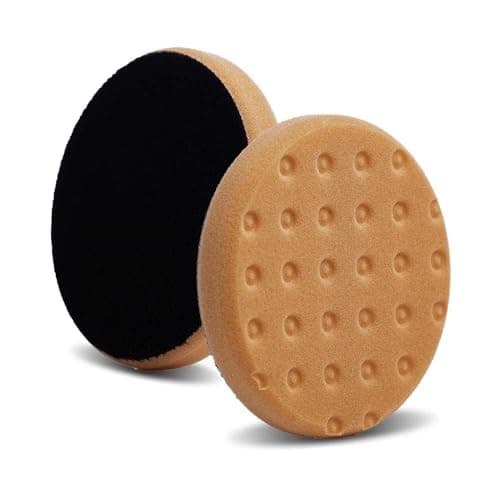
Lake Country Lake Country CCS 5.5" Foam Pads
Lake Country CCS 5.5" Foam Pads

The reference foam pad detailers reach for by default: the CCS dimple pattern meters product and reduces sling, and colors run a consistent, well-documented cut-to-finish scale.

The safe default foam pad on any DA
8.5
$26.76Amazon
02
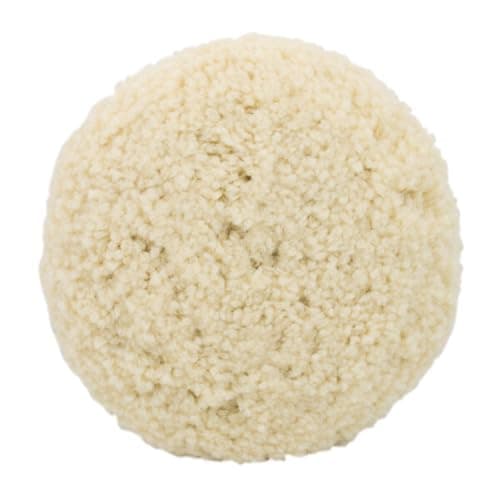
Lake Country Lake Country 6" Low-Lint Wool Buffing Pad
Lake Country 6" Low-Lint Wool Buffing Pad

Half-inch knitted lambswool over a 3/8-inch foam interface — the combination that gives you wool's cutting speed without wool's usual habit of shedding fibers into your compound.

Fast cutting on a rotary without the shedding mess
8.1
$26.76Amazon
03
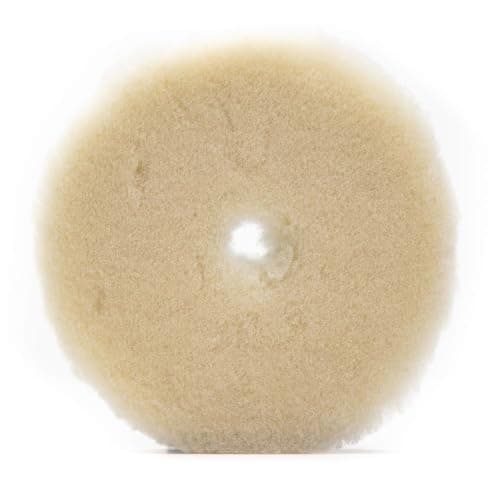
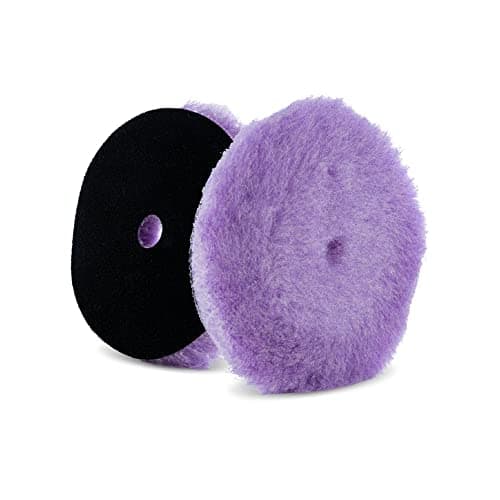
Purple Foamed Wool Purple Foamed Wool 6.25" Pad
Purple Foamed Wool 6.25" Pad

A hybrid that blends wool fiber into a foam matrix, so it cuts closer to wool but finishes closer to foam — the pad for when you would rather not run two separate passes.

One-pass correction where a full wool-then-foam sequence is overkill
7.9
$18.89Amazon
04
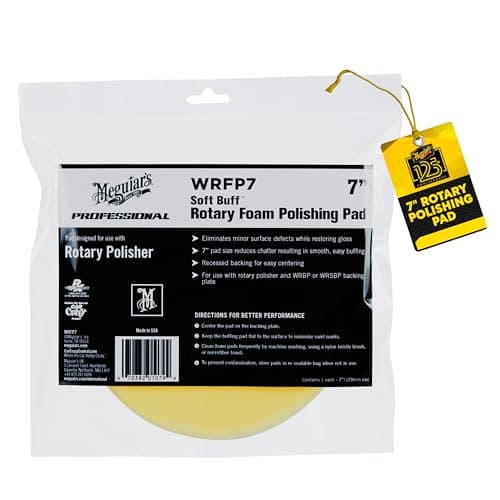
Meguiar's Meguiar's 7" Soft Buff Rotary Foam Polishing Pad (WRFP7)
Meguiar's 7" Soft Buff Rotary Foam Polishing Pad (WRFP7)

The foam pass that has to follow wool: a polishing-grade foam sized for a rotary's 7-inch plate, built to take out the haze a wool cutting pad leaves and put the gloss back.

Refining the finish after a wool cutting pass
7.6
$22.99Amazon
05
Woolous Woolous 7" Wool Buffing Pads
Woolous 7" Wool Buffing Pads

The budget route into wool: plain 7-inch wool pads at a price where you can buy several, wear them out on oxidized single-stage paint, and not feel it.

Heavily oxidized or neglected paint on a tight budget
7.6
$13.99Amazon

#ad · Live prices from the Amazon Product API, as of October 5, 2026. Where we have no verified live price, we show none — we would rather leave a gap than print a number that has rotted.

In detail

The picks, in full

01
Lake Country Lake Country CCS 5.5" Foam Pads

The safe default foam pad on any DA

Lake Country CCS 5.5" Foam Pads

5.5 inCCS dimpled foamColor-coded cutDA/rotary
8.5/10

The reference foam pad detailers reach for by default: the CCS dimple pattern meters product and reduces sling, and colors run a consistent, well-documented cut-to-finish scale.

Cut range
8.6
Durability
8.2
Finish quality
8.8
Value
8.2

Pros

  • CCS dimples hold product and cut sling and hopping
  • Color-to-aggressiveness scale is consistent and documented
  • Widely available in every cut level

Cons

  • Sold per-pair, so a full set adds up
  • Foam wears faster than microfiber on heavy cut

Don't buy this if…

…you want maximum cut in one pass — a microfiber cutting pad removes more, faster.

$26.76View on Amazon

Price as of October 5, 2026. Prices change — Amazon's is the one that counts.

#ad · we may earn a commission from this link to Lake Country CCS 5.5" Foam Pads

02
Lake Country Lake Country 6" Low-Lint Wool Buffing Pad

Fast cutting on a rotary without the shedding mess

Lake Country 6" Low-Lint Wool Buffing Pad

6-inch1/2" knitted lambswool3/8" foam interfaceLow-lint build
8.1/10

Half-inch knitted lambswool over a 3/8-inch foam interface — the combination that gives you wool's cutting speed without wool's usual habit of shedding fibers into your compound.

Cut
9.2
Finish
6.4
Heat control
8.6
Value
8

Pros

  • Knitted lambswool cuts faster than any foam at the same speed
  • Foam interface spreads pressure and helps dissipate heat
  • Low-lint construction means far less fiber left in the finish

Cons

  • Leaves wool haze that a foam finishing pass has to clear
  • Needs washing after almost every heavy job

Don't buy this if…

…you own only a dual-action — wool on a DA mostly just stalls the machine.

$26.76View on Amazon

Price as of October 5, 2026. Prices change — Amazon's is the one that counts.

#ad · we may earn a commission from this link to Lake Country 6" Low-Lint Wool Buffing Pad

03
Purple Foamed Wool Purple Foamed Wool 6.25" Pad

One-pass correction where a full wool-then-foam sequence is overkill

Purple Foamed Wool 6.25" Pad

6.25-inchWool/foam hybridFits 6" backing plateCompound or polish
7.9/10

A hybrid that blends wool fiber into a foam matrix, so it cuts closer to wool but finishes closer to foam — the pad for when you would rather not run two separate passes.

Cut
8
Finish
7.6
Heat control
7.8
Value
8

Pros

  • Cuts noticeably harder than foam while finishing better than pure wool
  • 6.25-inch sizing fits the 6-inch plates most rotary setups already run
  • Works on a rotary and on a strong long-throw DA

Cons

  • Neither the fastest cutter nor the finest finisher — it is a compromise
  • Hybrid construction costs more per pad than plain foam

Don't buy this if…

…your paint is badly oxidized — a full wool pad clears that far faster.

$18.89View on Amazon

Price as of October 5, 2026. Prices change — Amazon's is the one that counts.

#ad · we may earn a commission from this link to Purple Foamed Wool 6.25" Pad

04
Meguiar's Meguiar's 7" Soft Buff Rotary Foam Polishing Pad (WRFP7)

Refining the finish after a wool cutting pass

Meguiar's 7" Soft Buff Rotary Foam Polishing Pad (WRFP7)

7-inchRotary-specific foamPolishing cut levelHook-and-loop
7.6/10

The foam pass that has to follow wool: a polishing-grade foam sized for a rotary's 7-inch plate, built to take out the haze a wool cutting pad leaves and put the gloss back.

Cut
5.6
Finish
8.8
Heat control
8
Value
7.8

Pros

  • Sized and rated for rotary use rather than adapted from a DA pad
  • Removes wool haze without needing a third pad
  • Meguiar's foam is widely stocked and consistent between batches

Cons

  • One pad is nowhere near enough for a whole car
  • Too large to work tight panels and mirror surrounds

Don't buy this if…

…your rotary plate is 5 inches — buy the matching size, not this one.

$22.99View on Amazon

Price as of October 5, 2026. Prices change — Amazon's is the one that counts.

#ad · we may earn a commission from this link to Meguiar's 7" Soft Buff Rotary Foam Polishing Pad (WRFP7)

05
Woolous Woolous 7" Wool Buffing Pads

Heavily oxidized or neglected paint on a tight budget

Woolous 7" Wool Buffing Pads

7-inchWool faceRotary sizingMulti-pack
7.6/10

The budget route into wool: plain 7-inch wool pads at a price where you can buy several, wear them out on oxidized single-stage paint, and not feel it.

Cut
8.8
Finish
5.6
Heat control
6.8
Value
9.2

Pros

  • Cheap enough to treat as a genuine consumable
  • Real wool cut on paint that foam simply cannot clear
  • Also rated for boats and metal, not just automotive clear

Cons

  • Sheds noticeably more than the low-lint knitted pads
  • Coarser finish, so the foam pass afterwards is mandatory

Don't buy this if…

…your car has healthy modern clear coat — this much cut is not the answer to swirls.

$13.99View on Amazon

Price as of October 5, 2026. Prices change — Amazon's is the one that counts.

#ad · we may earn a commission from this link to Woolous 7" Wool Buffing Pads

Buying either one without wasting money

Count the passes, not the pads

A wool pad is never the only purchase. Wool haze is not optional and it is not subtle, so the real price of going wool is a wool pad plus a rotary foam polishing pad plus the extra hour that second pass takes. Compared like that, foam frequently wins on total cost even when it needs more passes to cut, because a foam cutting pass refines as it goes.

Low-lint is worth the premium, plain wool is worth the savings

If the car is paint you care about, buy the low-lint knitted build — the fiber it does not shed is fiber you do not have to chase out of the finish. If the car is an oxidized work truck or single-stage paint you expect to wear pads out on, plain multi-pack wool is the sensible spend and the shedding is a nuisance rather than a problem.

Check the diameter against the plate you own

Wool in this list is 6 and 6.25 and 7 inches; foam here is 5.5. Those are different plates. Decide the diameter before the material, because the plate is the part you keep — 5-inch vs 6-inch polishing pads works through what the extra inch costs and buys.

Wool needs washing more often, not less

A saturated wool pad stops cutting and starts smearing, and it holds far more spent product than foam does. Plan on cleaning it during the job rather than after it; the method is the same one in how to clean polishing pads, just more frequently.

Match the compound to the pad, not to the damage

Wool with a finishing polish is a waste of a pad, and foam finishing pads with a heavy compound haze paint without correcting it. The cutting compound picks note the pad grade each product is designed to pair with.
How we picked

We do not run a testing lab

We compiled published specifications, manufacturer data sheets and aggregated owner reviews, computed the cost of ownership from real sizes and coverage, then scored each product against a published rubric. The scores are judgments from documented research — they are not measurements we took, because we do not own a lab and we are not going to pretend we do. Where a number came from someone else, we name them and link them in Sources.

Questions

Frequently asked

Is a wool pad better than a foam pad?
Only at cutting. Wool removes defects faster than any foam at the same speed, and it finishes worse than any foam — it leaves a haze that a foam polishing pass has to clear. For a dual-action owner working on normal paint, foam is the better pad in every way that matters.
Can I use a wool pad on a dual-action polisher?
In practice, no. A dual-action's orbit is what makes it safe, and wool's drag against the paint is enough to stall that orbit, so the pad spins slowly and cuts far less than it would on a rotary. Wool is a rotary pad.
Does wool burn paint?
Wool itself does not, but the rotary it belongs on can, and wool lets you remove clear coat quickly enough that a careless pass does real damage. The heat and the cut both arrive faster than on foam, which is why wool is not the pad to learn on.
Do I need a foam pass after a wool pass?
Yes. Wool leaves a visible haze on any color and an obvious one on dark paint. A rotary foam polishing pad with a finishing polish is the pass that clears it, and skipping it undoes most of what the wool pass achieved.
What is a foamed wool pad?
A pad that blends wool fiber into a foam matrix rather than using a knitted wool face. It cuts closer to wool and finishes closer to foam, which makes it useful when you want one pass instead of a wool pass followed by a foam pass.
What size do wool pads come in?
Mostly 6 inches and up, because wool is a rotary pad and rotaries run larger plates. The 5-inch plate on a typical consumer dual-action will not hold a 6-inch wool pad correctly, so switching to wool usually means a new backing plate as well.

Keep reading

Receipts

Sources

We do not run a testing lab, and we do not pretend to. Where a measured number came from someone else's lab, we name them and link them. Where we could not verify something, we say so on the page rather than quietly leaving it out. Read our full method.