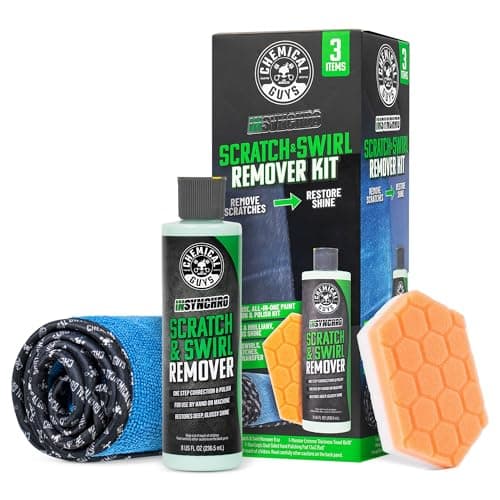
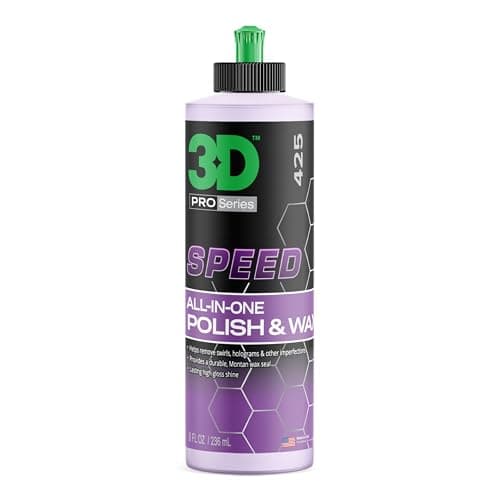
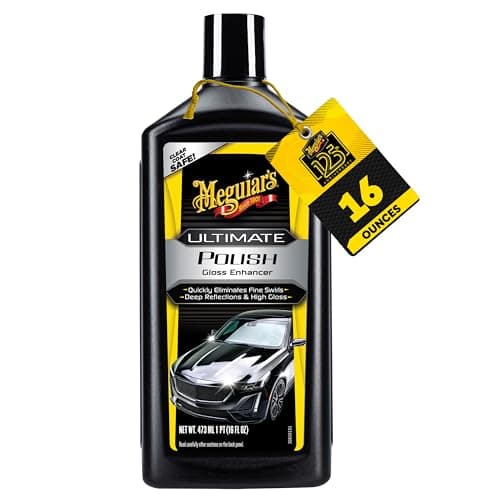
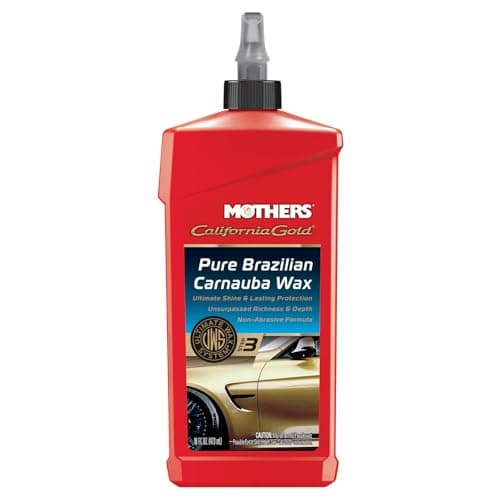
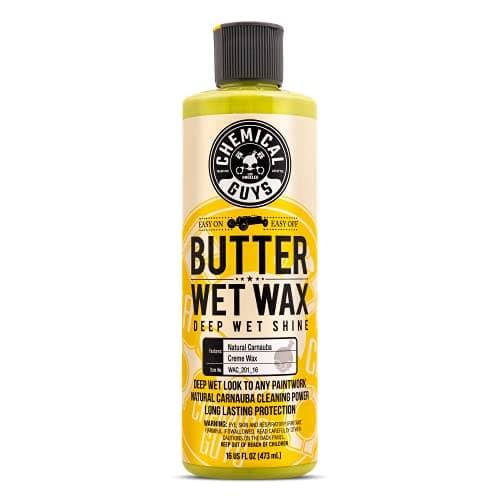
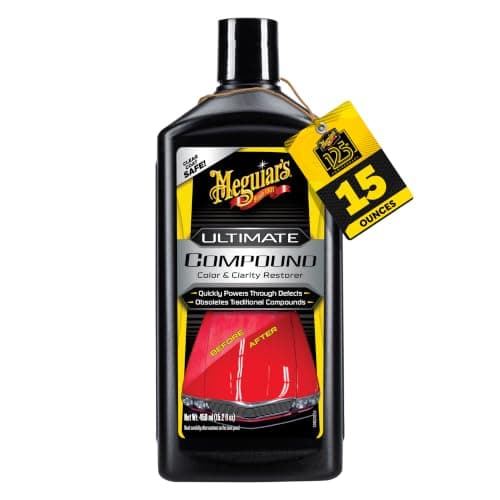
Meguiar's Ultimate Compound is the best hand polish for cars for most people — the one abrasive on this list that Meguiar's itself rates for hand or machine use, with enough cut to take out a scratch you can catch with a fingernail and little enough to leave gloss rather than haze. The budget pick is Meguiar's Ultimate Polish, which has no meaningful abrasive at all and is simply the cheapest way to make clean paint look deeper by hand. Prices come from the live price layer, as of November 23, 2026.
The honest framing for this page is a limit, not a product. Hand polishing cannot correct a car. A dual-action polisher moves a pad through thousands of small orbits a minute at a constant speed and a constant pressure, which is what breaks abrasives down evenly and removes a measured amount of clear coat across a whole panel. A hand moves a pad perhaps twice a second, unevenly, with pressure that falls off as your forearm tires. On a swirled hood, the difference is not a matter of degree. The machine removes the swirls; the hand makes the panel glossier and leaves the swirls where they are.
That is not an argument against hand polishing, because the hand is genuinely better at four things. It is better on a single localized defect, where a machine is an awkward amount of tool for a two-inch area. It is better in the places a 5.5-inch pad cannot sit — door jambs, around badges, mirror stalks, the sharp crease over a wheel arch. It is better on a car you only want to clean and protect rather than correct, which is most cars most of the time. And it is better than nothing at all, which is the realistic alternative for a great many people.
So the six picks below are sorted by which of those jobs each is for, rather than pretending they are six grades of the same thing. Two are abrasive and will remove something real. One is a polish-and-protect in a single pass. One is a pure gloss polish with no abrasive. Two are waxes, included because "hand polish" is very often asked by someone who actually wants the car to look better rather than to be corrected, and a wax is the shortest route to that.
How we ranked these
Whether the maker rates it for hand use, first.This sounds like a formality and is not. Machine-only compounds use abrasive systems that need machine energy to break down; applied by hand they smear, dry out and leave a mess. Meguiar's publishes hand or machine for Ultimate Compound, 3D publishes machine or hand for Speed, and Chemical Guys sells Insynchro specifically as a hand kit with the pad in the box. Those three are doing what the label says.
Then effort per panel. A product that needs eight minutes of hard rubbing per panel is a different purchase from one that wipes on and off in two, and on a whole car that gap decides whether the job gets finished. We have weighted it heavily, because an unfinished detail looks worse than an undetailed car.
Then whether it protects. By hand, the realistic ambition for a whole car is clean-and-protect in one pass, so an all-in-one or a cleaner wax is worth more here than it would be on a machine page. A pure polish by hand leaves bare clear coat that then needs a separate wax, which doubles a job you chose for its brevity.
Then what it includes. Hand application fails on the applicator more often than on the bottle. A foam applicator pad distributes product; a folded towel drags it. One pick here ships with the correct pad, and our wax applicator pad picks cover the rest.
And no claimed testing. We have not timed these across a panel set. The effort and cut judgments are reasoned from published abrasive type, published application instructions and the format of the product, and our method is public on how we research.
What a hand can and cannot remove
It can remove: oxidation and chalking on a flat panel, light water spotting that has not etched, a single scratch that does not catch a fingernail, paint transfer, bug and tar staining left after a dedicated remover, and the dull film that builds up on neglected paint. All of those are surface-level and respond to abrasive and pressure in a small area.
It cannot practically remove: swirl marks across a whole panel, buffer trails, holograms, sanding marks, etched water spots, or any scratch deep enough to catch a nail. Those need either more material removed than a hand can take off evenly, or a level of consistency a hand cannot produce. If that is your car, the beginner polisher page is the honest next step, and under $100 is what the entry costs.
There is one genuine exception worth knowing. On older single-stagepaint — no clear coat, color all the way through — hand polishing is dramatically more effective than it is on a modern clear-coated car, because single-stage paint is softer and the oxidation sits right at the surface. A cleaner wax and a foam pad on a faded 1980s single-stage panel produces a change people find hard to believe. Best compound for single stage paint is the page for that car.
Technique, because by hand it matters more than the bottle
Use a foam applicator, not a towel
A foam pad holds product in its cells and releases it gradually across the panel. A folded microfiber towel absorbs product into the nap, so you use three times as much and most of it never touches the paint. This single change does more for hand-polishing results than upgrading the bottle.
Work small, and work straight
Two-foot-square sections, and straight overlapping lines rather than circles. Circles are the reason "swirl marks" are called that: a circular hand motion with any grit present installs exactly the defect you are trying to remove. Straight passes in one axis, then straight passes across it.
Pressure, then no pressure
Firm pressure while the product is wet and working, then let up as it starts to go clear. Abrasives in a hand-rated polish break down as you work them, and the last few passes at light pressure are what leave gloss instead of haze.
Wipe it off properly and look again
Polishing oils flatter paint enormously while they are still on it. Remove the residue with a clean, dry microfiber, then look at the panel in direct light before you decide whether it worked. Our microfiber towel picks cover the removal towel, which matters: a cheap towel with a hard edge can mar the panel you just finished.
Never work on a hot panel or in direct sun
Hand application is slow, and a slow application on a hot panel means the product flashes dry before you have worked it. Shade, cool panel, early morning or evening. Can you polish a car in the sun covers why.
How long a car actually takes by hand
Worth knowing before you buy, because the main reason hand jobs end badly is running out of energy halfway down the second side. A sedan, washed and dried, with a one-step product and a foam applicator: roughly two to three hours of continuous work for the painted panels, and that is with a product that wipes off easily. With an abrasive compound worked properly, four to five. A truck or SUV is half again. If that number is unacceptable, the answer is either a spray-on product that asks for no rubbing at all, or a machine.
The pragmatic middle path, and the one we would actually recommend to most people asking this question: use an abrasive by hand on the specific defects that bother you — the scratch on the door, the dull patch on the hood — and use an all-in-one or a cleaner wax on everything else. That is an afternoon rather than a weekend and it addresses what you can see.
What to buy alongside
- Foam applicator pads, several. They load up and stop distributing product. Two per car minimum.
- Short-nap microfiber for removal. Plush towels are for drying; residue removal wants a shorter, denser nap.
- Clay, if the paint feels rough.Hand polishing over bonded contamination drags it across the panel. Decontaminate first — best clay bar for car.
- Protection, if you used a pure polish. A polished panel is bare. Our car wax picks cover the step after, and best car polish is the machine-focused counterpart to this page.