Skip to content
Pad & Polish

HUB 03 · Compounds & Polishes

Best Compound for Single-Stage Paint

On single-stage paint the color is the surface. Here is how to cut it without cutting through it, and the products that make a chalky old finish gloss again.

By Stephen V.Updated How we research
#ad

We earn a commission when you buy through our Amazon links, at no extra cost to you. It never affects our rankings, and we say so when the cheaper product is the better buy. How this works.

For almost everyone with a single-stage car, the right first bottle is Meguiar's Ultimate Compound — a mild SMAT compound that pulls oxidation and light defects out of pigmented paint and then finishes down well enough that many single-stage finishes need nothing after it. It is the pick for the owner of an older truck, a classic, a solid-white work van or a repainted panel who wants the chalk gone without gambling the color coat. If the paint is genuinely chalked rather than merely dull, step up to Mother's Professional Rubbing Compound further down the list; if you would rather cut and protect in one pass, 3D Speed is the all-in-one route.

Everything on this page is priced live from the retailer and stamped with the date we verified it. Where we have no verified price we show none rather than an old one.

Why single-stage changes the rules

A modern car is painted in two stages: a pigmented base coat that carries the color, and a transparent clear coat on top that carries the gloss and the UV protection. All of the polishing you read about on this site happens in that clear layer. You level a scratch by removing a few microns of clear, and the color underneath is never touched.

Single-stage paint has no such layer. The pigment and the resin are the same film, so the gloss, the UV protection and the color all live in one coat. That has three consequences that change every buying decision on this page.

  1. Every pass removes color. On a clear-coated car an over-aggressive compound costs you clear you cannot see. On single-stage it costs you pigment, and on a dark color the panel goes lighter and patchy rather than merely thin.
  2. Your pad turns the color of the car. This is the diagnostic that tells you what you are working on. Run a compound over single-stage red and the pad comes away pink. That is not a defect in the product; it is the paint telling you the abrasive is doing exactly what it does, in a layer you cannot replace.
  3. The surface is porous once it has oxidized. Oxidized single-stage is a dead, dried-out resin layer full of micro-voids. It drinks wax, which is why a single coat of anything looks fantastic for a week and then goes flat. Protection is part of the job here, not an optional last step.

How to tell whether your car is single-stage

Do this before you buy anything, because the test takes two minutes and the answer changes which page of this site you should be reading.

  1. Pick an inconspicuous painted area — inside a door jamb, the underside of a trunk lid, a lower rocker.
  2. Put a small amount of any mild polish on a clean white or light microfiber and rub by hand for ten or fifteen seconds with moderate pressure.
  3. Look at the towel. Color on the towel means single-stage. A clean towel, with perhaps a grey film, means you have a clear coat and you should be reading our general rubbing compound shortlist instead.

Two notes on edge cases. Factory white, and a great many commercial fleet and work vehicles, were painted single-stage well into the 1990s and in some lines later than that. And a car can be mixed: an original single-stage body with one clear-coated repainted fender is extremely common, so test more than one panel if the car has a history.

The cut ladder on single-stage

The rule is the same as always — use the least aggressive thing that works — but the cost of guessing wrong is higher, so the ladder is shorter and you start lower.

Paint conditionWhere to startWhy
Dull, but water still beads and the color is evenCleaner wax, by hand or machineThe surface is dirty and dry rather than dead; mild chemical cleaning is enough
Flat with light swirls, pad picks up faint colorMild SMAT compound on a light-cut foam padEnough cut to level marring, fine enough to finish without a second stage
Chalky, white-hazed, color rubs off on a dry towelHeavy compound, one small test section firstThe dead resin layer has to come off before any gloss exists underneath
Primer or filler showing through at an edge or ridgeStop. Do not polish that panelThe color film is already gone there; abrasives only widen the breakthrough

That last row matters more than any product choice. Single-stage cars fail at high points first — the peak of a hood crown, a roof rail, a bedside ridge — because that is where the paint was thinnest when it was sprayed and where the sun has hit it hardest since. If an edge is already showing lighter primer, polishing it is not a repair; it is the last step before bare metal. Mask it, work around it, and treat the panel as a paint-shop job.

Work smaller, check more often

Technique carries at least as much of the result as the bottle does. Three adjustments to the method on our step-by-step polishing guide are worth making for single-stage specifically. Work roughly a one-foot square instead of two, so you can inspect four times as often. Use fewer passes per section — two or three, then wipe and look — because that feedback loop is the only safety net you have. And change pads far more often than you would on a clear-coated car: a pad saturated with pigment and dried resin stops cutting and starts smearing, which reads as "the compound isn't working" right up to the moment it marrs the panel. Our pad cleaning guide covers the on-the-fly routine, and the quantity math is on how many polishing pads you actually need — single-stage sits at the top end of that range.

A hard, focused inspection light is not optional on pigmented paint. Oxidation hides under polishing oils and single-stage holds those oils longer than clear coat does, so a panel can look finished in the garage and chalky in the driveway. Wipe the section down with a panel wipe or diluted isopropyl before you grade it, and look under a real light — the field is ranked on our detailing light page.

The short answer

Quick picks

#ProductBest forScorePrice
01
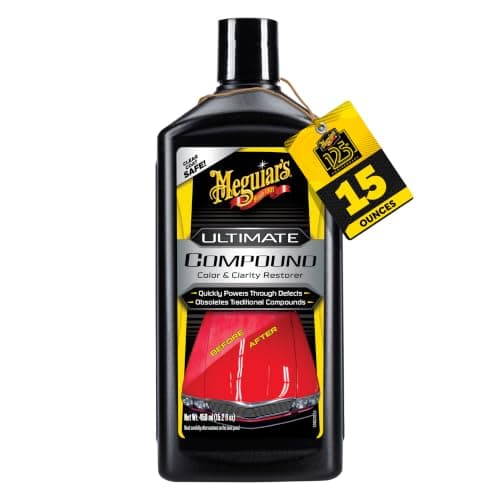
Meguiar's Meguiar's Ultimate Compound
Meguiar's Ultimate Compound

The compound to start with: clear-coat safe, works by hand or machine, and removes moderate swirls and oxidation while leaving a finish glossy enough that many people skip a follow-up polish.

Most swirl and oxidation removal, by hand or machine
8.6
$13.97Amazon
02
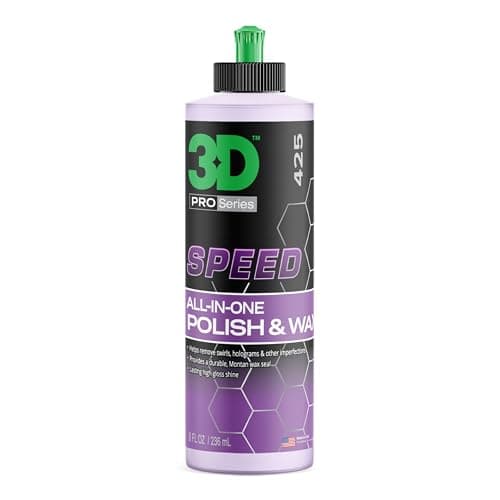
3D Products 3D Speed All-In-One Polish & Wax (8 oz)
3D Speed All-In-One Polish & Wax (8 oz)

A genuine all-in-one rather than a wax with a marketing claim: real polishing abrasives remove light swirls, and a clear-coat-safe sealant goes down in the same pass on the same pad.

One machine pass that corrects lightly and protects at the same time
7.8
$25.99Amazon
03
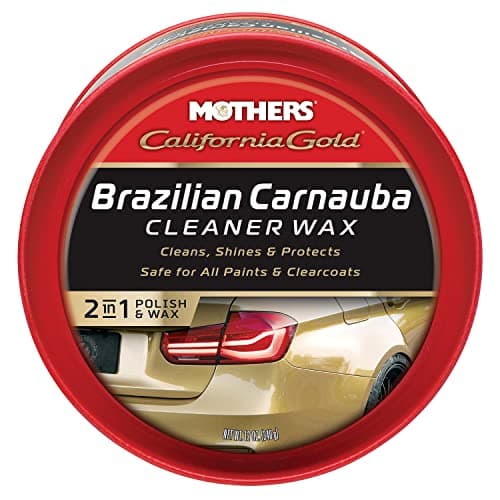
Mothers Mothers California Gold Brazilian Carnauba Cleaner Wax
Mothers California Gold Brazilian Carnauba Cleaner Wax

A cleaner wax, which is the right tool for white paint: the mild abrasives lift the yellowing and embedded grime that actually dull a white car, then the carnauba seals what is left.

White and light paint that has gone dull rather than swirled
8.3
$10.19Amazon
04
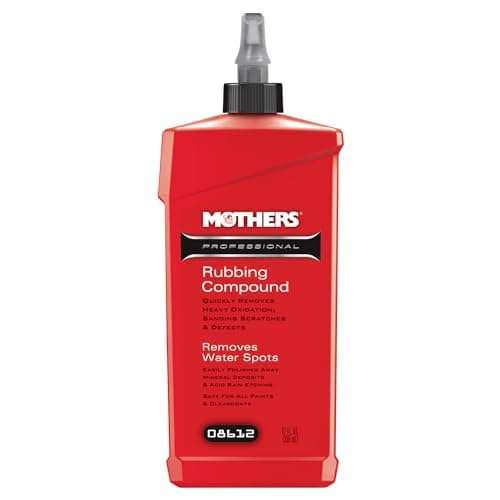
Mothers Mothers Professional Rubbing Compound
Mothers Professional Rubbing Compound

Mothers' body-shop line rather than its consumer shelf: a proper rubbing compound aimed at sanding marks and heavy oxidation, and workable by hand when a machine cannot reach.

Heavy oxidation on panels a machine cannot reach
8.0
$20.40Amazon
05
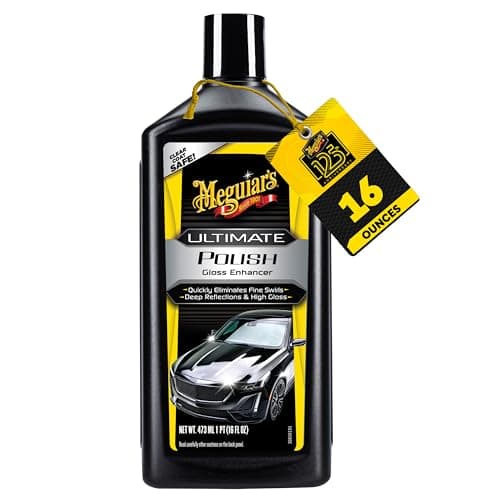
Meguiar's Meguiar's Ultimate Polish
Meguiar's Ultimate Polish

The gloss step, not a correction step: an extremely fine polish that darkens and deepens paint after compounding, which is exactly what black and dark-metallic finishes need before wax goes on.

The gloss pass after compounding, especially on dark paint
7.7
$9.67Amazon
06
Collinite Collinite 476S Super Doublecoat Auto Wax
Collinite 476S Super Doublecoat Auto Wax

The carnauba paste that fixes carnauba's weakest point: a carnauba-and-polymer blend Collinite rates at 7–10 months, against the weeks a traditional carnauba lasts — paid for with a hard paste that has to go on thin.

Carnauba looks with months, not weeks, of life
8.4
$19.91Amazon

#ad · Live prices from the Amazon Product API, as of October 11, 2026. Where we have no verified live price, we show none — we would rather leave a gap than print a number that has rotted.

In detail

The picks, in full

01
Meguiar's Meguiar's Ultimate Compound

Most swirl and oxidation removal, by hand or machine

Meguiar's Ultimate Compound

Clear-coat safeHand or machineNo fillers15.2 oz
8.6/10

The compound to start with: clear-coat safe, works by hand or machine, and removes moderate swirls and oxidation while leaving a finish glossy enough that many people skip a follow-up polish.

Cutting power
7.6
Finishing ability
8.6
Ease of use
9
Value
9

Pros

  • Genuinely clear-coat safe and beginner-forgiving
  • Corrects moderate defects yet finishes down glossy
  • Works by hand when you don't have a machine

Cons

  • Not aggressive enough for deep scratches or heavy oxidation
  • Best results still need a machine

Don't buy this if…

…your paint has heavy sanding marks or severe oxidation — step up to a dedicated cutting compound.

$13.97View on Amazon

Price as of October 11, 2026. Prices change — Amazon's is the one that counts.

#ad · we may earn a commission from this link to Meguiar's Ultimate Compound

02
3D Products 3D Speed All-In-One Polish & Wax (8 oz)

One machine pass that corrects lightly and protects at the same time

3D Speed All-In-One Polish & Wax (8 oz)

8 ozPolish + sealant in oneMachine or handClear coat safe
7.8/10

A genuine all-in-one rather than a wax with a marketing claim: real polishing abrasives remove light swirls, and a clear-coat-safe sealant goes down in the same pass on the same pad.

Cleaning ability
8.6
Gloss
8.6
Durability
7.6
Value
6.4

Pros

  • Removes light swirls properly, not just fills them
  • Leaves a sealant layer, so no separate protection step is needed
  • Works on a machine or by hand, which most one-steps do not

Cons

  • An 8 oz bottle at this price costs several times what a 16 oz parts-store cleaner wax does, per ounce and outright
  • Not enough cut for anything past light-to-moderate defects

Don't buy this if…

…your paint is genuinely swirled — a dedicated compound and a separate sealant will do far more.

$25.99View on Amazon

Price as of October 11, 2026. Prices change — Amazon's is the one that counts.

#ad · we may earn a commission from this link to 3D Speed All-In-One Polish & Wax (8 oz)

03
Mothers Mothers California Gold Brazilian Carnauba Cleaner Wax

White and light paint that has gone dull rather than swirled

Mothers California Gold Brazilian Carnauba Cleaner Wax

12 oz pasteCleaner waxBrazilian carnaubaLight oxidation removal
8.3/10

A cleaner wax, which is the right tool for white paint: the mild abrasives lift the yellowing and embedded grime that actually dull a white car, then the carnauba seals what is left.

Gloss
8.4
Durability
6.8
Ease of use
8.6
Value
9.4

Pros

  • Cleans and protects in one pass, so a dull white car brightens visibly
  • Mild abrasives handle the staining that swirl removers ignore
  • One of the cheapest paste waxes that does real work

Cons

  • The cleaning action is too mild for genuine oxidation
  • Carnauba durability is months, not seasons

Don't buy this if…

…your paint is freshly corrected — a pure wax or sealant protects longer.

$10.19View on Amazon

Price as of October 11, 2026. Prices change — Amazon's is the one that counts.

#ad · we may earn a commission from this link to Mothers California Gold Brazilian Carnauba Cleaner Wax

04
Mothers Mothers Professional Rubbing Compound

Heavy oxidation on panels a machine cannot reach

Mothers Professional Rubbing Compound

12 ozProfessional rubbing compoundMachine or handBody-shop line
8.0/10

Mothers' body-shop line rather than its consumer shelf: a proper rubbing compound aimed at sanding marks and heavy oxidation, and workable by hand when a machine cannot reach.

Cut
8.6
Finish
6.8
Ease of use
8.2
Value
8.6

Pros

  • Real cutting ability that still works under a hand applicator
  • Professional-line formulation without professional-line pricing
  • Widely available in auto parts stores when you run out mid-job

Cons

  • Coarser finish than the optical-grade compounds
  • Hand application is slow and physically demanding

Don't buy this if…

…you own a DA and only work flat panels — a machine compound cuts cleaner.

$20.40View on Amazon

Price as of October 11, 2026. Prices change — Amazon's is the one that counts.

#ad · we may earn a commission from this link to Mothers Professional Rubbing Compound

05
Meguiar's Meguiar's Ultimate Polish

The gloss pass after compounding, especially on dark paint

Meguiar's Ultimate Polish

16 ozFine finishing polishHand or DAUse before wax or sealant
7.7/10

The gloss step, not a correction step: an extremely fine polish that darkens and deepens paint after compounding, which is exactly what black and dark-metallic finishes need before wax goes on.

Cutting power
3
Finish quality
9.2
Ease of use
9.2
Value
9.2

Pros

  • Adds visible depth to dark paint that compound alone leaves flat
  • Almost impossible to over-correct with — very low cut
  • One of the cheapest bottles in the whole category

Cons

  • Removes essentially no defects on its own
  • Adds a whole extra step to an already long job

Don't buy this if…

…your paint still has swirls — compound first, then come back to this.

$9.67View on Amazon

$12.9926% off

Price as of October 11, 2026. Prices change — Amazon's is the one that counts.

#ad · we may earn a commission from this link to Meguiar's Ultimate Polish

06
Collinite Collinite 476S Super Doublecoat Auto Wax

Carnauba looks with months, not weeks, of life

Collinite 476S Super Doublecoat Auto Wax

Carnauba + polymer pasteRated 7–10 months (Collinite)9 fl oz tinThin coats only
8.4/10

The carnauba paste that fixes carnauba's weakest point: a carnauba-and-polymer blend Collinite rates at 7–10 months, against the weeks a traditional carnauba lasts — paid for with a hard paste that has to go on thin.

Durability
9.4
Looks & warmth
7.6
Ease of use
7.2
Value
9.4

Pros

  • Collinite's own most durable product — rated 7–10 months, against 4–7 for its 845 liquid
  • Collinite says it bonds without a surgically clean, multi-step decontamination first
  • Thin-coat application means a small tin covers a lot of cars

Cons

  • The hardest paste here to buff off — Collinite itself calls it the most labor-intensive of its waxes
  • An owner review on Collinite's own product page advises taping off black trim — it is very hard to remove
  • Polymer-heavy by design, so the glow trails a pure show carnauba

Don't buy this if…

…you want a relaxed wax day — a softer paste or a liquid carnauba buffs off with far less effort.

$19.91View on Amazon

$21.959% off

Price as of October 11, 2026. Prices change — Amazon's is the one that counts.

#ad · we may earn a commission from this link to Collinite 476S Super Doublecoat Auto Wax

Buying for single-stage paint

Prefer SMAT, and prefer mild

Diminishing-abrasive compounds are designed to break down as you work them, which means their cut depends on how long you work the section — a variable you are deliberately trying to keep small here. SMAT-style abrasives hold closer to their original size through the pass, so two passes mean two passes' worth of cut and no more. Predictability is worth more than peak cut on a layer you cannot replace, which is why the mild SMAT compound tops this list and the heavy compound sits at number four rather than number one.

An all-in-one is a legitimate answer, not a cop-out

On a clear-coated show car, an all-in-one that cuts, polishes and lays down protection in one pass is a compromise. On a forty-year-old single-stage work truck it is often the correct engineering decision: one pass over the paint instead of three, and the porous surface gets sealed in the same step rather than sitting bare while you go back for the wax. If the car is a driver rather than a project, start there and stop there.

Budget for protection in the same order

Freshly polished single-stage is the thirstiest surface in car care. Plan on two coats of a carnauba or a sealant, an hour or more apart, and expect the first one to look as though it vanished. That is the paint absorbing it, not the wax failing. A durable paste carnauba is the traditional and still the sensible answer — it fills and feeds the resin layer in a way a thin spray cannot — and our carnauba shortlist ranks the wider field. Thereafter, maintenance beats correction: a single-stage car waxed three times a year will never need this page again, and how often to wax a car sets the schedule.

Do not reach for a ceramic coating first

Coatings bond to a hard, non-porous surface. Oxidized single-stage is neither, and coating over a dead resin layer locks the dullness in under something you now have to remove chemically. If you want a coating on a single-stage car — and plenty of restored ones carry one happily — correct the paint first, panel-wipe it properly, and read polishing before a ceramic coating for the sequence.

Machine or hand?

Hand application is genuinely viable on single-stage in a way it is not on hard modern clear, because the paint is softer and the defects are shallower — see polishing a car by hand. A dual-action machine is still faster and more even, and it is safe here provided you drop a speed setting and a grade of pad from what you would use on a clear-coated car. What you must not do is reach for a rotary. On single-stage, rotary heat and a stationary pad edge can go through the color film in seconds, and the result is not a haze you can polish out — it is a patch of primer. If a rotary is the only machine you own, read the technique page first and then borrow a dual-action anyway.
How we picked

We do not run a testing lab

We compiled published specifications, manufacturer data sheets and aggregated owner reviews, computed the cost of ownership from real sizes and coverage, then scored each product against a published rubric. The scores are judgments from documented research — they are not measurements we took, because we do not own a lab and we are not going to pretend we do. Where a number came from someone else, we name them and link them in Sources.

Questions

Frequently asked

How do I know if my car has single-stage paint?
Rub a small amount of mild polish on a clean white microfiber over an inconspicuous painted area for ten or fifteen seconds. If the towel picks up the color of the car, the paint is single-stage. If the towel stays clean or shows only a grey film, there is a clear coat on top and the color is not in play.
Will rubbing compound ruin single-stage paint?
It will if you treat it like a clear-coated car. Every pass removes pigment rather than sacrificial clear, so the risk is real — but a mild compound, a light-cut foam pad, two or three passes at a time and frequent inspection is a routine job that thousands of owners do safely. The failures come from heavy compounds, rotary polishers, and working a panel without stopping to look at it.
Why is my pad turning the color of the car?
Because single-stage paint carries the pigment in the top film, so abrasion lifts color. On oxidized paint the first pass pulls mostly dead, chalky resin and the transfer is heavy; on sound paint it should be faint. Heavy, continuous color transfer after the oxidation is gone is the signal to stop cutting that panel.
Do I need to polish before waxing single-stage paint?
If the paint is oxidized, yes — wax over a dead resin layer looks better for a week and then goes flat, because the dullness is in the paint rather than on it. If the color is even and water still beads, a cleaner wax by hand is often the whole job and you can skip the compounding stage entirely.
Can you ceramic coat single-stage paint?
Yes, on sound, corrected, properly prepped single-stage paint — plenty of restored cars carry a coating. What does not work is coating over oxidation: the coating needs a hard non-porous surface to bond to, and you would be sealing the chalk in under a film that then has to be removed with abrasives.
How many coats of wax does single-stage paint need?
Plan on two, spaced at least an hour apart, and expect the first to look as though it disappeared. Freshly polished single-stage is porous and absorbs the first application; the second is the one that sits on the surface and gives you gloss and beading.

Keep reading

Receipts

Sources

We do not run a testing lab, and we do not pretend to. Where a measured number came from someone else's lab, we name them and link them. Where we could not verify something, we say so on the page rather than quietly leaving it out. Read our full method.