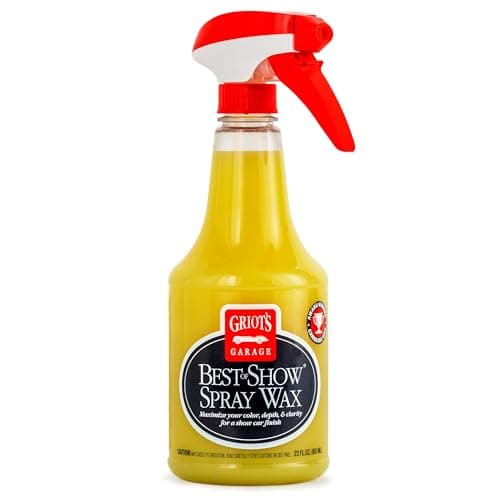
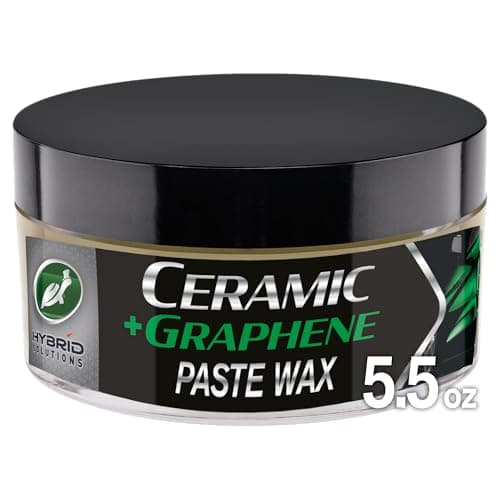
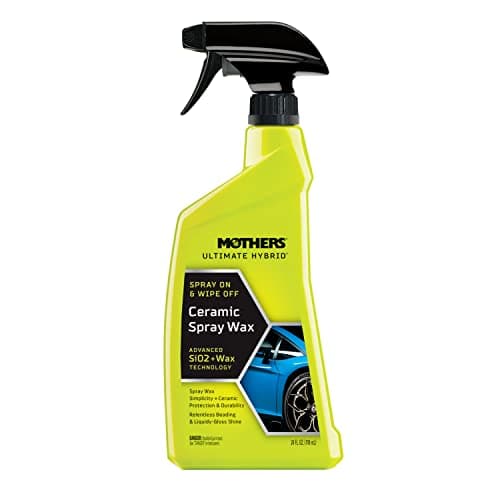
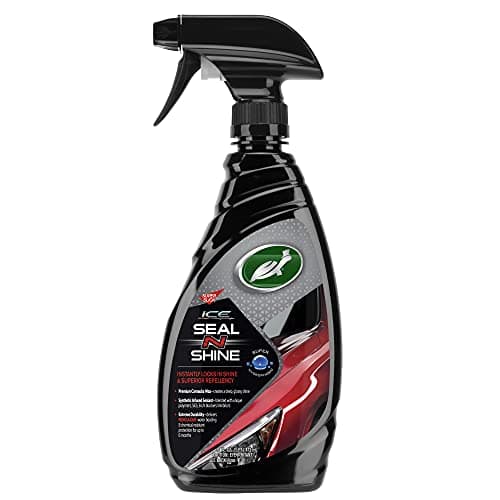
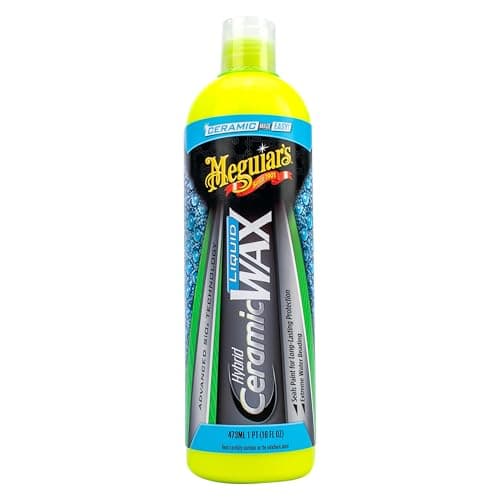
Meguiar's Hybrid Ceramic Liquid Wax is the best car wax for silver cars for most people — an SiO2 spray that goes on a wet car and rinses off, leaves no tint of its own to muddy the flake, and produces the tight water beading that stops silver's one real cosmetic problem before it starts. The budget pick is Turtle Wax ICE Seal N Shine, which does the same rinse-on job for less and genuinely adds no steps to a wash you were doing anyway. Prices render from the live price layer, as of November 23, 2026.
Silver and light gray metallic is the most common paint color in North America and the one with the least written about it, because it does not have the two problems that generate content. It does not show swirl marks — there is no dark background for a scratch to scatter light against. And it does not reward the thing wax marketing is built on. "Depth," "wet look," "liquid gloss" all describe light traveling into a dark clear coat and coming back; a silver panel reflects at the flake layer and that is the end of it. A carnauba that transforms a black car does almost nothing visible on a silver one.
What silver does show is dust, water spots and a slightly milky cast when the wax on it is wrong. Dust reads clearly against a light metallic because the flake sparkle is a high-frequency visual texture and a film of dust flattens it. Water spots show because the mineral ring is light-colored on light paint but sits in a different plane to the flake, so it reads as a dull patch rather than a stain. And a heavy, amber-tinted carnauba laid on thick over silver can visibly yellow the color and dull the sparkle — the one way to make a silver car look worse with wax.
So the ranking on this page is: does it keep the flake clean and bright, does it shed water so spots never form, and does it add no color of its own. That ordering puts synthetic sealants and SiO2 sprays at the top and the carnauba paste last — the reverse of our black car wax ranking, from much the same shelf.
How we ranked these
Optical neutrality first. A product that adds no tint and fills nothing is what a metallic wants, because everything you can see on a silver panel happens at or below the clear coat and anything sitting on top is in the way. Synthetic sealants and silica sprays are effectively colorless. Carnauba is not, and on silver that is a cost rather than the benefit it is on black.
Then water behavior. Water spotting is the defect silver actually suffers from, and the defense is a surface slick enough that droplets leave rather than sit and evaporate. Tight beading and fast sheeting matter more here than on any other color.
Then dust release. A slick, low-friction surface holds less dust and gives it up to a light rinse, which is the practical difference between a silver car that looks clean for a week and one that looks dusty in two days.
Then published durability, attributed to the maker. Collinite rates 476S at 7 to 10 months. Turtle Wax claims months of beading for its graphene paste. Those are their numbers, not ours, and the only honest ones to quote.
Then effort. Two of these six apply during the rinse and need no buffing at all, which on a color that benefits mostly from being clean is a real advantage rather than a shortcut.
Silver versus white, because they are not the same job
Our white car wax page ranks on a different priority, and the difference is worth stating because people treat the two colors interchangeably. White is a solid color with no flake, and its enemy is yellowing — a cleaner wax with mild abrasives is often the right answer because it lifts stain. Silver is a metallic, it does not yellow in the same way, and a cleaner wax's abrasives are working on a surface where there is nothing to lift. On silver, the cleaning step is a decontamination job rather than a waxing job, and the wax should be doing nothing but protecting.
The other difference: silver can look genuinely bad when it is dirty in a way white does not, because flake and dust are competing textures. A white car with a film on it looks like a white car that needs a wash. A silver car with a film on it looks gray and flat. That is why the easy-to-reapply products rank well here — frequency beats durability on this color.
What to do about water spots, since that is the real problem
Prevention is the entire strategy. Never let a silver car air-dry, never wash it in direct sun on a hot panel, and keep something slick on the paint so droplets run off rather than flattening out. If spots have already formed, the ten-second test tells you what you are dealing with: wet the area and look at it while wet. Spots that disappear when wet and return as it dries are etched into the clear coat; spots still visible while wet are mineral deposits sitting on top. How to remove water spots from car paint covers the escalation ladder, and a drying aid is the cheapest insurance against making new ones.
How to choose
Decide between frequency and durability
On silver these are genuine alternatives rather than a hierarchy. A rinse-on SiO2 spray gives you perhaps two months and costs two minutes a wash, so you reapply constantly and the car is always slick. A polymer-carnauba paste gives you most of a year and costs an afternoon twice. Both keep the flake bright. Pick the one that matches how you actually use the car, not the one with the bigger number.
Avoid the two things that hurt silver
- Heavy carnauba applied thick. Carnauba has a natural amber tone. One thin coat is invisible; a heavy coat on silver can read as a faint yellow cast and slightly dull the sparkle. If you want a carnauba look on silver, apply it thinner than the instructions suggest.
- Glazes and filling products. A glaze hides defects by filling them with oils, which is useful on dark paint before a show. On silver there is nothing to hide, and the filler is a layer between you and the flake.
Decontaminate before you protect, every time
The dullness people blame on their wax is usually a smooth film of iron and road grime. Silver shows it as a flat gray cast, and no wax will fix it — it will seal it in. An iron remover and, if the paint still feels rough, clay come first. On a silver car this single step changes more than any wax on this page.
Correct first if the paint is actually marred
Silver hides swirls so well that people are often surprised by how much marring is there once an inspection light is on it. Whether to correct it is a reasonable question on this color — the answer is usually no, because it is not visible in normal light and every pass spends clear coat. If you do want to, our light-paint polish picks cover the products, and the logic there applies to silver with one caution about not scuffing the clear above the flake.
Wheels and glass change the look of a silver car more than wax does
An honest allocation note. On a light metallic, the single most visible improvement for most budgets is clean, protected wheels and genuinely clear glass, because against silver paint both read as contrast. If you are choosing where fifty dollars goes, the under $50 coating band may well buy you more visible improvement than a better wax will.
Layering, if you want to
A sealant or SiO2 spray under a carnauba is the traditional stack, and it works on silver as long as the carnauba goes on thin. The order is always durable first, decorative second, and the first layer has to be fully cured. Do not layer a cleaner wax over anything — its abrasives remove the layer underneath. And do not expect layering to multiply durability; it adds the top product's life to the stack, not the sum of both.