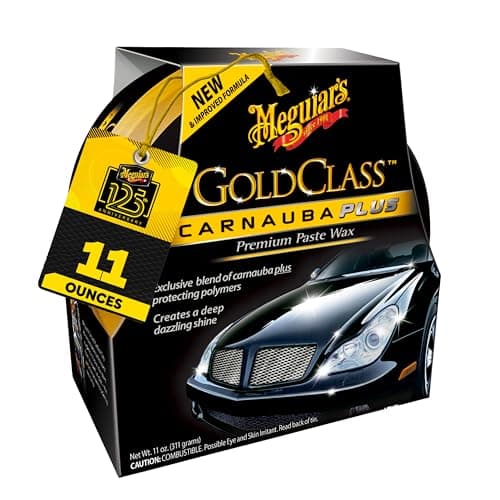
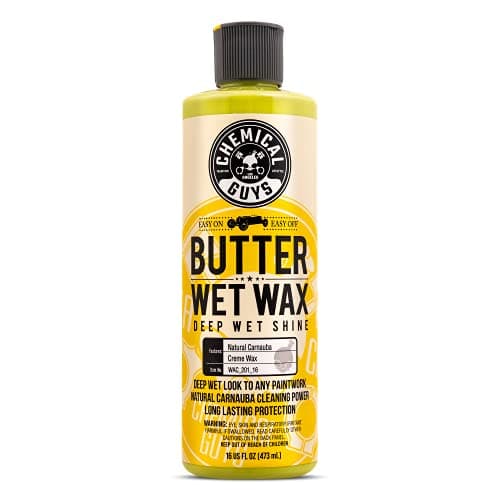
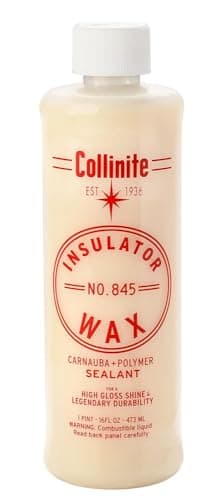
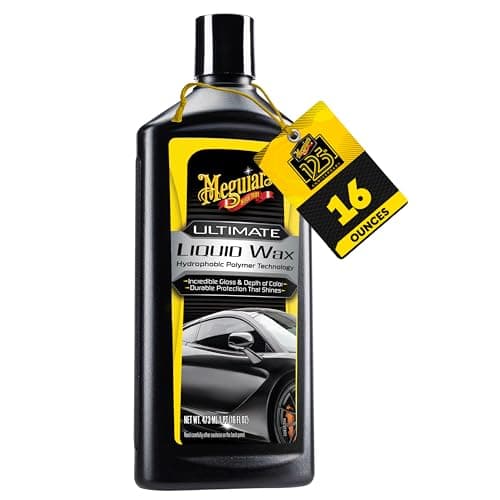
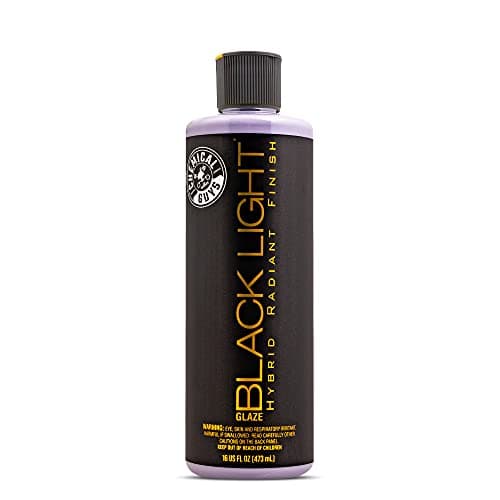
Black paint has no special chemical requirement. There is no wax formulation that only works on dark cars, and the products marketed that way are not chemically different from their standard versions in any way that changes the protection. What actually differs is what you are optimizing for — because on black, appearance is the whole reason you bought the color, and the appearance gap between waxes is far more visible than it is on silver. The rest of the process changes with it, which is covered in how to detail a black car.
Two things move up the priority list on dark paint. The first is depth: that wet, liquid-looking finish that makes a black car look like it has been poured rather than painted, which natural carnauba produces better than any synthetic. The second is filling: products that carry oils and polymers into fine marring, temporarily making an imperfect black car look considerably better than it is.
Filling is legitimate, as long as you know
The word "glaze" carries a whiff of cheating in enthusiast circles, and it should not. A glaze fills fine scratches and marring with oils so they stop catching the light, which on a black car that has not been corrected is a genuinely dramatic improvement for an hour's work. That is a reasonable thing to want.
The important part is knowing what you bought. Filling is temporary — it washes out over several weeks — and it removes nothing. If you want defects actually gone, that is correction, and it is covered in best cutting compound for black cars. Filling on top of a proper correction is the best of both; filling instead of one is a choice, not a mistake, as long as it is a choice you made deliberately.
Carnauba versus synthetic on dark paint
Carnauba gives depth and warmth. On black, that difference is genuinely visible — the finish looks softer and deeper, and it is the reason people who care about how a black car looks keep going back to paste wax despite the work involved. It lasts weeks.
Synthetic sealants give a sharper, brighter, more reflective finish that reads as "clean" rather than "deep," and they last months. On black, plenty of people find the synthetic look slightly cold. The standard resolution is to layer: a durable sealant underneath doing the protecting, a carnauba on top doing the looking, topped up as it wears. Our paint sealant roundup covers the base layer.
The towel matters more than the wax
This is the single most useful thing on the page. Most swirl marks on black cars come from washing and drying, not from driving, and a cheap thin towel with a stitched border will put fine scratches straight into paint you just waxed. Every buff-off on dark paint should use plush, edgeless microfiber, turned to a fresh face constantly. Our towel picks cost less than most of the waxes on this page and will do more for how the car looks.
Wax in the shade on a cool panel, apply thinly, and keep a second clean towel for the final pass. On black, a thick application does not last longer — it just makes a difficult buff-off, and difficult buff-offs are where marring comes from.
Worth knowing if you own more than one car: the criterion flips completely with the color. Black is ranked here on swirl visibility, white on yellowing and contamination, and red on something different again — organic red pigments are the ones UV can actually destroy, so our red-car picks are ranked on UV screening and realistic reapplication rather than on depth of shine.
How to choose, and how to apply it on black
Decide: depth, durability, or filling?
Depth points to carnauba. Durability points to a synthetic sealant. Filling points to a glaze or a hybrid glaze-sealant. You can layer to get two of the three, but no single product does all three well, and choosing honestly is what stops you being disappointed by an otherwise good product.
Correct first if you can
Nothing in a bottle makes swirled black paint look like corrected black paint under direct sun. If the car has visible swirls, an afternoon with a dual-action polisher will change it more than any wax on this page. Filling products are a genuine improvement, not a substitute.
Application, on dark paint specifically
- Wash and dry, carefully. Two buckets, clean mitt, plush drying towel. Grit at this stage becomes a scratch you will see for months.
- Work in the shade on a cool panel. Wax flashing early on a hot black panel is the classic cause of a streaky finish.
- Thin, even coats. More product does not mean more protection; it means a harder buff-off and more chance of marring.
- Two towels, minimum. One to remove the bulk, one clean and plush for the final pass.
- Inspect under a single bright light. Diffuse garage lighting hides everything on black until the car is outside.
Maintenance is what keeps it looking waxed
A black car looks its best when the wash routine is not constantly adding new swirls. No brush-type automatic washes, a clean mitt every time, a dedicated drying towel, and a spray wax top-up after washes to keep the surface slick so the mitt drags less. That routine matters more over a year than which wax you picked.
The common mistake
Buying an expensive wax to fix a swirled black car. The wax will look fantastic while it is wet and mildly better once dry, and the first sunny day will show every defect exactly where it was. Correct, then protect — in that order — and the same wax will look like a different product entirely.