Skip to content
Pad & Polish

HUB 01 · Machine Polishers

How to Wax a Car With a Polisher

Waxing by machine takes half the time and lays a far more even film than your arm can. The catch is that every setting is the inverse of the ones you use to correct paint.

By Stephen V.Updated How we research
#ad

We earn a commission when you buy through our Amazon links, at no extra cost to you. It never affects our rankings, and we say so when the cheaper product is the better buy. How this works.

Use the lowest speed on the machine, the softest pad you own, no downward pressure at all, and about four pea-sized drops of wax per panel. That is the whole technique, and it is worth stating up front because every instinct you built up while correcting paint is wrong here. Polishing rewards speed, pressure and a firm pad. Waxing punishes all three. The machine is not doing abrasive work; it is spreading a thin film more evenly than a hand can, and that is the only job you are asking of it.

Any orbital machine will do it: a dual-action polisher you already own, a cheap household orbital waxer, or a long-throw DA set to its slowest setting. The one machine to keep away from this job is a rotary, which brings heat and speed you actively do not want — the reasoning is in best rotary polisher.

Why bother, when waxing by hand works fine

Three reasons, and the first is the one that matters most for how the car ends up looking.

Evenness. A hand applicator lays down more product where you press and less where you do not, and the difference shows up as patchy gloss and uneven wear over the following weeks. An orbiting pad distributes a film at near-constant thickness across a whole panel. Thin and even is what every wax manufacturer asks for, and it is far easier to achieve with a motor.

Time. A whole car by hand is an hour or more of application plus the buff-off. By machine it is roughly half that, and the half you save is the tedious half.

Less product. Machine application uses noticeably less wax per car, because nothing gets absorbed into a foam applicator and you are not over-applying to compensate for uneven coverage.

What machine waxing does not do is correct anything. If the paint has swirls, a wax applied perfectly by machine is swirled paint with a perfect film of wax over it. The fix for that is a different job with different settings — how to remove swirl marks.

Which machine, and what it costs you

MachineWaxes well?Corrects?Notes
Household orbital waxer (6 in, bonnet)Yes — this is its only jobNoCheapest route, near-zero risk, bonnets widely stocked
Dual-action polisher, lowest speedYesYes, with a different pad and productThe sensible choice if you already own one
Long-throw DA, lowest speedYes, with careYes, quicklyBig orbit can sling product — spread it off the trigger first
RotaryNo reason toYesHeat and continuous spin are the opposite of what waxing wants

If you are buying something purely to stop waxing by hand, a 6-inch orbital waxer is the honest answer and costs about what a bottle of good sealant does. If you are choosing between that and a real polisher, buy the polisher — it does this job perfectly at its lowest setting and also does the one the waxer cannot. The field is in best car polisher for beginners.

Pad choice: softest thing in the drawer

Wax needs a finishing pad, a soft foam applicator pad, or a wax bonnet — and nothing with any cut in it. A cutting or polishing pad has an open, aggressive foam structure designed to work abrasives, and on a wax it does two unhelpful things: it absorbs product into the pores and it introduces faint marring on dark paint for no benefit at all. The rungs are described in polishing vs finishing pads.

Dedicate the pad. A pad that has had compound in it keeps a residue of abrasive deep in the foam no matter how carefully it is washed, and that residue in a wax pad means you are lightly compounding every panel you think you are protecting. Keep one finishing pad, in a distinct color, that never sees anything but wax and sealant.

Size barely matters here. There is no correction happening, so a 5.5-inch pad on a 5-inch plate is fine, a 6-inch is fine, and a bonnet over a spindle is fine. This is one of the few jobs where the usual pad sizing argument is irrelevant.

The method

Start on clean, dry, decontaminated paint. Machine waxing over grit grinds that grit into the clear coat with a motor. Wash, dry, and if the paint fails the baggie test, decontaminate first — how often should you clay bar your car covers how to tell.

Prime the pad. Four or five pea-sized drops spread around the face of a dry pad, then dab it across the panel in several places before you switch the machine on. A dry pad on its first panel absorbs most of what you give it, which is why the first panel always seems to take more product than the rest.

Spread with the machine off the trigger. With a long-throw machine especially, dab the product out and move the pad around the panel briefly before spinning it up. Switching on with a blob of wax on the pad flings it across the garage, the windows and you.

Lowest speed, two or three overlapping passes. Speed one or two on a six-speed dial. Let the weight of the machine do the work and keep your hand on the handle for guidance only. You are aiming for a film thin enough to see the paint through; if you can see white swirls of product sitting on the panel, that is too much wax and you will pay for it at the buff-off.

Keep the pad flat and move continuously. Same rule as polishing, for a different reason: a tilted pad lays down an uneven film, and at these speeds there is no heat risk to worry about. Work one panel at a time.

Let it haze, then buff off by hand. This part stays manual. Wait for the wax to flash to a haze — the time varies by product, humidity and panel temperature — then wipe with a clean plush microfiber, turning to a dry face often. Test one six-inch square before committing to a panel: if it comes off clean, continue; if it smears, wait longer. The towel grades are in best microfiber towels for detailing.

Do the trim and the tight bits by hand. Mirror caps, pillars, behind handles, grille slats and anywhere the pad cannot sit flat get a hand applicator. The machine is a panel tool, not a whole-car tool, and a pad edge spinning against textured trim leaves wax where it is hardest to remove.

Which products machine well

Liquid waxes and sealants are ideal. They spread thin, flash evenly and wipe off predictably, which is everything machine application needs. A synthetic liquid is the easiest thing in this category to apply by machine and the most forgiving if your film goes on slightly thick.

Soft paste waxes work if you load the pad by dabbing it into the tin rather than scooping product onto the panel. Hard pastes are the one genuinely bad fit: they want a thin, deliberate hand film and they fight you on removal, which is why a hard paste like Collinite 476S is better applied by hand.

Spray waxes and SiO2 toppers do not need a machine at all. They are designed to be misted and wiped, and putting a pad on them is work without a payoff — see best spray wax.

Ceramic coatings should never go on with a machine. A real coating is applied with a suede-wrapped block in deliberate cross-hatch passes and levelled by hand in a specific window. A machine spreads it unevenly, levels nothing, and leaves high spots that cure in place — how to apply ceramic coating covers the correct process.

The four mistakes that cause every bad result

Too much product. By far the most common. A thick film does not protect better or last longer; it just takes twice as long to remove and streaks while you do it.

Too much speed. High speed with a soft pad and a wax generates heat, flings product, and on some waxes starts to dry the film before it has spread. Stay at the bottom of the dial.

Pressure. Leaning on the machine while waxing compresses the pad, lays product unevenly and achieves nothing. The machine's own weight is already more pressure than this job needs.

A contaminated pad. Wax applied with a pad that still holds compound residue is a very light correction pass you did not intend, with a wax film over the top of it. One dedicated pad solves this permanently.
The short answer

Quick picks

#ProductBest forScorePrice
01
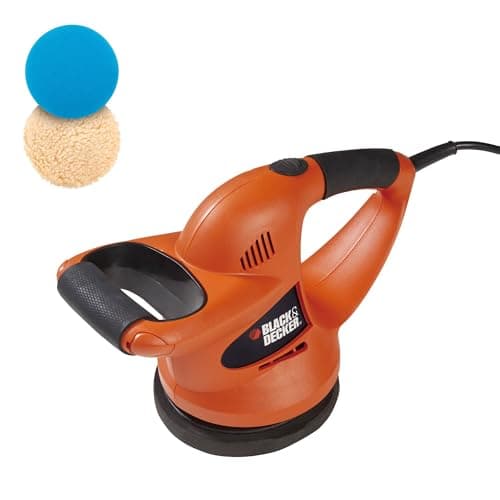
BLACK+DECKER BLACK+DECKER WP900 6-Inch Orbital Buffer/Polisher
BLACK+DECKER WP900 6-Inch Orbital Buffer/Polisher

The classic household orbital waxer: it applies and buffs off wax faster and more evenly than your arm can, and it is close to impossible to hurt paint with — but it corrects essentially nothing.

Applying and buffing wax without any correction risk
7.5
$71.99Amazon
02
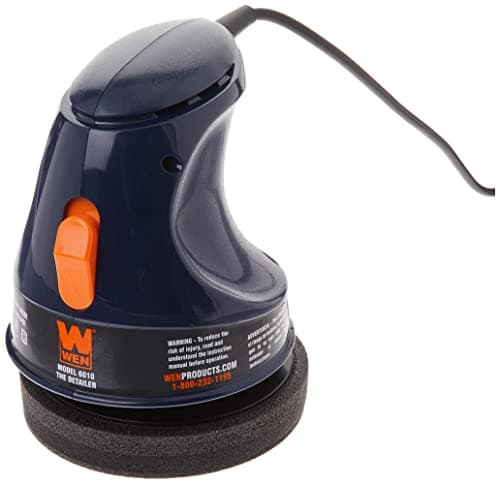
WEN WEN 6010 6-Inch Waxer/Polisher
WEN 6010 6-Inch Waxer/Polisher

The cheapest powered tool in car care that is still worth owning — a light 6-inch orbital waxer that costs about what a bottle of good sealant does and saves you an hour of hand-buffing.

The lowest-cost way to stop waxing by hand
7.5
$26.94Amazon
03
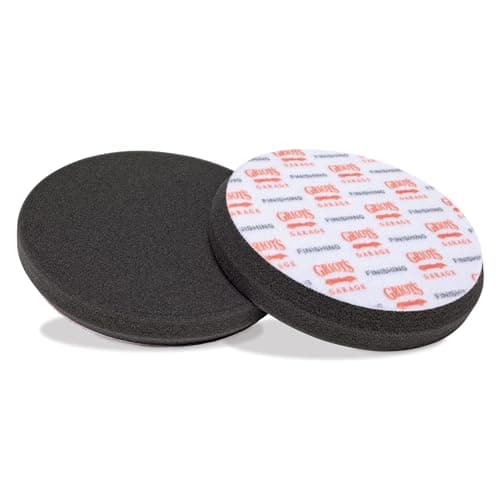
Griot's Garage Griot's Garage 5.5" Black Foam Finishing Pads
Griot's Garage 5.5" Black Foam Finishing Pads

The soft black foam that turns a compounded panel into a finished one — almost no cut, all gloss, and forgiving enough that it is very hard to leave a mark with it.

The last pass before wax or coating
8.6
$22.99Amazon
04
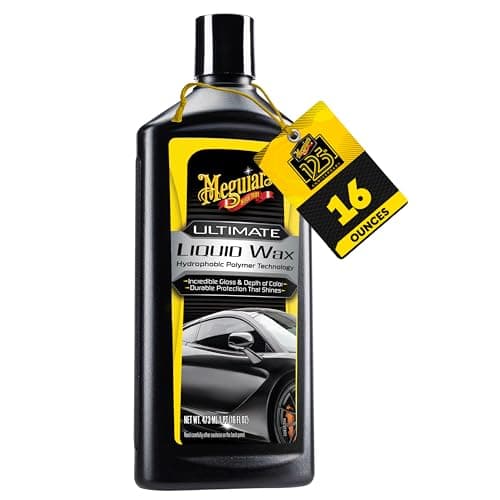
Meguiar's Meguiar's Ultimate Liquid Wax
Meguiar's Ultimate Liquid Wax

A synthetic polymer 'wax' that behaves like a sealant — longer-lasting protection than carnauba, easy application, and it can be applied in full sun, which most waxes hate.

Longer protection with wax-easy application
8.3
$29.99Amazon

#ad · Live prices from the Amazon Product API, as of October 17, 2026. Where we have no verified live price, we show none — we would rather leave a gap than print a number that has rotted.

In detail

The picks, in full

01
BLACK+DECKER BLACK+DECKER WP900 6-Inch Orbital Buffer/Polisher

Applying and buffing wax without any correction risk

BLACK+DECKER WP900 6-Inch Orbital Buffer/Polisher

6-inch orbital headCordedWool + foam bonnets includedWax application
7.5/10

The classic household orbital waxer: it applies and buffs off wax faster and more evenly than your arm can, and it is close to impossible to hurt paint with — but it corrects essentially nothing.

Ergonomics
8.4
Correction power
3.5
Beginner-safe
9.6
Value
8.4

Pros

  • Removes the arm-ache from waxing a whole car
  • So gentle that damaging paint with it takes real effort
  • Bonnets are cheap and widely stocked

Cons

  • Cannot remove swirls, oxidation or scratches
  • Bonnet-and-spindle design is nothing like a real DA backing plate

Don't buy this if…

…your paint has swirls you want gone — this spreads wax, it does not correct.

$71.99View on Amazon

Price as of October 17, 2026. Prices change — Amazon's is the one that counts.

#ad · we may earn a commission from this link to BLACK+DECKER WP900 6-Inch Orbital Buffer/Polisher

02
WEN WEN 6010 6-Inch Waxer/Polisher

The lowest-cost way to stop waxing by hand

WEN 6010 6-Inch Waxer/Polisher

6-inch orbital headCordedLightweightWax application only
7.5/10

The cheapest powered tool in car care that is still worth owning — a light 6-inch orbital waxer that costs about what a bottle of good sealant does and saves you an hour of hand-buffing.

Ergonomics
8
Correction power
3.2
Beginner-safe
9.6
Value
9.4

Pros

  • Cheaper than most of the products you would put on the pad
  • Light enough to hold over a whole roof without fatigue
  • Effectively zero risk of burning paint

Cons

  • No correction ability whatsoever
  • Basic bearings and housing — it is built to a price

Don't buy this if…

…you expected paint correction — this is a wax applicator with a motor, and nothing more.

$26.94View on Amazon

Price as of October 17, 2026. Prices change — Amazon's is the one that counts.

#ad · we may earn a commission from this link to WEN 6010 6-Inch Waxer/Polisher

03
Griot's Garage Griot's Garage 5.5" Black Foam Finishing Pads

The last pass before wax or coating

Griot's Garage 5.5" Black Foam Finishing Pads

5.5-inchBlack finishing foamFits 5-inch plateMachine washable
8.6/10

The soft black foam that turns a compounded panel into a finished one — almost no cut, all gloss, and forgiving enough that it is very hard to leave a mark with it.

Finish quality
9.2
Durability
8.4
Ease of use
8.8
Value
7.8

Pros

  • Soft enough to lay down gloss without hazing dark paint
  • Holds shape better than the cheap open-cell finishing foams
  • Sized to the same 5-inch plate most beginner DAs ship with

Cons

  • Removes essentially nothing — it is a finishing pad, not a corrector
  • Costs more per pad than the hex-faced budget options

Don't buy this if…

…you still have swirls to remove — you need a cutting pad first.

$22.99View on Amazon

Price as of October 17, 2026. Prices change — Amazon's is the one that counts.

#ad · we may earn a commission from this link to Griot's Garage 5.5" Black Foam Finishing Pads

04
Meguiar's Meguiar's Ultimate Liquid Wax

Longer protection with wax-easy application

Meguiar's Ultimate Liquid Wax

Synthetic polymerApply in full sunLonger durabilityLiquid
8.3/10

A synthetic polymer 'wax' that behaves like a sealant — longer-lasting protection than carnauba, easy application, and it can be applied in full sun, which most waxes hate.

Durability
8
Looks & warmth
7.8
Ease of use
8.8
Value
8.4

Pros

  • Outlasts carnauba while applying just as easily
  • Can be used in direct sun
  • Clean, high-gloss finish

Cons

  • Synthetic look is crisp rather than warm
  • Still short of a real ceramic coating's life

Don't buy this if…

…you specifically want the warm carnauba glow — a carnauba paste delivers that better.

$29.99View on Amazon

Price as of October 17, 2026. Prices change — Amazon's is the one that counts.

#ad · we may earn a commission from this link to Meguiar's Ultimate Liquid Wax

How we picked

We do not run a testing lab

We compiled published specifications, manufacturer data sheets and aggregated owner reviews, computed the cost of ownership from real sizes and coverage, then scored each product against a published rubric. The scores are judgments from documented research — they are not measurements we took, because we do not own a lab and we are not going to pretend we do. Where a number came from someone else, we name them and link them in Sources.

Questions

Frequently asked

Can you apply wax with a dual-action polisher?
Yes, and it is the better way to do it. Use the lowest speed on the dial, a soft finishing or foam applicator pad, no downward pressure, and four or five pea-sized drops of product per panel. The result is a thinner, more even film than hand application and it takes about half the time.
What speed should you wax a car at with a polisher?
The lowest the machine offers - speed one or two on a typical six-speed dial. There is no abrasive work happening, so speed adds nothing and costs you heat, product slinging and premature drying of the film.
What pad do you use to wax a car with a machine?
A soft black finishing pad, a dedicated foam applicator pad, or a wax bonnet. Never a cutting or polishing pad: the open foam absorbs product and can leave fine marring on dark paint. Keep one pad in a distinct color that only ever sees wax, because compound residue buried in foam never fully washes out.
Do you buff wax off with the machine too?
No - buff off by hand with a clean plush microfiber. Removal needs a dry, clean, constantly refreshed surface, which a single pad cannot provide. Test one six-inch square first: if the wax comes off clean, do the panel; if it smears, let it haze longer.
Can you use an orbital buffer to wax a car?
Yes. A 6-inch household orbital waxer with a foam or wool bonnet is purpose-built for exactly this and is close to impossible to damage paint with. It corrects nothing at all, which is fine if waxing is the only job you want it for.
Can you apply a ceramic coating with a polisher?
No. A coating is applied with a suede-wrapped applicator block in deliberate cross-hatch passes and levelled by hand inside a specific flash window. A machine spreads it unevenly and levels nothing, which leaves high spots that cure permanently in place.

Keep reading

Receipts

Sources

We do not run a testing lab, and we do not pretend to. Where a measured number came from someone else's lab, we name them and link them. Where we could not verify something, we say so on the page rather than quietly leaving it out. Read our full method.