Skip to content
Pad & Polish

HUB 06 · Paint Prep & Decontamination

How Often Should You Clay Bar Your Car?

There is no correct interval, because claying is mildly abrasive and contamination arrives at completely different rates depending on where a car lives and sleeps. There is a test instead.

By Stephen V.Updated How we research
#ad

We earn a commission when you buy through our Amazon links, at no extra cost to you. It never affects our rankings, and we say so when the cheaper product is the better buy. How this works.

Clay when the paint fails the baggie test, and not before. For most daily-driven cars that works out to once or twice a year, usually in spring and before any protection goes down — but the interval is an outcome, not a rule. A garaged weekend car in a dry climate can go several years between claying. A car parked under trees beside a rail line will fail the test in three months. The test takes twenty seconds and it is the only honest answer to this question.

The reason the answer is a test rather than a number is that claying costs you something. A clay bar works mechanically: it shears bonded contamination off the surface, and in doing so it leaves very fine marring behind, invisible on a light-colored car and quite visible on black. It also strips whatever protection was on the paint. Claying a clean car is not neutral maintenance — it is a small, pointless withdrawal from a finite account.

The baggie test

Wash and dry the car first, because the test does not work through road film. Then put your hand inside a thin sandwich bag, pull it taut, and run your fingertips lightly across a horizontal panel — the hood, the roof, the trunk lid.

The plastic amplifies texture your bare fingers cannot feel. If the panel is smooth under the bag, the paint is clean and claying it would be work for nothing. If you feel grit, roughness or a sandpapery drag, that is bonded contamination standing proud of the clear coat, and it is time to decontaminate. The whole test is in how to clay bar a car, along with the technique.

Test more than one panel. Contamination is not evenly distributed: horizontal surfaces collect fallout from above, the lower third of every panel gets road-level spray, and the area immediately behind each wheel takes the worst of it. A hood that passes and a rear quarter that fails is completely normal, and it means you clay the quarter.

What actually drives how fast paint contaminates

Where the car sleeps. The single biggest factor, and the one people underestimate. A garaged car is out of the fallout for twenty hours a day. A car parked outdoors under trees collects sap and pollen continuously, and tree sap bonds hard and fast.

Industrial and rail proximity. Airborne iron particles from brake dust, rail traffic and industry embed in clear coat and then rust in place. This is the source of the orange speckling on white cars, and it is the fastest-accumulating contaminant in most urban environments.

Highway miles. Motorway driving blasts the front end and lower panels with tar, bug remains and road film. A high-mileage commuter contaminates far faster than a low-mileage car in the same postcode.

How well the car is protected. A coated or freshly waxed car does not stop collecting contamination, but far less of it bonds, and much of what lands washes off with a normal maintenance wash. This is the quiet compounding benefit of protection: it reduces how often you need to perform the abrasive step. That is also why we rank protection durability the way we do in wax vs sealant vs coating.

Season. Spring brings pollen and the residue of a winter of road salt and grit. Autumn brings leaf fall and sap. Most people who clay twice a year end up doing it in spring and late autumn without planning to, because that is when the test fails.

The step that should usually come first

Reaching for clay is often the wrong first move, and this is the most useful thing on this page. Bonded contamination comes in two broad families and they want two different tools.

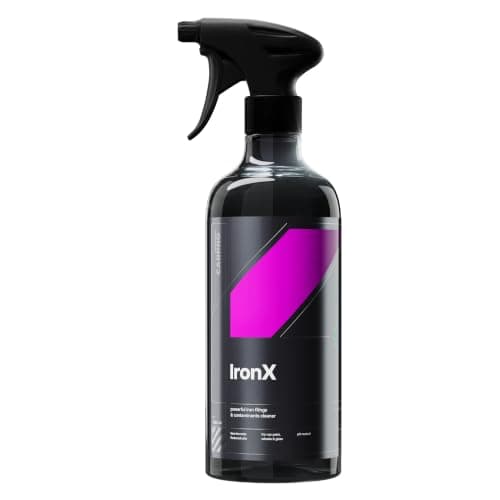
Embedded iron — brake dust and rail fallout — is dissolved chemically by an iron remover, which reacts with the metal particles and turns visibly purple as it works. Nothing touches the paint, so there is no marring at all. Everything else — tar, tree sap, overspray, industrial film, the general bonded crust a car picks up — needs the mechanical shear that clay provides.

The efficient order is chemical first, mechanical second: wash, iron remover, rinse, then re-run the baggie test. A surprising proportion of cars pass the second test, which means the iron was the whole problem and you have just skipped the abrasive step entirely. When the paint still fails, you clay — but you clay a surface with much less left on it, so one bar lasts longer and does less work. The full comparison is in iron remover vs clay bar.

Rough intervals, as outcomes rather than rules

How the car livesTypically fails the testNotes
Garaged, low mileage, dry climateEvery few yearsTest annually; expect to pass most years
Garaged daily driver, suburbanRoughly annuallyUsually spring, before protection goes down
Parked outdoors, commuter milesTwice a yearSpring and late autumn is the common pattern
Outdoors under trees, or near rail or industryEvery three to six monthsAn iron remover will often handle it without clay
Ceramic coatedRarely, while the coating livesClaying a coating abrades it — see below

Those are descriptions of what the test tends to find, not a schedule to follow. If your car is in the bottom row and the hood is smooth, do not clay it because the table says three months.

Three cases with their own answers

A ceramic-coated car. Clay is abrasive and a coating is a sacrificial layer, so claying a coated car wears the coating rather than the clear coat. Do not clay on a schedule here at all. If a coated car genuinely feels rough, that is usually a sign the coating is failing or that mineral deposits have built up, and the right response is the maintenance routine in how to maintain a ceramic coating, with decontamination reserved for when the coating is being replaced anyway.

Before polishing. Always, if the paint fails the test — and this is the one case where the answer is close to unconditional. Grit left on the surface gets picked up by the pad and dragged across the panel for the rest of the pass, which is how a correction session installs new scratches. The argument in full is in do you need to clay bar before polishing.

Before a coating install. Always, for a different reason: a coating bonds to whatever is on the surface, so bonded contamination gets permanently locked under a layer designed to last years.

How often to replace the clay itself

More often than most people do. A traditional bar is a consumable that collects everything it removes: knead it to a fresh face every panel or two, and when kneading no longer produces a clean surface, the bar is finished. Any bar that touches the ground is finished immediately, with no judgment call — it has picked up grit that will cut the next panel you touch.

A reusable clay mitt or towel is the other model: a rubber-polymer face you rinse clean rather than knead, which survives years of use and covers ground far faster than a bar. It needs constant lubrication and it is less able to deal with a heavy tar spot, and the same dropped-on-the-floor rule applies. The formats are compared in clay bar alternatives.

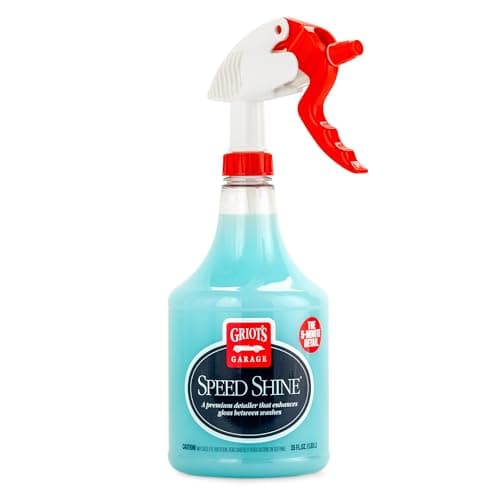
Whichever you use, lubrication is not optional. Clay dragged across dry paint marrs it badly — the panel must stay wet with a dedicated clay lubricant or a generous detail spray through the whole process, and the moment a section starts to go dry you stop and re-wet it. One of the picks below is on this page specifically because it doubles as a clay lubricant and a between-wash wipe-down.
The short answer

Quick picks

#ProductBest forScorePrice
01
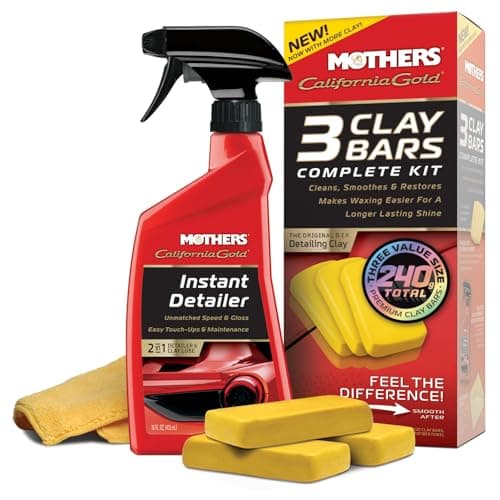
Mothers Mothers California Gold Clay Bar System
Mothers California Gold Clay Bar System

The lowest-cost way to learn claying: three mild bars plus detailer that safely pull bonded contamination off paint, and forgiving enough that a first-timer won't marr the finish.

A first clay job at the lowest cost of entry
8.4
$21.46Amazon
02
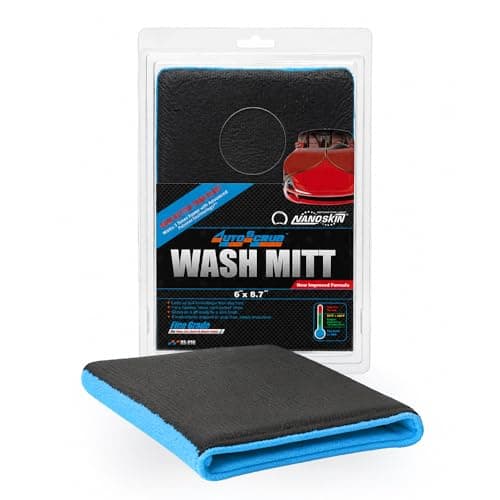
Nanoskin Nanoskin AutoScrub Clay Mitt (Fine)
Nanoskin AutoScrub Clay Mitt (Fine)

The reusable upgrade over a clay bar: a rubber-polymer mitt that decontaminates a whole car fast and survives being dropped, so it pays for itself over a few details.

Fast decontamination you reuse for years
8.2
$52.99Amazon
03
Griot's Garage Griot's Garage Speed Shine (35 oz)
Griot's Garage Speed Shine (35 oz)

The detail spray most people who own a clay bar already have: very slippery, safe on every exterior surface including trim and wheels, and the default clay lubricant in half the tutorials online.

Clay lubricant and a between-wash wipe-down, from one bottle
8.8
$14.99Amazon
04
CarPro CarPro IronX Iron Remover
CarPro IronX Iron Remover

The category benchmark: a pH-balanced iron remover that dissolves embedded brake-dust and fallout — it bleeds purple as it works — and is safe on paint and wheels when used as directed.

The reference iron remover for paint and wheels
7.8
$35.99Amazon

#ad · Live prices from the Amazon Product API, as of October 17, 2026. Where we have no verified live price, we show none — we would rather leave a gap than print a number that has rotted.

In detail

The picks, in full

01
Mothers Mothers California Gold Clay Bar System

A first clay job at the lowest cost of entry

Mothers California Gold Clay Bar System

Mild/fine clayThree 80 g barsIncludes detailerBeginner-safe
8.4/10

The lowest-cost way to learn claying: three mild bars plus detailer that safely pull bonded contamination off paint, and forgiving enough that a first-timer won't marr the finish.

Decontamination
7.6
Marring safety
8.8
Kit completeness
8.2
Value
8.8

Pros

  • Cheap, complete starter kit
  • Mild grade is forgiving on clear coat
  • Widely available

Cons

  • Mild bar is slow on heavy contamination
  • A dropped bar is scrap — though you get three

Don't buy this if…

…the paint is heavily contaminated — a medium clay or a clay mitt works faster.

$21.46View on Amazon

Price as of October 17, 2026. Prices change — Amazon's is the one that counts.

#ad · we may earn a commission from this link to Mothers California Gold Clay Bar System

02
Nanoskin Nanoskin AutoScrub Clay Mitt (Fine)

Fast decontamination you reuse for years

Nanoskin AutoScrub Clay Mitt (Fine)

Rubber-polymer mittReusableFine gradeFast coverage
8.2/10

The reusable upgrade over a clay bar: a rubber-polymer mitt that decontaminates a whole car fast and survives being dropped, so it pays for itself over a few details.

Decontamination
8.6
Marring safety
7.8
Kit completeness
7.6
Value
8.6

Pros

  • Covers a car far faster than a bar
  • Survives drops — rinse and keep going
  • Reusable for many details

Cons

  • Needs plenty of lube to stay marr-safe
  • Higher up-front cost than a bar

Don't buy this if…

…you only ever decon one car once — a cheap clay bar is enough for a single job.

$52.99View on Amazon

Price as of October 17, 2026. Prices change — Amazon's is the one that counts.

#ad · we may earn a commission from this link to Nanoskin AutoScrub Clay Mitt (Fine)

03
Griot's Garage Griot's Garage Speed Shine (35 oz)

Clay lubricant and a between-wash wipe-down, from one bottle

Griot's Garage Speed Shine (35 oz)

35 ozAll exterior surfacesClay lubricantTrim and wheel safe
8.8/10

The detail spray most people who own a clay bar already have: very slippery, safe on every exterior surface including trim and wheels, and the default clay lubricant in half the tutorials online.

Lubricity
9.2
Gloss added
8.4
Streak resistance
8.8
Value
8.8

Pros

  • Slippery enough to clay with safely, which not every quick detailer is
  • Safe on trim, glass and wheels as well as paint
  • Large bottle at a sensible price

Cons

  • Adds gloss but essentially no durable protection
  • Not the product for a genuinely dirty car

Don't buy this if…

…you want a spray that also protects — a ceramic spray does both jobs at once.

$14.99View on Amazon

$16.499% off

Price as of October 17, 2026. Prices change — Amazon's is the one that counts.

#ad · we may earn a commission from this link to Griot's Garage Speed Shine (35 oz)

04
CarPro CarPro IronX Iron Remover

The reference iron remover for paint and wheels

CarPro IronX Iron Remover

Iron dissolverColor-change reactionPaint-safe pHWheels + body
7.8/10

The category benchmark: a pH-balanced iron remover that dissolves embedded brake-dust and fallout — it bleeds purple as it works — and is safe on paint and wheels when used as directed.

Fallout strength
9
Usability
8
Smell
6.4
Value
7.8

Pros

  • Dissolves bonded iron that clay can't fully remove
  • Color change shows you where it's working
  • Trusted, well-documented formula

Cons

  • Strong sulfur smell during the reaction
  • Premium price per bottle

Don't buy this if…

…your paint is only lightly contaminated — a clay bar alone may be enough.

$35.99View on Amazon

$40.0010% off

Price as of October 17, 2026. Prices change — Amazon's is the one that counts.

#ad · we may earn a commission from this link to CarPro IronX Iron Remover

How we picked

We do not run a testing lab

We compiled published specifications, manufacturer data sheets and aggregated owner reviews, computed the cost of ownership from real sizes and coverage, then scored each product against a published rubric. The scores are judgments from documented research — they are not measurements we took, because we do not own a lab and we are not going to pretend we do. Where a number came from someone else, we name them and link them in Sources.

Questions

Frequently asked

How often should you clay bar your car?
When the paint fails the baggie test, which for most daily drivers works out to once or twice a year. Claying is mildly abrasive and strips protection, so doing it on a calendar rather than on evidence means doing unnecessary work on paint that was already clean.
Can you clay bar a car too often?
Yes. Clay removes bonded contamination by shearing it off, which leaves very fine marring behind - invisible on light colors, quite visible on black - and takes your wax or sealant with it. Over years, repeatedly claying clean paint means repeatedly polishing afterwards to clean up, and polishing is what actually consumes clear coat.
What is the baggie test?
Wash and dry the car, put your hand in a thin sandwich bag, pull it taut, and run your fingertips lightly over a horizontal panel. The plastic amplifies texture your bare fingers cannot detect. Smooth means the paint is clean; grit or a sandpapery drag means bonded contamination and time to decontaminate.
Should I use an iron remover before claying?
Usually, yes. An iron remover dissolves embedded brake dust and rail fallout chemically with nothing touching the paint, and a good proportion of cars pass the baggie test afterwards - meaning iron was the whole problem and you can skip the abrasive step. When clay is still needed, it has far less work to do.
How often should you replace a clay bar?
Knead a bar to a fresh face every panel or two, and retire it when kneading no longer gives you a clean surface. Any bar dropped on the ground is finished immediately - it has picked up grit that will scratch the next panel. A reusable clay mitt is rinsed rather than kneaded and lasts years, with the same dropped-on-the-floor rule.
Do you need to clay a ceramic coated car?
Not on a schedule, and ideally not at all while the coating is healthy. Clay is abrasive and the coating is the sacrificial layer, so claying wears the coating rather than the paint. Roughness on a coated car usually means mineral build-up or a coating starting to fail, and the maintenance routine addresses both.

Keep reading

Receipts

Sources

We do not run a testing lab, and we do not pretend to. Where a measured number came from someone else's lab, we name them and link them. Where we could not verify something, we say so on the page rather than quietly leaving it out. Read our full method.