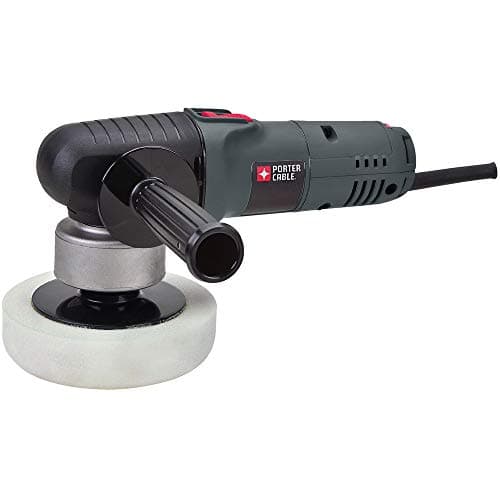
"Best for the money" is not the same question as "cheapest," and in this category the difference is expensive. A polisher that costs thirty dollars and cannot hold its orbit under working pressure removes nothing — you have not saved a hundred and fifty dollars, you have spent thirty on a vibrating paperweight and still have swirled paint. The genuinely economical purchase is the machine with the lowest price that still does the job you bought it for.
So that is how this page is ranked: correction per dollar. Each pick below is the best value at a different budget, and each entry says plainly what the money buys and what it does not. If your budget is genuinely fixed, read down to the tier you can afford and stop there; if it is flexible, read the gap between tiers, because the jump from a waxer to a real dual-action is the single largest step-change in results anywhere on this site.
The one spec that decides value
Every polisher in this price range advertises roughly the same things: a speed range, an orbit size, a wattage. Only one characteristic reliably separates a good-value machine from a bad one, and it is not on the box — how much motor is left when you lean into a panel. A dual-action polisher corrects because the pad keeps turning against the paint. A weak motor lets ordinary working pressure slow that rotation until it stops, and when the pad stops turning, correction stops with it. The owner concludes the compound is wrong or their technique is bad. Neither is true. The tool gave up.
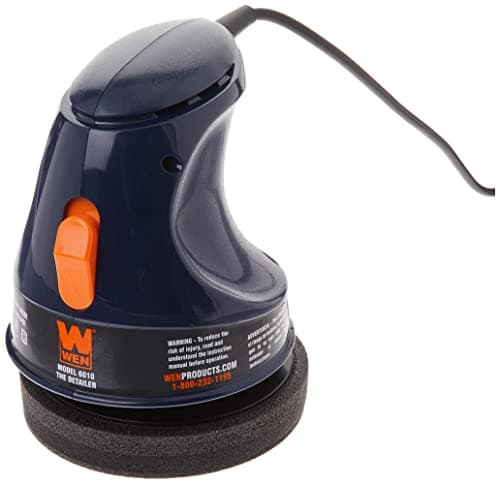
This is why the cheapest machines here are ranked where they are rather than at the top. A six-inch random orbital waxer at thirty dollars is superb value for applying and removing wax — genuinely the right tool, genuinely cheap. It is terrible value as a corrector, because it will not correct. The mechanism, and why a dual-action is the safe machine to learn on either way, is laid out in dual-action vs rotary polisher.
Budget the whole system, not the tool
The most common way to waste money in this category is to spend the entire budget on the machine. A polisher removes nothing by itself; the pad and the compound loaded onto it do all of the actual work. Buying a two-hundred-dollar tool and running it with whatever foam disc came free in the box produces a worse result than a hundred-dollar tool with pads chosen for a DA and a compound matched to your actual defects.
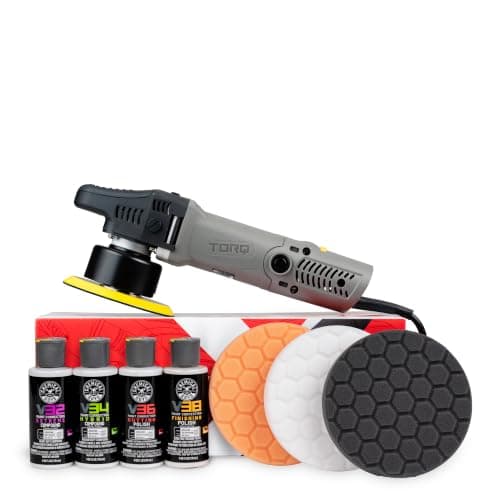
Plan on pads and compound costing something like a third of what the machine does. If that pushes you down a tier on the tool, take the tier down — the system with the cheaper motor and the right consumables outperforms the reverse every time. A kit that bundles pads and compound is often the honest answer for that reason, and it is why one sits second on this page.
When spending more is the cheaper decision
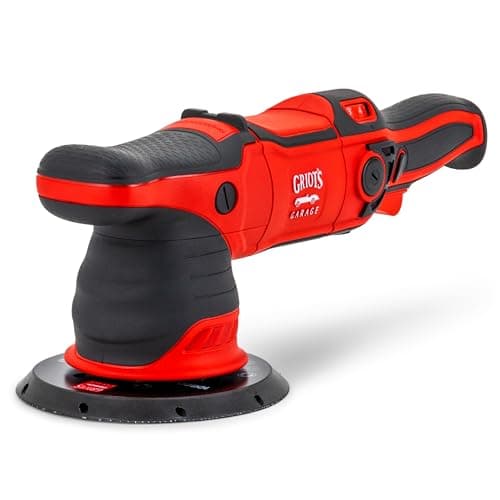
There is one situation where the expensive machine is the value pick: when you will keep it. A lifetime warranty and a motor that still holds speed after five years of use is cheaper per year than replacing a budget tool twice, and the price gap between the classic value DA and the premium one is smaller than most people expect once you account for that. If you already know you will be correcting cars for years rather than fixing one hood once, buy up. If you genuinely do not know yet, buy the classic, learn on it, and let the tool tell you whether you need more.
The five below are ordered by value, not by price, and the ranking changes if your goal changes — which is exactly why each entry ends with who should not buy it.
There is one cheaper option people reach for before any of these, and it is worth ruling out properly rather than by reputation: can you polish a car with a drill sets out which jobs a drill genuinely handles, and why clear coat is not one of them.
How to judge value in a polisher
Value in this category is a ratio, and both halves of it are easy to get wrong. The numerator is not "power" in the abstract, it is correction actually delivered on your paint; the denominator is not the sticker price, it is the total cost of the system you end up owning.
What the money is really buying
- Motor reserve under load — the difference between a machine that corrects and one that hums. This is the first thing cut to hit a low price point, and the last thing any spec sheet mentions.
- Orbit size — an 8 mm throw is the sweet spot for value: forgiving enough to learn on, large enough to clear ordinary swirls at a reasonable pace. Long throw buys speed on big flat panels, which only pays off if you are correcting whole cars.
- Warranty and parts — a lifetime warranty and a stocked backing-plate aftermarket turn a tool into a decade-long purchase. A no-name machine with neither is a consumable.
- What is in the box — a kit that includes pads and compound can be better value than a cheaper bare tool once you price the consumables you would have bought anyway.
The tiers, plainly
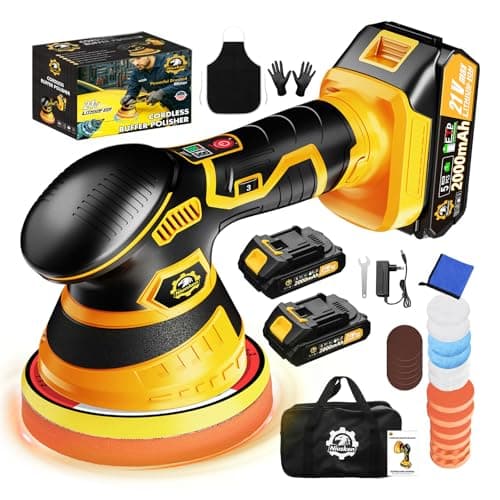
Under about forty dollars you are buying an orbital waxer. It applies and removes wax beautifully, saves your arms, and will not remove a swirl. Around a hundred dollars you reach the classic corded dual-action — the cheapest machine that genuinely corrects paint, and the tool a generation of tutorials was filmed on. Around a hundred and fifty to two hundred, you get more motor reserve, better ergonomics, and warranties worth reading. Past that you are buying long-throw speed and cordless convenience, both of which are real but neither of which is a value proposition for a first machine.
Cost per year, not cost
Work it out over the life of the tool rather than at the till. A hundred-dollar machine you replace in three years and a hundred-and-eighty-dollar machine with a lifetime warranty cost roughly the same over a decade — and the second one is more pleasant to hold for every hour in between. That arithmetic flips only if you are genuinely uncertain whether you will keep polishing, in which case buying the cheaper tool to find out is the rational move.
The mistake that wastes the most money
Buying the cheapest thing labeled "polisher," discovering it does not correct, and concluding that machine polishing does not work. That sequence costs people the thirty dollars and then the entire hobby. If your budget only reaches a waxer, buy the waxer deliberately — as a wax applicator — and save separately for a dual-action. Do not buy it expecting correction and be disappointed by physics. Walk through how to polish a car step by step before you decide, so you know what the machine is actually being asked to do.