Skip to content
Pad & Polish

HUB 06 · Paint Prep & Decontamination

Best Car Glass Cleaner

Glass is the last thing you clean and the first thing you notice from the driver's seat. Six cleaners ranked on the two things that matter: whether they can harm your tint, and whether they actually cut interior film.

By Stephen V.Updated How we research
#ad

We earn a commission when you buy through our Amazon links, at no extra cost to you. It never affects our rankings, and we say so when the cheaper product is the better buy. How this works.

Glass is the one surface on a car that gets judged from the inside. You can live with a swirl you have to crouch to see; you cannot stop noticing a smear across the windshield every time the sun comes in low. It is also the surface where a perfect job and a terrible job take exactly the same amount of time, and the difference comes down to a few decisions almost nobody makes deliberately.

The decision with real consequences is ammonia. Automotive glass is not a kitchen window: most cars have factory or aftermarket film on the side and rear glass, and that film is held on by an adhesive layer that ammonia degrades. The damage shows up as purpling, bubbling or edge lift, usually weeks after the cleaning that caused it, which is why the link so rarely gets made. Every product on this page is stated by its maker to be ammonia-free, and that is not a coincidence — it is the entry requirement.

The decision with no consequences at all, meanwhile, is which bottle you buy. Honest version: the gap between the best and worst cleaner here is much smaller than the gap between good and bad technique. So this page ranks the cleaners on tint safety, on how much interior film they actually cut, and on format — and then spends as much space on the two things that genuinely decide the result.

Why glass streaks, and why it is usually not the cleaner

Streaking is a residue problem with four common causes, in rough order of how often they are the real culprit.

The towel is contaminated. This is the big one. A microfiber towel that has ever touched wax, sealant, detail spray, tire dressing or fabric softener carries enough of it to smear glass permanently. Fabric softener is the quiet killer: it coats the fibers to make them feel soft, which is precisely the opposite of what a glass towel is for. Glass needs its own towels, washed without softener, and never used anywhere else.

There was more film than you thought. The inside of a windshield accumulates a haze of plasticizer outgassed from the dashboard, plus whatever got into the cabin from outside. One light pass redistributes it rather than removing it. The fix is a second pass, not a different bottle.

Too much product. Flooding the glass leaves more liquid than the towel can absorb, and the excess dries where you stopped wiping. Two or three light sprays per window, onto the towel as often as onto the glass, beats a soaked pane.

The glass was hot or in the sun. Cleaner that evaporates before you wipe it leaves its own residue behind. Glass is the one part of a detail that is genuinely easier in the shade.

Ammonia, tint and the one irreversible mistake

Household blue glass cleaner is cheap, effective on windows and the wrong product for a car. Many formulations contain ammonia, which does two things you do not want: it attacks the adhesive and dye layers in window film, and it dries out and discolors the rubber, vinyl and plastic it inevitably oversprays onto.

Tint damage is not reversible. Film that has purpled or started to lift at the edge gets replaced, not repaired, and that is a real bill per car. This is the reason to buy a product that says ammonia-free and tint safe in the maker's own words rather than trusting that a car-branded bottle must be fine. Several automotive cleaners are sold alongside household lines with similar names and different chemistry, so read the bottle rather than the brand.

One more, smaller point in the same family: dyes. A colored cleaner can leave a faint tinted line where product wicks into a window seal or the gap at the bottom of a door glass. It is cosmetic and it is avoidable, which is why a dye-free formula is a genuine, if minor, specification rather than marketing.

Liquid or foam — this is the real format choice

Liquid sprays are faster on vertical glass, use less product per window and wipe off with less towel work. They are the right default for door glass, mirrors and a quick exterior pass.

Clinging foams exist for one piece of glass: the inside of the windshield. A modern windshield is raked so far back that it is closer to horizontal than vertical, and a liquid sprayed onto it runs straight down into the defrost vents and the top of the dashboard. Foam stays where it lands, which buys the dwell time that a genuinely hazed windshield needs. It costs more towel work to clear, which is the trade.

A third category is worth naming: cleaners that leave a little protection behind. They are the sensible maintenance choice on glass that is already coated, because the weekly clean tops the protection up rather than wearing it down. They are the wrong choice immediately before you apply a real coating, for exactly the same reason — anything left behind is contamination for the product going on next.

How we ranked them

Tint safety — what the maker states, in writing, about ammonia and about film. This is the only criterion here with a permanent downside, so it carries the most weight, and every pick on the page clears the bar before it is ranked at all.

Film cutting — how well the product deals with interior haze rather than exterior dust, judged from the formulation class and what each maker says it is built for. Exterior glass is easy; the inside of a windshield is the test. We have run no controlled comparison and how we research sets out what our scores are built from.

Streak-free finish — how forgiving the product is of ordinary technique: how fast it flashes, how much residue it leaves if you slightly over-apply, how it behaves on a warm pane. The best cleaners here are the ones that tolerate a mediocre towel.

Value — cost per window over a year, not per bottle. Glass cleaner is a consumable you will buy repeatedly, and the bulk formats change the arithmetic substantially if you actually have somewhere to keep them.

The inside of the windshield is the whole job

If you only ever clean one piece of glass properly, make it this one. It is the pane you look through, it gets the worst of the dashboard outgassing, and it is the hardest to reach — the bottom two inches sit behind a dash that will not let your hand turn over.

The technique that works: get into the passenger seat rather than leaning across from the driver's side, so your arm is working with the rake of the glass instead of against it. Spray a clinging foam or spray a liquid onto a folded towel rather than onto the pane. Work in overlapping horizontal passes across the whole screen, then do a second pass with a dry towel in vertical passes. Using two directions is not superstition — it is how you can tell, afterwards, which pass left a streak.

For the bottom edge, a flat tool with a towel over it reaches where a hand cannot. A long reach tool sold for this job does the same thing. What does not work is pressing harder with a bunched towel, which puts product into the seal and leaves the corner smeared.

Where glass sits in the order of work

Glass is last. Not nearly last — last. Every step before it throws something onto the windows: wash water, dried-on soap, clay lubricant, compound dust, polish spatter, wax residue, coating overspray. Cleaning the glass first means cleaning it twice, and the second clean is harder because polish dust on glass is abrasive.

That makes it the mirror image of the wheels, which come first for exactly the same reason — best wheel cleaner covers why anything that runs downhill belongs at the start. In between sits the usual sequence: wash, decontaminate, dry, correct, protect, dress the tires, then the glass.

One exception worth knowing. If you are going to apply a glass coating, the glass gets cleaned, then polished or decontaminated, then panel-wiped, and only then coated — and no protective cleaner goes near it beforehand. The prep chemistry for that is the same chemistry used before a paint coating, covered in best panel wipe for ceramic coating.

What a glass cleaner cannot do

It cannot remove hard water spots that have etched the glass. A spot that survives a thorough clean is mineral deposit bonded to, or etched into, the silica — that needs an acidic water-spot remover or a glass polish with cerium oxide, which is a different job with a different product. The mechanism, and the same problem on paint, is in how to remove water spots from car paint.

It cannot remove bonded contamination either — overspray, tree sap, industrial fallout and the fine grit that makes glass feel rough to a fingertip. Glass takes clay far better than paint does, and claying the windshield is one of the most underrated improvements to wiper performance there is.

And it cannot make water bead. That is a hydrophobic coating, which is a separate product that goes on after the cleaning and genuinely changes how a car drives in rain — the options are in best windshield coating. A cleaner that claims water repellency is usually leaving a light residue to achieve it, which works for a few washes and is not the same thing.

The short answer

Quick picks

#ProductBest forScorePrice
01
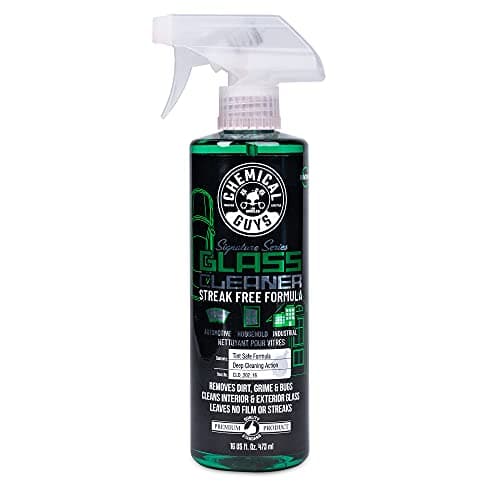
Chemical Guys Chemical Guys Signature Series Glass & Window Cleaner
Chemical Guys Signature Series Glass & Window Cleaner

The pick that gets the two things that matter in writing: Chemical Guys states it is ammonia-free and tint-safe, and it is formulated for the inside film — fingerprints, smoke haze and plasticizer fog — not just the outside of the glass.

Interior glass on a tinted car
9.0
$9.99Amazon
02
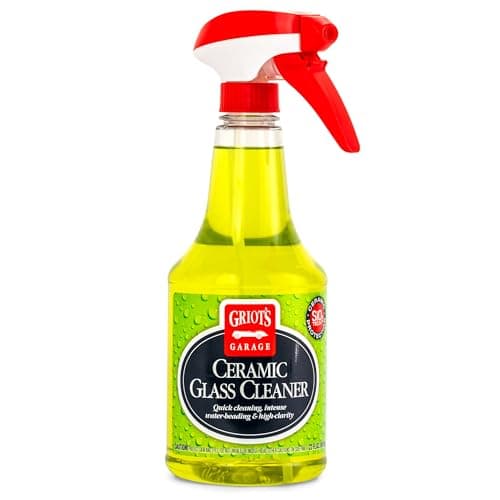
Griot's Garage Griot's Garage Ceramic Glass Cleaner
Griot's Garage Ceramic Glass Cleaner

The only pick here that Griot's describes as cleaning and protecting rather than just cleaning, which makes it the sensible maintenance spray for glass that already has a coating on it.

Maintaining already-coated glass
8.7
$9.99Amazon
03
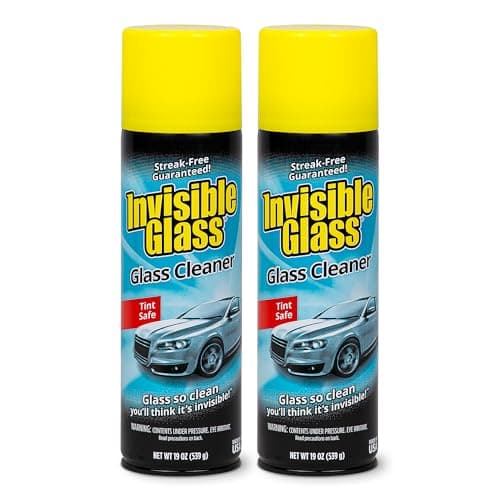
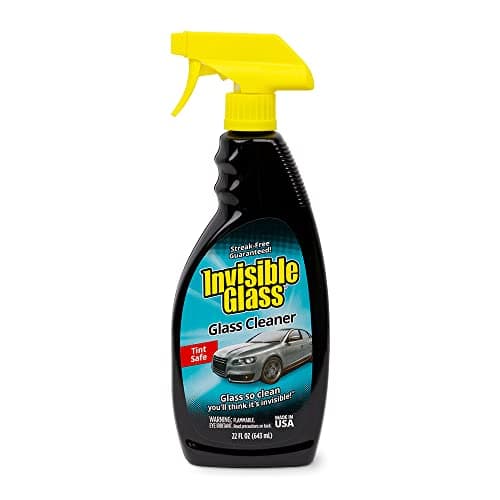
Invisible Glass Invisible Glass Auto Glass Cleaner Spray
Invisible Glass Auto Glass Cleaner Spray

The value answer that needs no apology: ammonia-free, tint-safe, 22 ounces, and priced like a household cleaner — which is why it is the bottle most detailers actually keep in the trunk.

The best result per dollar
9.0
$4.48Amazon
04
Invisible Glass Invisible Glass Auto Glass Cleaner Foaming Spray
Invisible Glass Auto Glass Cleaner Foaming Spray

The same ammonia-free, tint-safe formula as the liquid, thickened into a foam that clings — which is the specification that matters on the one piece of glass everybody hates, the inside of a steeply raked windshield.

The inside of the windshield
9.0
$10.36Amazon
05
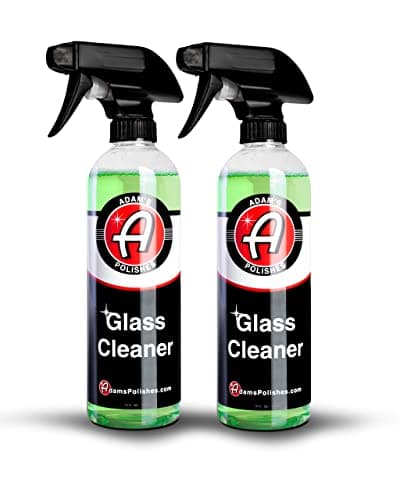
Adam's Polishes Adam's Glass Cleaner
Adam's Glass Cleaner

The pick for a freshly protected car: Adam's states it is safe on tinted and non-tinted glass and that it will not strip wax or paint protection, which is the overspray question nobody else in the category answers.

Cleaning glass on a waxed or coated car
8.5
$18.99Amazon
06
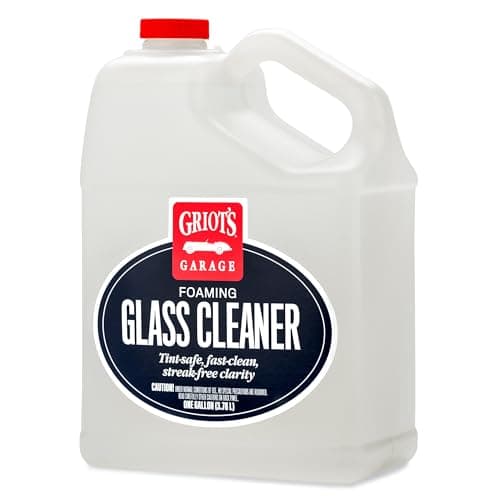
Griot's Garage Griot's Garage Foaming Glass Cleaner
Griot's Garage Foaming Glass Cleaner

The bulk pick, and the only one that is dye-free as well as ammonia-free — which matters if you have ever wondered why a blue cleaner leaves a faint blue line along a window seal.

Multiple cars, or a glass-cleaning habit
9.0
$39.99Amazon

#ad · Live prices from the Amazon Product API, as of October 30, 2026. Where we have no verified live price, we show none — we would rather leave a gap than print a number that has rotted.

In detail

The picks, in full

01
Chemical Guys Chemical Guys Signature Series Glass & Window Cleaner

Interior glass on a tinted car

Chemical Guys Signature Series Glass & Window Cleaner

16 oz sprayAmmonia-freeTint safeInterior and exterior glass
9.0/10

The pick that gets the two things that matter in writing: Chemical Guys states it is ammonia-free and tint-safe, and it is formulated for the inside film — fingerprints, smoke haze and plasticizer fog — not just the outside of the glass.

Streak-free finish
9
Tint safety
9.6
Film cutting
8.8
Value
8.4

Pros

  • Ammonia-free and tint-safe are both stated by the maker, so the one irreversible risk in this category is off the table
  • Chemical Guys specifically calls out fingerprints and smoke film, which is the interior haze most cleaners struggle with
  • Available in a gallon refill, so the bottle you like is not a dead end

Cons

  • A thin liquid rather than a foam, so it runs on a vertical side window if you over-spray
  • No water-repellent or protective component — it cleans and nothing else
  • Costs more per ounce than the mass-market picks below

Don't buy this if…

…you want the glass to bead water afterwards — this is a cleaner, and the sealing is a separate product.

$9.99View on Amazon

Price as of October 30, 2026. Prices change — Amazon's is the one that counts.

#ad · we may earn a commission from this link to Chemical Guys Signature Series Glass & Window Cleaner

02
Griot's Garage Griot's Garage Ceramic Glass Cleaner

Maintaining already-coated glass

Griot's Garage Ceramic Glass Cleaner

22 ozCleans and protectsStreak-freeCar and home glass
8.7/10

The only pick here that Griot's describes as cleaning and protecting rather than just cleaning, which makes it the sensible maintenance spray for glass that already has a coating on it.

Streak-free finish
8.8
Tint safety
8.8
Film cutting
8
Value
9

Pros

  • Griot's states it both cleans and protects, so routine cleaning is also topping up rather than stripping
  • 22 oz for the same money as a 16 oz boutique bottle
  • Works on house glass too, which matters more than it sounds when you are buying a second bottle

Cons

  • Griot's publishes no durability figure for the protective component, so treat it as a top-up rather than a coating
  • A protective residue is the opposite of what you want immediately before applying a real windshield coating
  • Not described as a heavy-film remover — it is a maintenance spray, not a first clean

Don't buy this if…

…you are about to coat the windshield — anything that leaves protection behind is contamination for the coating that follows.

$9.99View on Amazon

Price as of October 30, 2026. Prices change — Amazon's is the one that counts.

#ad · we may earn a commission from this link to Griot's Garage Ceramic Glass Cleaner

03
Invisible Glass Invisible Glass Auto Glass Cleaner Spray

The best result per dollar

Invisible Glass Auto Glass Cleaner Spray

22 fl ozAmmonia-freeTint safeControlled spray
9.0/10

The value answer that needs no apology: ammonia-free, tint-safe, 22 ounces, and priced like a household cleaner — which is why it is the bottle most detailers actually keep in the trunk.

Streak-free finish
8.8
Tint safety
9.2
Film cutting
8.2
Value
9.6

Pros

  • Ammonia-free and tint-safe at the lowest price on this page, which is a rare combination
  • The controlled spray pattern genuinely reduces overspray onto dash plastics and door cards
  • Stocked nearly everywhere, so replacing it mid-detail is never a problem

Cons

  • No protective or water-repellent component at all
  • The thin liquid runs on vertical glass faster than the foaming version of the same product
  • Heavy interior plasticizer film usually wants two passes rather than one

Don't buy this if…

…the inside of the windshield has years of haze on it — start with the foaming version, which stays put long enough to work.

$4.48View on Amazon

Price as of October 30, 2026. Prices change — Amazon's is the one that counts.

#ad · we may earn a commission from this link to Invisible Glass Auto Glass Cleaner Spray

04
Invisible Glass Invisible Glass Auto Glass Cleaner Foaming Spray

The inside of the windshield

Invisible Glass Auto Glass Cleaner Foaming Spray

19 oz, 2-packClinging foamAmmonia-freeTint safe
9.0/10

The same ammonia-free, tint-safe formula as the liquid, thickened into a foam that clings — which is the specification that matters on the one piece of glass everybody hates, the inside of a steeply raked windshield.

Streak-free finish
8.6
Tint safety
9.2
Film cutting
9.2
Value
8.8

Pros

  • Foam stays on near-horizontal interior glass instead of running down onto the dash
  • Clinging product means real dwell time, which is how baked-on interior film actually comes off
  • Sold as a two-pack, so the per-bottle price is close to the liquid

Cons

  • Foam needs more wiping to clear than a liquid, so you use more towel per window
  • Overkill for a quick exterior wipe-down, where the liquid is faster
  • An aerosol-style foam is harder to aim precisely in tight corners than a trigger spray

Don't buy this if…

…your glass only ever needs a light exterior wipe — the liquid does that faster and for less.

$10.36View on Amazon

Price as of October 30, 2026. Prices change — Amazon's is the one that counts.

#ad · we may earn a commission from this link to Invisible Glass Auto Glass Cleaner Foaming Spray

05
Adam's Polishes Adam's Glass Cleaner

Cleaning glass on a waxed or coated car

Adam's Glass Cleaner

2-packTint safeWon't strip protectionStreak-free
8.5/10

The pick for a freshly protected car: Adam's states it is safe on tinted and non-tinted glass and that it will not strip wax or paint protection, which is the overspray question nobody else in the category answers.

Streak-free finish
8.6
Tint safety
9.4
Film cutting
8
Value
8

Pros

  • Adam's commits in writing to not stripping wax or paint protection, which makes overspray onto a freshly waxed A-pillar a non-event
  • Rated safe on tinted and non-tinted glass alike
  • Two bottles means one for the garage and one for the car

Cons

  • A two-pack is the highest up-front spend on this page
  • No foaming claim, so it behaves like a liquid on vertical and raked glass
  • No water-repellent component, so beading is still a separate purchase

Don't buy this if…

…you want one bottle to try — the two-pack is the format, and the per-bottle saving only pays off if you use both.

$18.99View on Amazon

Price as of October 30, 2026. Prices change — Amazon's is the one that counts.

#ad · we may earn a commission from this link to Adam's Glass Cleaner

06
Griot's Garage Griot's Garage Foaming Glass Cleaner

Multiple cars, or a glass-cleaning habit

Griot's Garage Foaming Glass Cleaner

1 gallonDye-freeAmmonia-freeTint safe
9.0/10

The bulk pick, and the only one that is dye-free as well as ammonia-free — which matters if you have ever wondered why a blue cleaner leaves a faint blue line along a window seal.

Streak-free finish
8.8
Tint safety
9.2
Film cutting
8.8
Value
9

Pros

  • Dye-free as well as ammonia-free, so nothing colored can collect in seals and trim gaps
  • A gallon of foaming cleaner is a per-ounce price the spray bottles cannot approach
  • Griot's rates it tint safe and streak-free, same as its ready-to-use sizes

Cons

  • You need your own foaming trigger bottle — a gallon jug does not dispense foam on its own
  • The highest up-front cost on the page for someone cleaning one car
  • Bulk chemistry in a garage is a storage decision, not just a purchase

Don't buy this if…

…you clean one windshield a month — a 22 oz bottle will go off before you finish a gallon's worth of glass.

$39.99View on Amazon

Price as of October 30, 2026. Prices change — Amazon's is the one that counts.

#ad · we may earn a commission from this link to Griot's Garage Foaming Glass Cleaner

Getting glass genuinely clear

Buy glass towels and keep them separate

This is the single highest-value change anyone can make to their glass results, and it costs less than the cleaner. Dedicate two towels: a low-pile waffle-weave or flat-weave for the wet pass, and a second dry one for the buff. Never use them on paint, never use them on trim, and wash them without fabric softener. The reasoning behind towel grades is in best microfiber towels for detailing.

Two towels, two directions

Wet pass with the first towel, immediate dry buff with the second, and change direction between them — horizontal then vertical. The direction change is diagnostic: a streak that runs vertically came from the dry pass, a streak that runs horizontally came from the wet one. One towel doing both jobs just moves the residue around.

Spray the towel, not the glass, for interiors

Overspray onto a dashboard, a screen or a door card is how glass cleaner ends up drying out vinyl and fogging infotainment plastics. Three sprays onto the folded towel is plenty for a side window. Keep it off screens entirely — they have their own coatings and their own cleaner.

Do the glass in the shade, cool

Hot glass flashes cleaner off before the towel arrives, and the residue it leaves is the exact streak you were trying to avoid. Glass is also the one job that is easier at the end of the day, in the garage, with the doors shut against dust.

Roll the side glass down two inches

The top edge of a door glass sits inside the seal and collects a black line of grime that nobody ever cleans. Drop the window, clean the strip you just exposed, then raise it and do the rest. It is thirty extra seconds and it removes the mark that makes an otherwise clean window look dirty from the driver's seat.

Clay the exterior glass once a year

Run a fingertip across a clean windshield. If it feels gritty rather than slick, it is contaminated, and that grit is what makes wipers chatter and streak. Glass tolerates clay far better than paint does, so a light pass with lubricant and a fine-grade bar is low-risk and transforms wiper behavior — how to clay bar a car covers the technique and the lubricant rules.

Match the format to the pane

Liquid for door glass, mirrors and quick exterior passes. Clinging foam for the inside of the windshield and the rear screen, where a liquid runs. A protective cleaner for glass you have already coated. If you buy one bottle, buy a liquid; if you buy two, make the second a foam and keep it for the windshield.

Know when the cleaner is not the problem

Permanent-looking haze that returns within a day is almost always a towel issue or a wiper issue, not a cleaner issue. Spots that survive cleaning are etched minerals. Rainbow smearing at the edges of side glass is a tint adhesive problem and a sign to stop using whatever is causing it immediately. Buying a third bottle of cleaner solves none of those three.
How we picked

We do not run a testing lab

We compiled published specifications, manufacturer data sheets and aggregated owner reviews, computed the cost of ownership from real sizes and coverage, then scored each product against a published rubric. The scores are judgments from documented research — they are not measurements we took, because we do not own a lab and we are not going to pretend we do. Where a number came from someone else, we name them and link them in Sources.

Questions

Frequently asked

Can you use Windex on car windows?
Not on tinted glass. Many household glass cleaners contain ammonia, which degrades the adhesive and dye layers in window film and dries out the rubber and vinyl it oversprays onto. The damage - purpling, bubbling, edge lift - is not repairable, and it usually shows up weeks later so the cause gets missed. Use an automotive cleaner that states it is ammonia-free and tint safe.
Why does my windshield streak after cleaning?
Almost always the towel. A microfiber that has touched wax, sealant, detail spray or fabric softener carries enough residue to smear glass every time. After that, the usual causes are too much product, not enough passes on genuinely hazed interior glass, and cleaning in direct sun so the product flashes off before you wipe. The cleaner itself is rarely the culprit.
What is the best car glass cleaner for the inside of the windshield?
A clinging foam. A modern windshield is raked so far back that it is nearly horizontal from the inside, and a liquid sprayed onto it runs down into the defrost vents. Foam stays put and gives the dwell time that dashboard plasticizer haze needs. Work from the passenger seat rather than reaching across, and finish with a dry towel in the opposite direction.
Is ammonia-free glass cleaner better?
For a car, yes - and it is not really a performance question. Ammonia cuts grease well, but it attacks window film adhesive and dries out the plastics and rubber it oversprays. Modern ammonia-free automotive formulas clean interior film perfectly well without the one risk in the category that cannot be undone.
How do you remove water spots from car glass?
A glass cleaner will not touch them. Spots that survive a thorough clean are mineral deposits bonded to - or etched into - the silica, and they need either an acidic water-spot remover or a cerium-oxide glass polish. Try the chemical route first, since polishing glass is slow and unforgiving, and seal the glass afterwards so it stops happening.
When should you clean the glass in a detail?
Last, after everything else. Washing, claying, compounding, polishing, waxing and coating all throw residue onto the windows, so glass cleaned early simply gets cleaned twice - and the second time is harder because polish dust on glass is abrasive. The only exception is a glass coating, which needs its own clean-polish-panel-wipe sequence immediately before application.

Keep reading

Receipts

Sources

We do not run a testing lab, and we do not pretend to. Where a measured number came from someone else's lab, we name them and link them. Where we could not verify something, we say so on the page rather than quietly leaving it out. Read our full method.