Skip to content
Pad & Polish

HUB 03 · Compounds & Polishes

Meguiar's Ultimate Compound vs Ultimate Polish

Two bottles on the same shelf, in the same packaging, that do opposite jobs. One takes defects out of the clear coat. The other makes an already-corrected panel look deeper.

By Stephen V.Updated How we research
#ad

We earn a commission when you buy through our Amazon links, at no extra cost to you. It never affects our rankings, and we say so when the cheaper product is the better buy. How this works.

Buy Ultimate Compound. If you are standing in the aisle with both bottles and one budget, the compound is the one that changes how your car looks, because it is the only one of the two that removes anything. Ultimate Polish is for the person whose paint is already defect-free and who wants more depth out of a dark color before wax goes on — a real job, but the second job. Buy the compound now, and buy the polish later if a corrected black panel still looks flatter than you expected.

The confusion is Meguiar's own doing, and it is entirely understandable. Both products sit in the consumer Ultimate line, in near-identical bottles, at near-identical prices, a few inches apart on the same shelf. Nothing on either label tells you that one is an abrasive corrective product and the other is effectively a finishing cream. People buy Ultimate Polish expecting a milder swirl remover, spend an afternoon on a hood, and conclude that machine polishing does not work.

What each bottle actually does

Ultimate Compound is an abrasive. Meguiar's lists it as clear-coat safe and usable by hand or machine, in a 15.2 oz bottle, with no fillers. "No fillers" is the specification that matters most and gets read least: it means the product contains nothing that temporarily hides a scratch it did not remove. What you see after the wipe-off is the real condition of the paint. It carries enough cut for the swirl marks and light oxidation a daily-driven car accumulates, and it refines down glossy enough that plenty of people stop there. The bottle gets a longer look in our Ultimate Compound review.

Ultimate Polish is a 16 oz fine finishing polish, specified for hand or DA use, with the instruction to apply it before wax or sealant. Its cut is so low that over-correcting with it is close to impossible. It is also close to impossible to fix a scratch with it. What it adds is optical: on black, dark gray and dark metallic paint, a compounded panel can look clean but slightly dry, and a pass of a fine polish puts the wetness back. On silver and white, the difference is often invisible.

That is the whole decision. One bottle levels clear coat. The other refines the surface you have already leveled. The reason both exist is that doing those two jobs with one product always costs you something at one end or the other — which is the trade-off every one-bottle compound is quietly making.

Side by side, from the listings

Ultimate CompoundUltimate Polish
Product typeAbrasive compoundFine finishing polish
Bottle size15.2 oz16 oz
Removes swirls?Yes — moderate swirls and light oxidationEssentially no
FillersNone — what you see is the real paintNone, but there is nothing to hide either
ApplicationHand or machineHand or DA
Pad to pair it withCutting or polishing foam, or microfiberSoft finishing foam
Where it sits in the jobAfter decontamination, before protectionAfter compounding, before wax or sealant
Buy it ifThe paint has visible defectsThe paint is clean and the color looks flat

The test that tells you which one you need

Wash the car, dry it, and look at a horizontal panel in direct sun or under a handheld inspection light. If you can see fine circular scratching, a spiderweb pattern around the reflection of the light, or a dull chalky cast, those are defects and you need the compound. If the panel is genuinely clean and the complaint is that the color looks shallow or grayish-flat rather than deep, that is a gloss problem and the polish is the right answer.

There is a middle case worth naming, because it sends people to the wrong bottle more than any other. Paint that has been compounded recently, by hand or with a cutting pad, often carries very fine haze left by the abrasive itself. That haze looks like a gloss problem and is technically a defect. A fine polish is exactly the right fix for it, which is the one situation where the polish removes something. It is also why the two-step order runs in the direction it does: compound, then polish, never the reverse. The longer version of that argument is in polish or compound first.

Do you need both?

Most people genuinely do not. Ultimate Compound finishes clean enough that a single pass followed by wax looks good on the great majority of daily drivers, especially in lighter colors. The honest case for owning both is narrower than the shelf suggests, and it comes down to three situations.

Dark paint. Black, dark gray and dark blue show everything, including the very faint micro-marring a compound leaves behind. A polish pass is the difference between "clean" and "wet", and on those colors it is visible from across a parking lot. This is the same reasoning behind the pick set in the black-paint compound rankings.

Hard clear coat. On a hard, ceramic-reinforced clear you will often need a more aggressive pad to get the compound to bite, and a more aggressive pad leaves more haze. The polish step stops being optional. Whether your paint is in that category is a testable question, covered in hard paint vs soft paint.

Before a coating. A ceramic coating locks in whatever it is applied over, including haze. If a coating is going on afterwards, the finishing step pays for itself permanently rather than for a few months — the full sequence is in how to polish a car before a ceramic coating.

Outside those three, buying both bottles mostly buys you another two hours of work per car. There is no shame at all in compounding, waxing and going inside.

Where this pairing stops being enough

Ultimate Compound has a ceiling, and you will find it on neglected single-stage paint, on deep scratches that catch a fingernail, and on sanding marks. It is a consumer compound tuned to be forgiving, which is the same thing as saying it is tuned not to cut hard. When you hit that ceiling the answer is not more passes with the same bottle — it is a genuine cutting compound, and then a genuine finishing polish to clean up after it. That is the professional M-line pairing, and the comparison is in Ultimate Compound vs M105.

Going the other direction, if the whole appeal of a single bottle is that it is a single bottle, there is a third category neither of these products belongs to: one-steps that cut and finish in the same pass. They compromise at both ends by design. The last two picks below exist precisely so you can see what each compromise costs — a professional finishing polish with more refinement and no cut at all, and a one-step that trades some of both for a single pass.

The short answer

Quick picks

#ProductBest forScorePrice
01
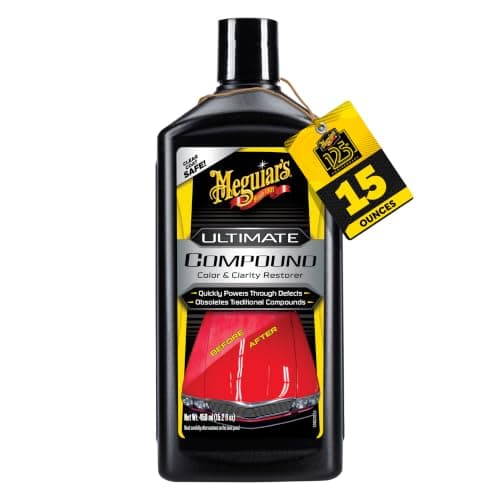
Meguiar's Meguiar's Ultimate Compound
Meguiar's Ultimate Compound

The compound to start with: clear-coat safe, works by hand or machine, and removes moderate swirls and oxidation while leaving a finish glossy enough that many people skip a follow-up polish.

Most swirl and oxidation removal, by hand or machine
8.6
$13.97Amazon
02
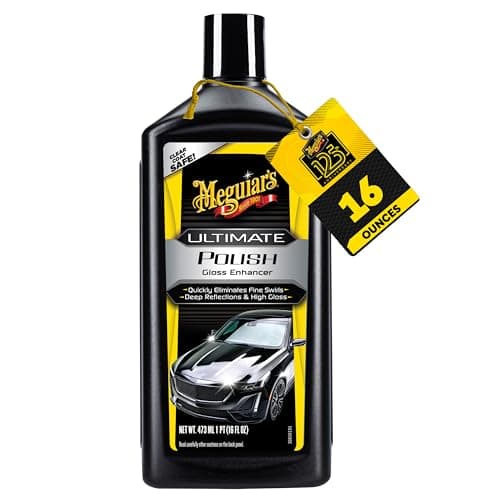
Meguiar's Meguiar's Ultimate Polish
Meguiar's Ultimate Polish

The gloss step, not a correction step: an extremely fine polish that darkens and deepens paint after compounding, which is exactly what black and dark-metallic finishes need before wax goes on.

The gloss pass after compounding, especially on dark paint
7.7
$9.67Amazon
03
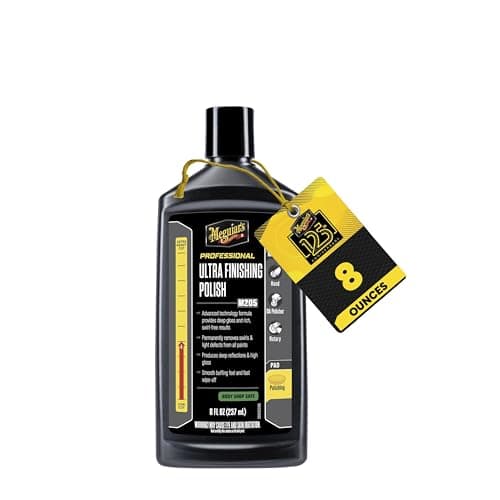
Meguiar's Meguiar's Professional M205 Ultra Finishing Polish
Meguiar's Professional M205 Ultra Finishing Polish

The professional finishing polish the whole hobby benchmarks against: it removes the haze a cutting compound leaves and finishes clear, with no fillers hiding what is still underneath.

The gloss pass after a cutting compound
8.1
$13.99Amazon
04
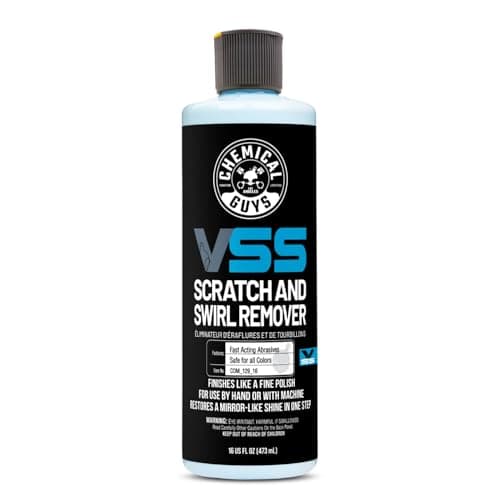
Chemical Guys Chemical Guys VSS One-Step Scratch & Swirl Remover
Chemical Guys VSS One-Step Scratch & Swirl Remover

A true one-step: it cuts light-to-moderate defects and then finishes with enough gloss to skip a separate polish, which is exactly what most weekend correction jobs need.

A one-and-done light correction step
8.0
$21.97Amazon

#ad · Live prices from the Amazon Product API, as of October 17, 2026. Where we have no verified live price, we show none — we would rather leave a gap than print a number that has rotted.

In detail

The picks, in full

01
Meguiar's Meguiar's Ultimate Compound

Most swirl and oxidation removal, by hand or machine

Meguiar's Ultimate Compound

Clear-coat safeHand or machineNo fillers15.2 oz
8.6/10

The compound to start with: clear-coat safe, works by hand or machine, and removes moderate swirls and oxidation while leaving a finish glossy enough that many people skip a follow-up polish.

Cutting power
7.6
Finishing ability
8.6
Ease of use
9
Value
9

Pros

  • Genuinely clear-coat safe and beginner-forgiving
  • Corrects moderate defects yet finishes down glossy
  • Works by hand when you don't have a machine

Cons

  • Not aggressive enough for deep scratches or heavy oxidation
  • Best results still need a machine

Don't buy this if…

…your paint has heavy sanding marks or severe oxidation — step up to a dedicated cutting compound.

$13.97View on Amazon

Price as of October 17, 2026. Prices change — Amazon's is the one that counts.

#ad · we may earn a commission from this link to Meguiar's Ultimate Compound

02
Meguiar's Meguiar's Ultimate Polish

The gloss pass after compounding, especially on dark paint

Meguiar's Ultimate Polish

16 ozFine finishing polishHand or DAUse before wax or sealant
7.7/10

The gloss step, not a correction step: an extremely fine polish that darkens and deepens paint after compounding, which is exactly what black and dark-metallic finishes need before wax goes on.

Cutting power
3
Finish quality
9.2
Ease of use
9.2
Value
9.2

Pros

  • Adds visible depth to dark paint that compound alone leaves flat
  • Almost impossible to over-correct with — very low cut
  • One of the cheapest bottles in the whole category

Cons

  • Removes essentially no defects on its own
  • Adds a whole extra step to an already long job

Don't buy this if…

…your paint still has swirls — compound first, then come back to this.

$9.67View on Amazon

$12.9926% off

Price as of October 17, 2026. Prices change — Amazon's is the one that counts.

#ad · we may earn a commission from this link to Meguiar's Ultimate Polish

03
Meguiar's Meguiar's Professional M205 Ultra Finishing Polish

The gloss pass after a cutting compound

Meguiar's Professional M205 Ultra Finishing Polish

8 ozUltra-finishing polishBody-shop safePairs with M105
8.1/10

The professional finishing polish the whole hobby benchmarks against: it removes the haze a cutting compound leaves and finishes clear, with no fillers hiding what is still underneath.

Gloss
9.4
Cut
5.4
Ease of use
8.6
Value
8.8

Pros

  • Body-shop safe formula leaves nothing behind to mask defects
  • Long working time, so a panel does not dry out mid-pass
  • The other half of the most-documented two-step in detailing

Cons

  • Almost no cut — it will not remove swirls on its own
  • Professional-line packaging with no applicator included

Don't buy this if…

…you want one bottle that both corrects and finishes.

$13.99View on Amazon

$16.0013% off

Price as of October 17, 2026. Prices change — Amazon's is the one that counts.

#ad · we may earn a commission from this link to Meguiar's Professional M205 Ultra Finishing Polish

04
Chemical Guys Chemical Guys VSS One-Step Scratch & Swirl Remover

A one-and-done light correction step

Chemical Guys VSS One-Step Scratch & Swirl Remover

One-step cut + finishMachine friendlyBody-shop safeLight–moderate cut
8.0/10

A true one-step: it cuts light-to-moderate defects and then finishes with enough gloss to skip a separate polish, which is exactly what most weekend correction jobs need.

Cutting power
7.4
Finishing ability
8.2
Ease of use
8.4
Value
8

Pros

  • Cuts and finishes in a single product and pass
  • Refines to a glossy finish, not a hazy one
  • Good on daily-driver defect levels

Cons

  • Not enough bite for heavy oxidation
  • One-steps compromise vs a dedicated cut + polish

Don't buy this if…

…the paint is badly neglected — a two-step compound-then-polish will look far better.

$21.97View on Amazon

Price as of October 17, 2026. Prices change — Amazon's is the one that counts.

#ad · we may earn a commission from this link to Chemical Guys VSS One-Step Scratch & Swirl Remover

Using them properly

Pad choice does more than product choice

The same bottle of Ultimate Compound behaves like three different products on a cutting foam pad, a polishing foam pad and a microfiber cutting pad. If a compound seems not to be working, change the pad before you change the bottle — polishing vs finishing pads covers which rung does what. Ultimate Polish wants the softest pad you own; putting a fine polish on a cutting pad gives you the haze of the pad with none of the correction.

Work small, and work the product out

Two-foot squares, four to six slow overlapping passes, moderate pressure, and keep going until the product goes from opaque to nearly clear. Both of these bottles are diminishing-abrasive formulas: the abrasives break down as you work them, and stopping early leaves you with the cut of the product and none of the refinement. This is the most common technique error with either bottle.

Wipe off with a clean towel, then inspect

Because neither product contains fillers, the panel you inspect after wipe-off is the truth. Inspect every section before you move on, under a light, from two angles. Finding a missed area after the wax is on costs you the wax.

Protect afterwards, always

Compounding strips whatever protection was on the paint and leaves bare clear coat. Ultimate Polish explicitly expects a wax or sealant to follow it. Neither bottle protects anything, and a freshly corrected car left unwaxed is the most vulnerable it will ever be — see do you wax after polishing.

A note on hand application

Both are rated for hand use and both genuinely work by hand, with the usual caveat: by hand you can correct a scratch, not a car. Expect to spend an afternoon on a hood and a trunk lid, and expect the result to be real. If a whole car is the goal, the machine is not a luxury — how to polish a car by hand sets out what hand work can and cannot reach.
How we picked

We do not run a testing lab

We compiled published specifications, manufacturer data sheets and aggregated owner reviews, computed the cost of ownership from real sizes and coverage, then scored each product against a published rubric. The scores are judgments from documented research — they are not measurements we took, because we do not own a lab and we are not going to pretend we do. Where a number came from someone else, we name them and link them in Sources.

Questions

Frequently asked

Is Meguiar's Ultimate Polish the same as Ultimate Compound?
No. Ultimate Compound is an abrasive product that removes swirl marks and light oxidation from the clear coat. Ultimate Polish is a fine finishing polish with almost no cut, used after compounding to add gloss and depth before wax. Same product line, opposite jobs.
Which should I use first, Ultimate Compound or Ultimate Polish?
Compound first, polish second, always. The compound levels the defects and can leave very fine haze behind; the polish refines that haze and deepens the color. Running them in the other order means polishing a panel you are about to abrade again.
Do I need Ultimate Polish if I use Ultimate Compound?
Usually not. Ultimate Compound finishes glossy enough on most daily drivers in lighter colors that wax can go straight on. The polish earns its place on dark paint, on hard clear coat where you needed an aggressive pad, and before a ceramic coating, which locks in whatever it covers.
Will Ultimate Polish remove swirl marks?
No, and expecting it to is the most common mistake with this bottle. Its abrasives are too fine to level a scratch. It will remove the faint haze a compound or a cutting pad leaves behind, which is a different and much shallower problem.
Can I use either one by hand?
Both are rated for hand application and both work by hand. The limit is coverage, not capability: by hand you can realistically correct a panel or two in an afternoon, not a whole car. For a full car a dual-action polisher does the same work in a fraction of the time.
Is Ultimate Compound safe on clear coat?
Yes. Meguiar's specifies it as clear-coat safe, and it is tuned to be forgiving rather than fast. The real risk with any abrasive is repeated correction over years rather than one careful pass, which is why it is worth knowing how much film you have before you start.

Keep reading

Receipts

Sources

We do not run a testing lab, and we do not pretend to. Where a measured number came from someone else's lab, we name them and link them. Where we could not verify something, we say so on the page rather than quietly leaving it out. Read our full method.