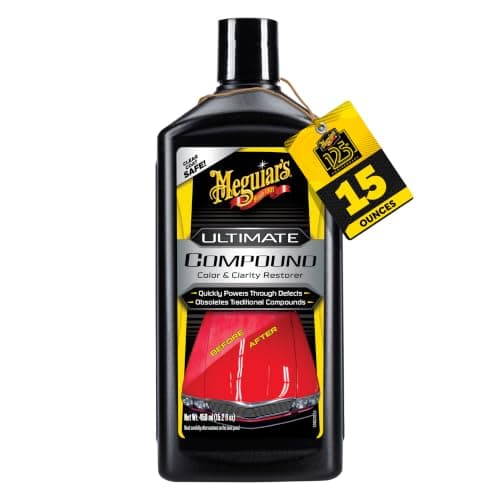
Black paint is not harder to correct than any other color. It is harder to finish, and the distinction explains almost everything about why dark cars look worse than light ones parked next to each other. Clear coat is clear on every car, and the same swirl mark exists on the silver hatchback beside you — but silver scatters light in a way that hides it, and black reflects like a mirror and shows you every single defect the moment the sun comes out. The whole-car version of that problem, from the wash through to protection, is in how to detail a black car.
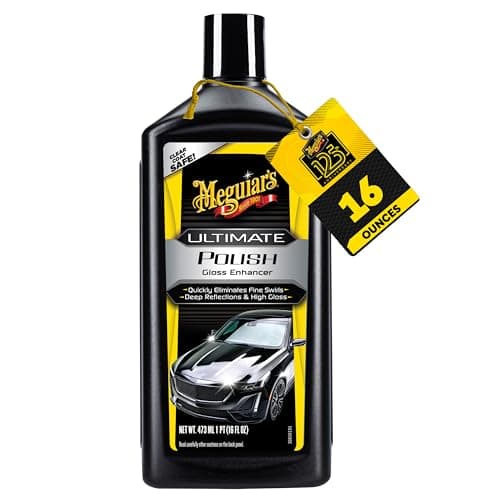
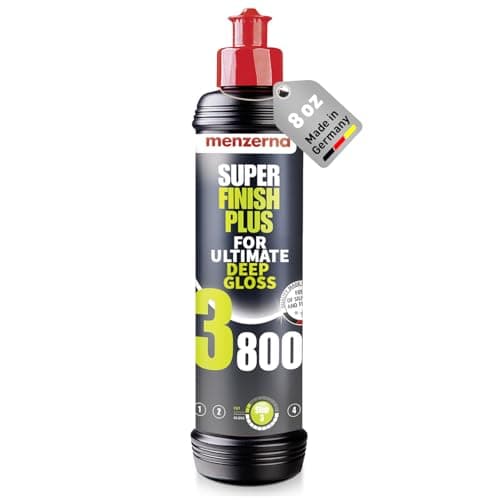
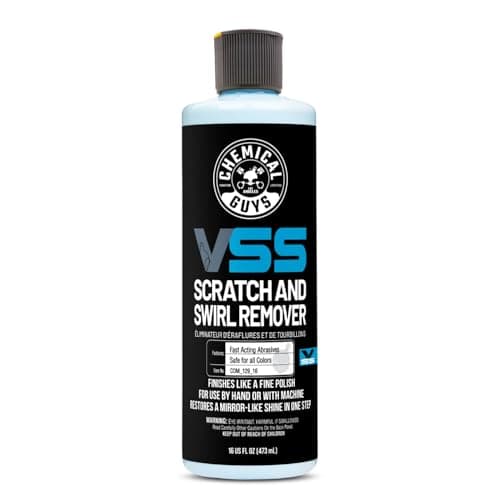
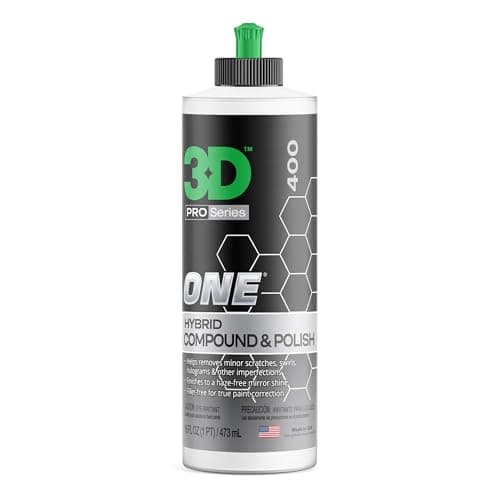
The practical consequence is that the ranking criteria change. On a light-colored car you can get away with an aggressive compound and a mediocre finishing pass, because nobody will ever see the difference. On black, the haze that compound left is as visible as the swirls you removed, so a compound that cuts hard and finishes badly has moved the problem rather than solved it. That is why this list is ordered by finishing quality rather than by cut level, and why two of the five picks are polishes rather than compounds at all.
The three defects black actually shows
Swirl marks are fine circular scratches from washing and drying, and they show as a spiderweb halo around any bright light. They are shallow and come out easily; they are simply impossible to ignore on dark paint.
Holograms — sometimes called buffer trails — are the fine, directional marring a rotary polisher leaves behind, and they appear as a shimmering three-dimensional pattern in direct sun. They are the specific reason a finishing polish exists, and they are close to invisible on white paint and glaring on black.
Micro-marring is the light haze an aggressive pad-and-compound combination leaves. Fine, uniform, and only visible when the light hits right — which on black is constantly.
The two-step order for dark paint
Correct first, then refine. Use the mildest compound that removes the defect on a test panel, then follow with a genuine finishing polish on a soft pad. On black, skipping the second step is where the disappointment happens: the swirls are gone, the paint looks flat and slightly gray, and you cannot work out why. That flatness is micro-marring, and the finishing polish is what removes it.
Then inspect properly. Compounds contain oils that temporarily fill and hide exactly the defects you are checking for, so wipe the panel with a diluted isopropyl alcohol solution or a panel-prep spray before you decide you are finished. On black this step is not optional — it is the difference between a correction and a temporary illusion of one.
Glaze is a finish, not a fix
Products marketed specifically for dark paint are frequently glazes: they fill fine marring with oils and polymers so the surface looks flawless immediately, without removing anything. There is nothing dishonest about using one — a glaze under a sealant genuinely makes an imperfect black car look superb, and not everyone wants to spend a weekend correcting. Just know which you are buying. A glaze's effect washes away over a few weeks; correction is permanent. We cover the dark-paint protection layer in best car wax for black cars.
Pair whichever product you choose with a soft pad for the finishing pass — the pairing matters as much as the bottle, and the range is in our DA pad roundup.
How to correct black paint without making it worse
Wash and decontaminate first, carefully
Every particle of grit still on the paint when the pad touches it becomes a new scratch, and on black you will see every one. Two-bucket wash, a clean mitt, then a chemical decontamination and a clay stage before any machine work. Our decontamination guide explains why this is not an optional preamble.
Use less aggressive everything
The instinct on black is to go harder because the defects look worse. Do the opposite. The defects are the same depth as on any other car — they are just visible. Start with a polishing pad and a one-step product, evaluate honestly, and only escalate if it failed.
Light matters more than technique
You cannot correct what you cannot see, and ordinary garage lighting hides almost everything on dark paint. A single bright point source held at a low angle — a proper inspection light, or failing that direct sunlight — is what reveals swirls, holograms and marring. Working under diffuse overhead light on a black car essentially guarantees you will find your mistakes outdoors the next day.
Wipe with a plush towel, always
A cheap, thin microfiber towel with a stitched border will put fine scratches straight back into paint you just spent hours refining. On black, use plush, edgeless towels for every wipe-down, and turn to a clean face constantly. The picks are in our microfiber towel roundup.
Protect it, then maintain it properly
A corrected black car stays corrected only if the washing routine stops adding swirls. That means no automatic car washes with brushes, no drying with whatever towel is nearest and a wash technique that keeps grit off the mitt. Protection helps too: a slick sealant or coating reduces how much the mitt drags. See our black-paint coating picks for the durable end of that.
The common mistake
Correcting black paint with an aggressive compound, admiring it while it is still wet with polishing oils, waxing it immediately, then discovering the following weekend — when the oils wash off — that the swirls are back and there is now haze as well. Do the alcohol wipe-down before you protect. It is a two-minute step that tells you the truth.