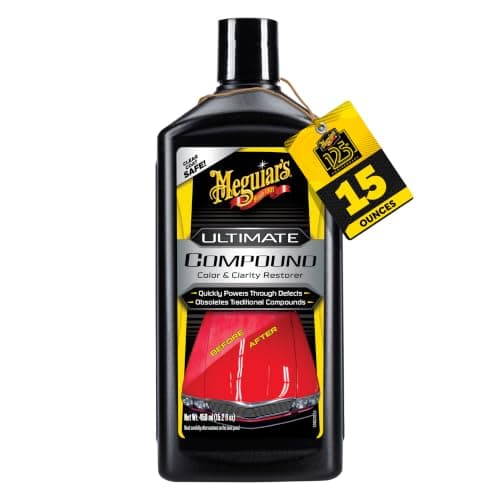
If you asked a hundred people who have corrected paint at home what was in the first bottle they bought, Meguiar's Ultimate Compound would win by a distance. It is cheap, it is stocked in every auto-parts store, it works by hand or by machine, and — the part that matters — it is genuinely good, not merely popular. This page is about where its limits actually are, because the honest answer to "is it enough?" is "for most cars, yes, and here is exactly when it is not." It is also not the same bottle as Meguiar's Ultimate Polish, which is its own question — see Ultimate Compound vs Ultimate Polish.
The usual disclosure first: we have not run this against a paint depth gauge, because we do not operate a lab. What follows comes from Meguiar's published product data, the mechanical behavior of the abrasive technology it uses, and the consistent patterns in aggregated owner reporting. Our method is documented on how we research.
What diminishing abrasives actually do
Ultimate Compound is built on Meguiar's micro-abrasive technology, which is a diminishing-abrasive system: the particles start coarse enough to remove material quickly, then fracture into progressively finer ones as the pad works over them. By the end of a set of passes the same product is effectively polishing rather than cutting.
That single property explains most of what people like about it. It is why one bottle can both remove swirls and leave a surface that looks finished, why it is unusually forgiving of technique compared with a fixed-abrasive compound, and why it is safe to hand a beginner. It also explains the most common way people get poor results with it: stopping too early. If you wipe the residue off after three passes you get the coarse half of the formula and none of the refinement, which reads as "it left the paint hazy" when the product simply had not finished.
What it removes, and what it will not
It handles the defects most daily drivers actually have: wash-induced swirl marks, light to moderate oxidation, water spot etching that has not gone deep, and shallow scratches you cannot catch a fingernail in. On a car that has been through a few automatic washes and lost its gloss, this is very often the whole answer.
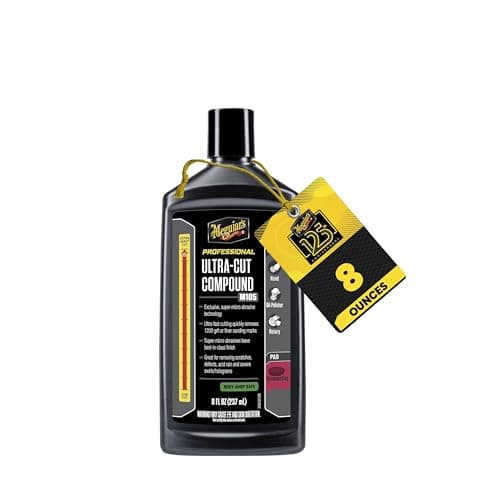
Where it stops is heavy, neglected damage. Severe oxidation on single-stage paint, sanding marks, and deep scratches need a dedicated heavy cutting compound and, usually, a follow-up polish. Trying to get there with Ultimate Compound means many more passes, more heat, and a worse result than the right product would have given in one. That is the case for the second pick on this page.
By hand versus by machine
Meguiar's rates it for both, and both genuinely work — but the gap is large. By hand you can clear a scratch on a door, brighten a faded panel, and fix a specific spot. Across a whole car, hand pressure cannot deliver the consistent speed and contact a machine does, and you will be there all afternoon for a result a dual-action gives you in twenty minutes. If you own a machine, use it; the roundups in our beginner polisher picks cover the entry point.
The pad changes the answer
Cut level is the product and the pad multiplied together, and Ultimate Compound is unusually responsive to that. On a firm cutting pad it behaves like a moderate compound and clears more than its reputation suggests. On a soft finishing pad it behaves almost like a polish and mostly adds gloss. One bottle plus two pads covers a genuinely wide range, which is a large part of why it is such good value — see our pad picks for the range.
Where the marketing gets ahead of the product
It is sold as a scratch remover, and that phrase does a lot of work in the consumer aisle. It removes scratches that live within the clear coat by leveling the surface around them. It cannot remove a scratch that has gone through the clear coat, and no compound can, because there is nothing left to level. The fingernail test settles it in two seconds: if your nail catches, this bottle is not the fix, and neither is any other on the shelf.
The verdict
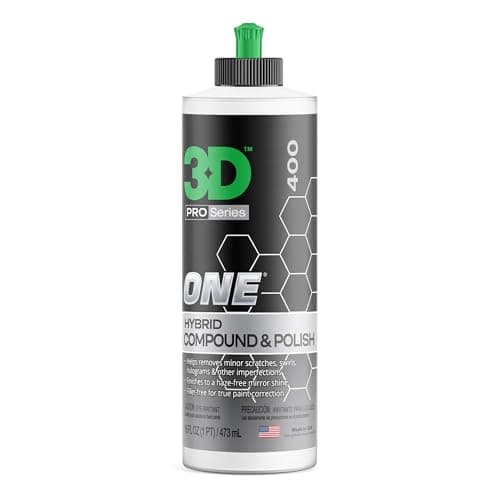
Ultimate Compound remains the correct default recommendation, and the reason is value rather than peak performance. It removes what most cars actually have, finishes well enough that many owners never need a separate polish, works by hand or machine, and costs less than almost anything it competes with. Buy the heavy cutter instead if your paint is genuinely neglected, and buy a one-step if you want cut and finish balanced in a single product with less dependence on working time. For everyone else, this is still the bottle. The wider field is in our rubbing compound roundup.
The comparison people actually want to make next is against the professional line, where M105 cuts harder and finishes worse and expects a second bottle behind it. Ultimate Compound vs M105 puts the two side by side on cut, working time, finish and who each one is for.