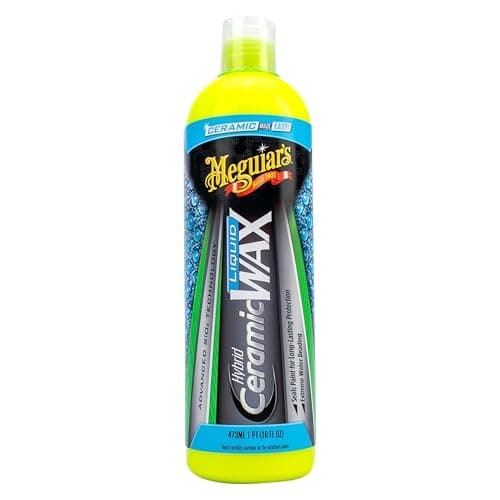
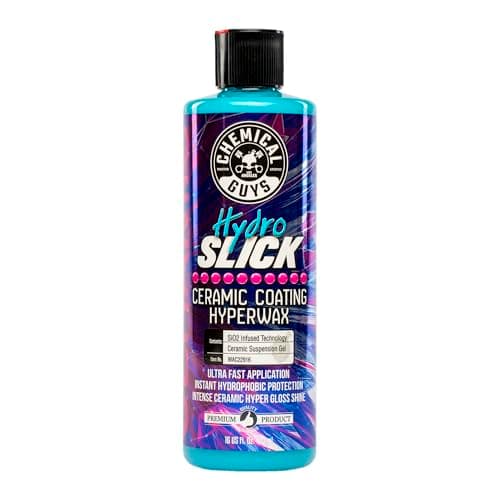
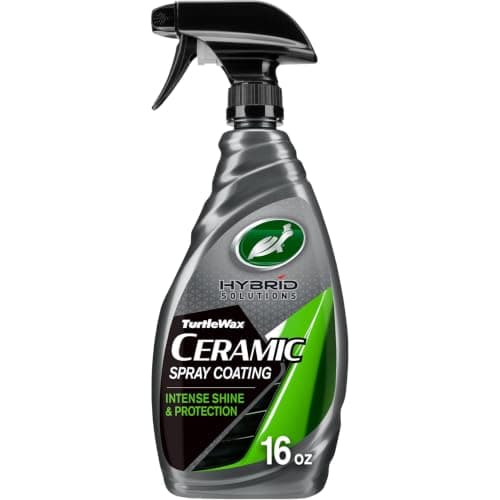
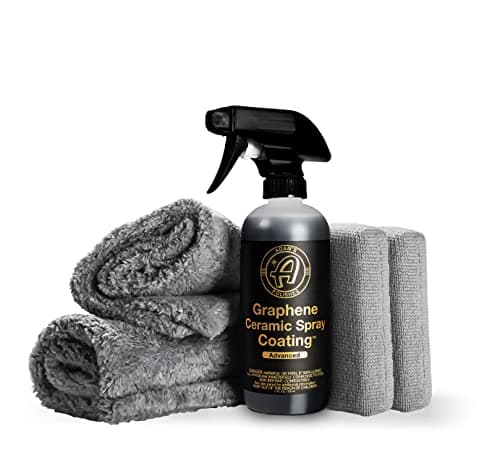
Yes, you can — and in almost every case you should not. Wax will not harm a cured ceramic coating, but it does not bond to it either; it sits on top as a sacrificial film, wears off in a few weeks, and while it is there it mutes the tight beading and fast sheeting the coating was bought for. If what you actually want is to refresh a coated car, use a ceramic spray instead. Adam's Advanced Graphene Ceramic Spray is the strongest of them, and Meguiar's Hybrid Ceramic is the one you can apply to a wet car in the driveway with essentially no technique.
This is the mirror image of a question the site answers elsewhere — applying a coating over an existing wax, which genuinely does fail, because the coating cannot bond through the wax. That one matters; can you apply a ceramic coating over wax covers it. Wax over coating is the harmless-but-pointless direction.
What actually happens when you wax a coated car
A cured coating is a hard, low-energy surface. Carnauba and most sealants are designed to bond to clear coat, not to cured silica, so the layer you apply has very little to grip. Three things follow.
It does not last. A wax that would give you three months on bare paint gives you weeks on a coating, because the bond is weaker and the surface is slicker.
It changes the water behavior. This is the one people notice. Coatings produce tight, high-contact-angle beads that run off a panel; a carnauba film on top flattens those beads into larger, lazier ones. The protection underneath is unchanged. The thing you were looking at every time it rained is not.
It adds nothing measurable. The coating is already the harder, more chemically resistant layer. A wax over it is not stacking protection; it is putting a softer film in front of a tougher one.
What to use instead
| What you want | Use | Why |
|---|
| Restore beading on an aging coating | A graphene or SiO2 spray | Same chemistry family — it reinforces rather than covers |
| Zero-effort top-up after a wash | An apply-on-wet-paint ceramic spray | Spray the wet car, rinse, done |
| More slickness to the touch | An SiO2 paste or hyperwax | Drops surface friction without a carnauba film |
| Cheap maintenance between real top-ups | A budget ceramic spray | Inexpensive enough to use after every wash |
| Actually more protection | Another coating layer, after a proper strip | Only bonding chemistry adds durability |
The one case where waxing a coated car is reasonable
When the coating is at the end of its life and you are not ready to re-coat. A coating that has stopped beading has not vanished — it has degraded, and the paint underneath is now only lightly protected. A wax or a sealant at that point is genuine, useful protection buying you time until you can strip and re-coat properly. The tell is simple: if water still beads tightly, leave it alone; if water sheets flat and the surface feels grabby rather than slick, protection is thin and anything is better than nothing.
The other defensible case is a show-day gloss layer you intend to be temporary. A carnauba film does add a warm depth some people prefer on dark paint, and it washes off. If that is what you are after, it is a cosmetic choice rather than a mistake — just know it is coming at the cost of the beading until it wears away.
How to tell your coating is still working
Before changing anything, run the two checks that tell you where you actually stand. Wash the car and look at the beads: tight, tall and quick to run means the coating is fine. Then run a clean hand across a dry panel — a working coating feels slick and uniform, and a failing one feels dry and slightly textured. If both checks pass, the only honest reason to add anything is that you enjoy doing it. The full maintenance routine is in how to maintain a ceramic coating, and how long you should expect yours to last is in how long does a ceramic coating last.
Topping up a coated car without undoing it
Match the chemistry, not the shelf
An SiO2 or graphene spray shares chemistry with the coating underneath, which is why it reinforces the surface instead of masking it. A carnauba does not. That single distinction decides nearly every product question on a coated car.
Wash matters more than topping up
Most "my coating stopped working" cases are a coating buried under road film and hard-water minerals rather than a coating that has failed. A pH-neutral wash and a decon step restore more beading than any topper will, which is the order of operations in best car wash soap for detailing.
Avoid waxes and polishes with cleaners in them
Cleaner waxes and all-in-one polishes contain mild abrasives, and abrasives on a coating remove the coating. That is a different and worse outcome than a harmless carnauba film, and it is the one genuinely damaging thing on the shelf here.
If you do wax it, use the softest option
A pure, non-abrasive paste or a spray wax, applied by hand with a soft applicator. Nothing with a cut, nothing applied by machine with a cutting pad. The wax field itself is ranked in best car wax if this is the route you want.
Re-coating beats layering
When the coating is genuinely done, strip it and apply a fresh one rather than building layers of topper on a dead base. Stripping is a real job, and it is laid out in how to remove a ceramic coating.