Search for the best professional ceramic coating and you run into a wall almost immediately: the products professional installers actually use are not for sale. Gtechniq Crystal Serum Ultra goes only to Gtechniq-accredited detailers. CarPro’s CQuartz Professional and Finest Reserve go only to its licensed installers. Opti-Coat Pro goes only to Optimum’s authorized network, and Gyeon keeps its Infinite line behind its certified-detailer program. You cannot put any of them in a cart.
What you can buy is the retail version each of those companies sells alongside the installer product — same lab, same chemistry family, tuned to be survivable in a driveway. That is what this page ranks: the professional-grade coatings that are genuinely purchasable, from brands whose main business is the professional line. If what you actually want is someone else to do the job, the shape of a professional quote is worked out in how much a ceramic coating costs; if you want the broadest DIY field including sprays, that is best ceramic coating for cars. This page assumes you have decided to apply a real coating yourself and want the most professional product that will let you.
How we ranked them
Five criteria, in this order:
- Professional lineage. Every pick here is either the retail sibling of an installer-only coating or comes from a brand whose primary market is professional detailers. A coating from a company with no professional line was not considered, with one deliberate exception at the bottom of the list.
- Rated durability, as the maker publishes it.We use the manufacturer’s own figure and quote it as a claim, not a fact. Where a maker publishes a range, we use the range. Where the figure is inconsistent across the maker’s own channels — Optimum is the example — we say so.
- The wipe-off window. This is where professional coatings punish amateurs. A coating that flashes in seconds is fine on a lift, under lights, with a second set of hands; in a garage on a Saturday it is how high spots happen. We weight a longer or more readable window heavily.
- What a mistake costs. Some of these can be machine-polished off if you get a high spot; the installer-only versions often cannot, which is precisely why they are installer-only. A coating that gives you a second chance ranks higher.
- Cost per protected year. Bottle price divided by the rated life, per car. Prices on this page are live and date-stamped, so we describe cost in brackets in the prose and let the cards carry the number.
Why the real pro coatings are locked up
The reason is not marketing. Gtechniq says outright that Crystal Serum Ultra, applied incorrectly, can only be wet-sanded off the finish, and that is why it releases the product only to detailers it has trained. CarPro keeps CQuartz Professional and Finest Reserve to licensed installers, and Optimum keeps Opti-Coat Pro to its authorized network, on the same logic: a harder, denser layer is a bigger problem to remove. A professional coating’s defining property — that it is very hard to take off — is the exact property that makes it unsafe to sell to someone who might need to take it off.
The retail versions are engineered around that risk. Gtechniq positions Crystal Serum Light at roughly 80% of Ultra’s performance and notes that, unlike Ultra, it can be machine-polished off if applied badly. Gyeon describes Mohs EVO as designed for users who want a long-lasting coating that is easy to apply. CarPro calls UK 3.0 its highest-performing consumer-grade coating and reformulated it to apply across a wide temperature range. The trade is real but small: a slightly shorter rated life and a slightly softer cured layer, in exchange for a product you can recover from.
The six at a glance
| Pick | Installer-only sibling | Maker’s durability claim | Bottle |
|---|
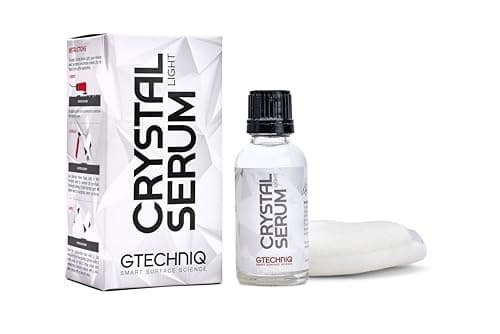
| Gtechniq Crystal Serum Light | Crystal Serum Ultra (accredited detailers only) | 3–5 years | 30 mL (50 mL also sold) |
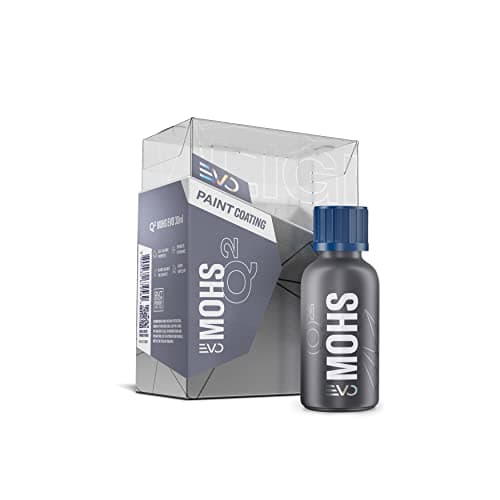
| Gyeon Q2 Mohs EVO | Q2 Infinite line (certified detailers only) | Up to 36 months / 1 layer; 48 / 2 layers | 30 mL (15–25 mL per car) |
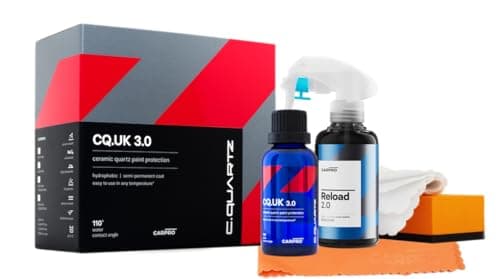
| CarPro CQuartz UK 3.0 | CQuartz Professional / Finest Reserve (licensed installers) | 18–24 months (CarPro’s stated real-world figure) | 50 mL kit with Reload |
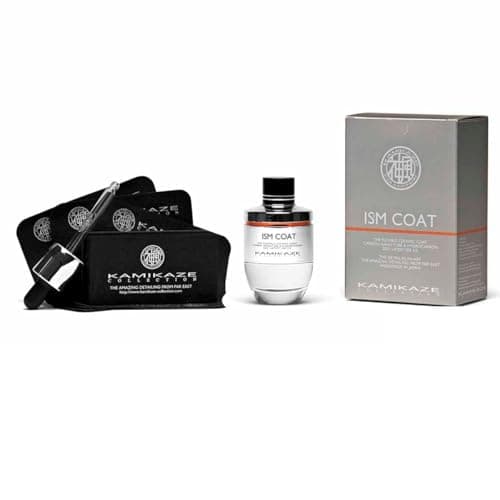
| Kamikaze Collection ISM Coat 3.0 | None — a professional-studio brand sold retail | Typically 24–36 months | 30 mL |
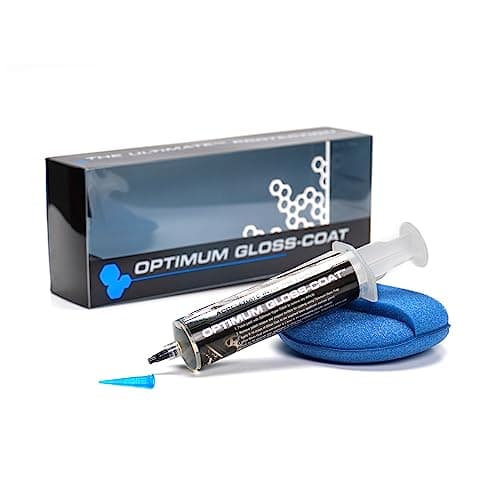
| Optimum Gloss-Coat | Opti-Coat Pro (authorized installers only) | 3 years on the current listing; 2 in older copy | 20 cc, two vehicles |
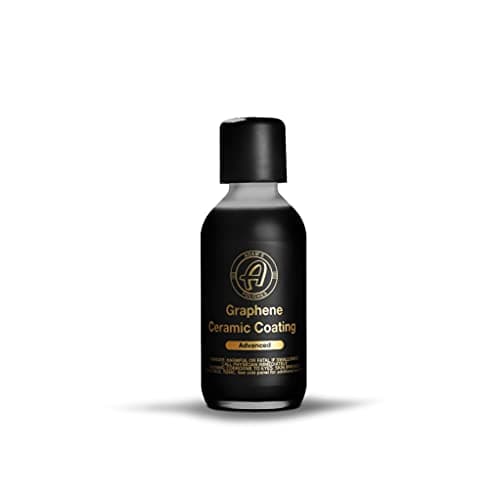
| Adam’s Advanced Graphene Ceramic Coating | None — a consumer brand | Multi-year (Adam’s) | Kit with applicators |
Read the durability column carefully, because it is the most honest thing on the page. CarPro’s 18–24 months is the lowestnumber here and, on CarPro’s own wording, the most conservative — it calls it a real-world figure rather than a ceiling. Gtechniq’s 3–5 years and Adam’s multi-year claim are upper bounds under good conditions. The rule we set out in how long a ceramic coating lasts applies to every row: prep, parking and wash habits move the real number far more than the brand does.
Why Crystal Serum Light wins
Because it is the only product here that its own maker describes in terms of the installer product — about 80% of Ultra’s performance — and backs that with the longest standalone claim on the page. It is not the easiest coating to apply; the wipe-off window is short and retailer instructions talk in seconds to a minute or two per section, which is why ease of application is its lowest score. But it gives you the one thing Ultra does not, which is a way back: a high spot can be machine-polished out. For a DIYer who has coated a car before and wants the most professional result they can legitimately buy, that combination is the answer. Gtechniq also pitches EXO as a topcoat over it; that is optional, and it is a second bottle.
Gyeon’s Mohs EVO is the pick if the wipe-off window worries you more than the headline years do. Gyeon’s instruction is unusually readable — wipe as soon as the coating starts to sweat — and its published consumption of 15–25 mL per car means the 30 mL bottle is a whole car with margin, not a gamble. CQuartz UK 3.0 stays on this list at third for the reason it has stayed on every coating list we publish: an application temperature range CarPro quotes as 3–40°C, which no other maker here publishes at all, a conservative durability claim, and a 50 mL kit that includes its Reload topper. The full case, including who should skip it, is in the CQuartz UK 3.0 review.
The two outliers, and why they are here
Kamikaze ISM 3.0 has no installer-only sibling because Kamikaze is a professional studio brand in its entirety — it is sold retail in the US through a high-end detailing shop, and its price reflects that. It ranks fourth rather than higher because its durability claim is the middle of the pack and its price is the top of it; it is on the page because it comes from a brand whose entire market is professional studios, and because Kamikaze went out of its way in the 3.0 revision to make the wipe-off forgiving. It is a gloss purchase, not a years-per-dollar purchase.
Adam’s Advanced Graphene is the deliberate exception to the professional-lineage rule. It is here because it is the coating we would still point a first-timer to — the longest wipe-off window of any real coating we rank, sold as a complete kit — and because anyone reading a page about professional coatings deserves to see what they are giving up by choosing one. If every line above sounds like more risk than you want, the Adam’s review is where to go next, and nothing about that choice is a compromise on the result.
How to choose a professional-grade coating
Decide whether you want professional chemistry or a professional result
They are not the same purchase. The result — a car that beads, sheds dirt and holds gloss for years — comes overwhelmingly from the preparation, and that is true for every product on this page. A professional-grade coating applied over swirled, uncorrected paint seals the swirls under a layer that is harder to remove than any consumer product. If you have not machine-polished a car before, do that first; how to polish a car before a ceramic coating is the sequence, and the coating is the last fifteen minutes of a two-day job.
Weigh the wipe-off window against your conditions
Every maker here publishes something about the working window, and they differ more than the durability figures do. Crystal Serum Light is the shortest. Mohs EVO gives you a visible cue. Kamikaze says forgiving. UK 3.0 can be buffed immediately or left a few minutes. If you are working alone, outdoors, in summer, the short-window products are where high spots come from, and a high spot in a professional-grade coating is a polishing job, not a wipe. Be honest about your conditions before you buy on years.
Check the size against the car
Thirty milliliters is the standard bottle in this tier and it is enough for one car when the coating is applied as thinly as it should be — Gyeon’s published 15–25 mL per car is a useful benchmark for the others too. A large SUV, a second layer, or a first-timer’s heavier hand can all push past it. Gtechniq sells a 50 mL bottle, Optimum’s 20 cc kit is explicitly two vehicles, and CarPro’s kit is 50 mL. Running out mid-panel is the one mistake none of these products can recover from.
Know what the coating will not do
Optimum says plainly that Gloss-Coat is not for glass, and it is the right rule for all of them — coat glass with a glass product. None of these will stop a rock chip; that is what paint protection film is for. And none of them will bond to wax or a sealant, so the panel wipe before coating is not optional — can you apply ceramic coating over wax explains what happens if you skip it, and our panel wipe picks cover the product.
Buy fresh, and use it
Coatings cure in the bottle as well as on the car. Kamikaze advises using an opened bottle within 30–60 days, and the same physics applies to every quartz coating here whether the maker says so or not. Buy the bottle when you have the weekend booked, not in a sale months ahead of it, and do not plan to save half for next year.
Application, in order
- Two-bucket wash, then chemical decontamination — an iron remover first, then clay if the paint still feels rough.
- Machine-correct every defect you do not want sealed in for the coating’s rated life.
- Panel-wipe every surface immediately before coating to strip polishing oils.
- Apply in the shade, on a cool panel, one section at a time, following the maker’s wipe-off instruction for that product exactly.
- Inspect each panel under a strong light before moving on — a swirl-finder light is how high spots are caught while they are still soft.
- Respect the cure window. Gyeon says 12 hours dry and out of direct sun; Kamikaze says 12–24 hours without water; retailer guidance for Crystal Serum Light is 24 hours before driving and about a week to full cure.
The step-by-step method, with the mistakes that cause most high spots, is in how to apply ceramic coating.
The common mistake
Buying the longest number on the box and treating the wipe-off instruction as a suggestion. The rated life of every coating here assumes it was leveled properly and cured undisturbed; a professional coating with high spots is not a five-year coating, it is a polishing job with a five-year coating underneath it. Choose on the window you can actually work in, and the years will follow.