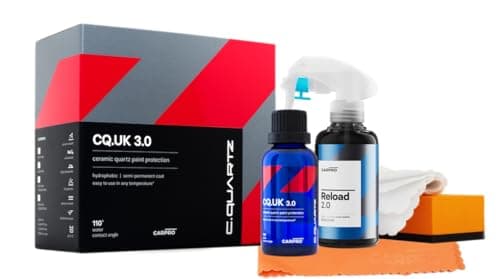
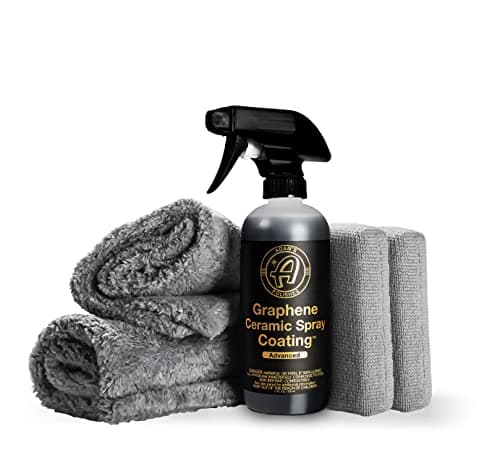
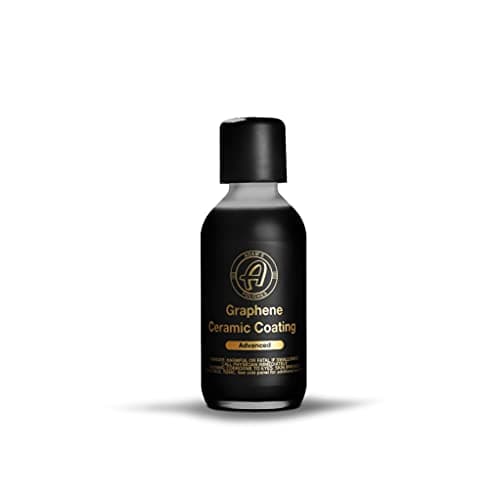
Adam's Advanced Graphene Ceramic Coating is the coating we rank first for dark paint and second overall, and the reason is not the graphene. It is the wipe-off window — the number of minutes between laying the coating down and having to remove the excess before it flashes hard. That window is where DIY coating jobs succeed or fail, and Adam's is unusually generous about it.
The disclosure first. We have not applied this coating to a test panel and measured contact angles over twelve months, because we do not run a lab and are not going to pretend otherwise. This assessment is built from Adam's published data, the chemistry the product category shares, and consistent patterns in aggregated owner reporting. The method is on how we research.
What graphene actually adds
Every consumer "ceramic" coating is fundamentally a silica (SiO2) resin that cures into a hard, hydrophobic film bonded to your clear coat. A graphene coating adds graphene oxide into that resin. The marketing claims associated with it are reduced water spotting and better heat dissipation — the theory being that a more thermally even surface gives standing water less opportunity to bake mineral deposits into the coating while it evaporates.
Is that a transformative difference? No, and anyone telling you otherwise is selling something. The honest position is that graphene coatings behave like good silica coatings with a slightly different water behavior, and that the gap between two well-applied coatings is much smaller than the gap between a well-applied and a badly applied one. The chemistry argument is worked through properly in ceramic coating vs graphene.
The wipe-off window is the real feature
Here is what goes wrong with DIY coatings. You apply a section, the coating begins to flash — turning from wet to a faint rainbow sheen — and you have a limited time to buff the residue off with a clean microfiber. Miss that window and the excess cures on the surface as high spots: streaky, hazy patches that are genuinely difficult to remove and usually need machine polishing to fix.
Pro-grade coatings are less forgiving here. They are formulated for a controlled environment and an applicator who does this every day. Adam's is formulated the other way round — a longer, more visible window aimed at someone applying their first coating in a home garage with imperfect lighting. For that buyer, that is worth more than any durability claim on the bottle.
Durability, stated honestly
Adam's markets multi-year protection. Coating durability claims in general should be read as a ceiling under good conditions, not a guarantee. What actually determines how long a coating lasts is prep quality, whether it was applied in the right temperature and humidity range, how the car is washed afterwards, and whether it lives outside in strong sun or in a garage.
A coating washed weekly with a harsh detergent and dried with a rough towel will underperform its rating dramatically. The same coating washed with a pH-neutral shampoo and topped occasionally will get close to it. That is covered in how to maintain a ceramic coating, and it matters more than which bottle you bought.
What the kit does and does not cover
The coating ships as a kit with applicators, which removes one shopping trip. What it does not include is the prep, and prep is most of the job. A coating bonds to whatever surface it lands on — if that surface has bonded contamination, wax residue or polish oils on it, the coating bonds to those instead of to your clear coat, and it fails early no matter how good the chemistry is.
The full prep sequence — wash, decontaminate, correct, panel wipe — is in how to polish a car before ceramic coating. The panel wipe step in particular is not optional; the products for it are ranked in best panel wipe for ceramic coating.
Who should buy something else
If you want maximum durability and you prep properly, a pro-grade coating rewards the extra care with a longer service life. It is less forgiving during application, which is the trade.
If you are not going to do the prep, do not buy this — or any real coating. A coating over unprepared paint locks the defects in under a hard film for years. A ceramic spray gives you most of the beading with none of the commitment, and reapplies in twenty minutes when it wears off. Our ceramic spray picks are the honest recommendation for that buyer.
If you are not sure a coating is worth it at all, is ceramic coating worth it works through the arithmetic without a sales pitch.
The verdict
This is the coating to buy if it is your first real coating and you intend to do the prep properly. It trades a little outright longevity for a much bigger margin of error during the step where DIY coating jobs actually go wrong, and that is the right trade for almost everyone applying one at home. On dark paint, where high spots show most cruelly, it is the pick we are most comfortable making.