Skip to content
Pad & Polish

HUB 01 · Machine Polishers

Dual-Action Polisher vs Random Orbital

Two names, mostly one machine. Here is what the terms really mean, the one genuine difference hiding behind them, and which class you should buy.

By Stephen V.Updated How we research
#ad

We earn a commission when you buy through our Amazon links, at no extra cost to you. It never affects our rankings, and we say so when the cheaper product is the better buy. How this works.

In car care, "dual-action polisher" and "random orbital polisher" almost always describe the same machine, and the one most people should buy is a free-spinning dual-action like the Griot's Garage G9. The two phrases are not naming two product categories; they are naming two halves of the same motion. If you have been trying to work out which type to buy, the useful answer is that you are looking at one type with two names — and that the distinction worth your attention is a different one entirely: free-spinning versus forced rotation versus rotary.

Prices below come from the live price layer and carry the date we verified them.

What the two words each describe

Random orbital describes the orbit. The backing plate is mounted off-centre, so as the motor turns, the plate traces a small circular orbit — typically between 8 mm and 21 mm across on car polishers — rather than spinning around a fixed centre. "Random" is there because the plate is also free to rotate on its own bearing, so the combination of orbit and spin never repeats the same path twice. That is the whole point: a path that never repeats cannot cut a groove.

Dual action describes the two motions that produce that path: the orbit, plus the free rotation of the plate. Two actions. One machine.

So "random orbital" and "dual action" are two descriptions of one mechanism, written from two different angles. The industry uses them interchangeably, retailers list the same tool under both, and a buyer comparing a "random orbital polisher" against a "dual action polisher" is usually comparing two units from the same class. Our dual-action shortlist and our buffer page cover the same field of machines for exactly this reason.

The one place the terms genuinely diverge

There is a real distinction buried under the terminology, and it is worth knowing because it is the one that changes how a machine behaves on the paint.

ClassHow the plate movesBehavior on paintRisk
Free-spinning dual-action / random orbitalOrbits, and the plate rotates freely — rotation can stall under pressureForgiving, slower correction, almost no heat build-up in one spotVery low
Forced-rotation dual-actionOrbits, and the plate is geared so rotation cannot stallFaster, more consistent cut; pulls across the panel and needs a firmer gripLow to moderate
RotarySpins on one fixed axis, no orbit at allFastest cut available, builds heat quickly in one placeHigh in untrained hands

Forced-rotation dual-action machines are a genuine third category — gear-driven tools where the plate is compelled to rotate rather than left free to. They correct faster than a free-spinning DA because the pad never stops spinning when you lean on it, and they are correspondingly less forgiving about pad edges and panel contours. They are also a specialist purchase: there are only a handful of them, they cost considerably more than the machines on this page, and we do not list one here because we do not currently have a verified live listing for one in our catalog. If you are comparing a free-spinning DA against a forced-rotation DA, the short version is that the forced-rotation tool buys you time on a correction and costs you a little of the beginner-proof character that makes the free-spinning class so popular.

The rotary is the real other animal, and it is the comparison most people actually want when they type these terms. Dual-action vs rotary takes that apart in full, and how to use a rotary polisher is the technique page if you have inherited one.

Why a free-spinning DA is safe, and why that is also its limit

The reason a free-spinning dual-action is hard to damage paint with is that the same feature protects you and holds you back. When you press hard, or run the pad over a tight curve, or let the edge of the pad catch a body line, the plate simply stops rotating. It keeps orbiting, so it keeps moving liquid around and it keeps making polishing noises, but the cut collapses. Heat cannot concentrate because nothing is spinning in one place — which is the safety — and correction slows to nearly nothing — which is the limitation.

That stall is invisible unless you look for it, and it is the single most common reason a first machine correction produces no result. The fix is a two-second habit: draw a short line across the face of your pad with a marker and watch it. If the line is turning, you are cutting. If it has stopped, ease off the pressure or drop a pad size. How to use a dual-action polisher covers the full set of habits, and long throw vs short throw explains why a bigger orbit resists that stall better than a small one.

One more name to clear up: orbital sanders

Autocomplete will push you toward "dual action polisher vs random orbital sander", and the answer there matters because getting it wrong is expensive. A random orbital sander is a woodworking and bodywork tool: a short orbit, a stiff pad, high speed, and no provision for the sideways loads polishing puts on a bearing. Some of them accept a polishing backing plate, and people do use them, and the usual outcome is either a stalled pad that polishes nothing or a hologram pattern from a machine spinning far faster than a polish wants. The related question — whether you can polish a car with a drill — gets the same answer for the same reason. Buy a tool designed for paint.

The picks below are one of each class so you can see the field: two free-spinning dual-action machines at different orbit sizes and price points, one long-throw DA, and one rotary to show what the genuinely different machine costs and does.

The short answer

Quick picks

#ProductBest forScorePrice
01
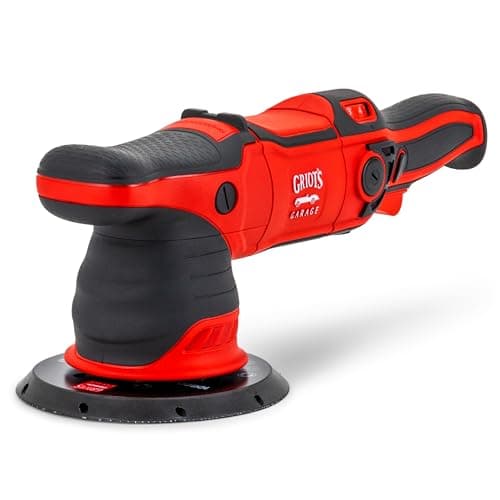
Griot's Garage Griot's Garage G9 Random Orbital Polisher
Griot's Garage G9 Random Orbital Polisher

The dual-action most enthusiasts would tell a beginner to buy: a smooth 9 mm orbit, a strong motor and a lifetime warranty, so it corrects real defects without the wobble cheaper units get under pressure.

A first polisher you won't outgrow
8.8
$179.99Amazon
02
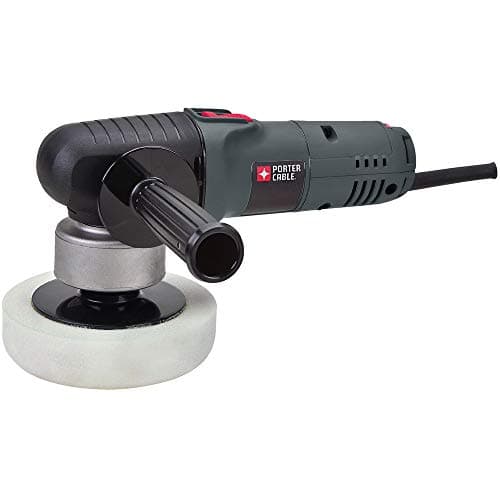
PORTER-CABLE PORTER-CABLE 7424XP Variable-Speed Polisher
PORTER-CABLE 7424XP Variable-Speed Polisher

The budget classic that taught a generation to machine polish — decades of tutorials use this exact tool, so every mistake you can make already has a video fix.

The lowest-risk way to learn machine polishing
8.3
$159.00Amazon
03
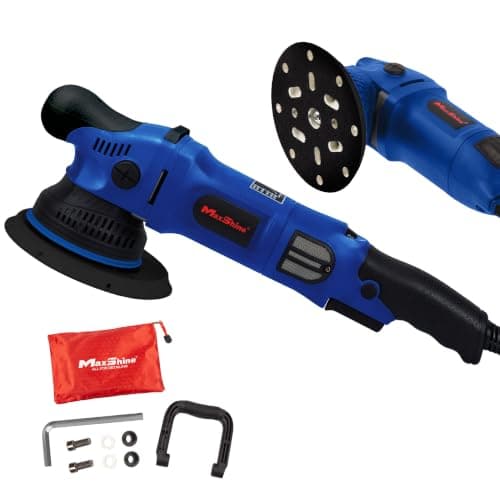
Maxshine Maxshine M21 Pro Long-Throw Dual-Action Polisher
Maxshine M21 Pro Long-Throw Dual-Action Polisher

The long-throw end of the dual-action range: the same stall-protected action a beginner tool has, wrapped around an orbit big enough to take a whole car's moderate defects out in a fraction of the passes.

Correcting whole cars in the fewest passes
8.1
$258.99Amazon
04
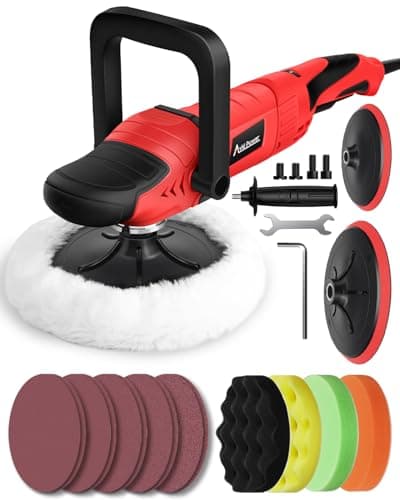
AVID POWER AVID POWER 1200 W Rotary Buffer/Polisher
AVID POWER 1200 W Rotary Buffer/Polisher

A budget corded rotary with real motor power and four pads in the box — genuinely capable on neglected single-stage paint, and genuinely capable of burning through clear coat if you dwell.

Cheap cutting power on heavily oxidized paint
7.0
$49.99Amazon

#ad · Live prices from the Amazon Product API, as of October 11, 2026. Where we have no verified live price, we show none — we would rather leave a gap than print a number that has rotted.

In detail

The picks, in full

01
Griot's Garage Griot's Garage G9 Random Orbital Polisher

A first polisher you won't outgrow

Griot's Garage G9 Random Orbital Polisher

9 mm orbit1000 W motor6-speed dialLifetime warranty
8.8/10

The dual-action most enthusiasts would tell a beginner to buy: a smooth 9 mm orbit, a strong motor and a lifetime warranty, so it corrects real defects without the wobble cheaper units get under pressure.

Ergonomics
8.8
Correction power
8.6
Beginner-safe
9.2
Value
8.4

Pros

  • Enough torque to hold speed under pad pressure, where budget DAs bog down
  • Longer 9 mm orbit corrects faster than the old 5 mm entry tools
  • Griot's lifetime warranty is genuinely lifetime

Cons

  • Heavier than a bare-bones DA
  • Pads and compounds sold separately

Don't buy this if…

…you only ever want to apply a spray coating — a cheaper spot polisher is plenty.

$179.99View on Amazon

Price as of October 11, 2026. Prices change — Amazon's is the one that counts.

#ad · we may earn a commission from this link to Griot's Garage G9 Random Orbital Polisher

02
PORTER-CABLE PORTER-CABLE 7424XP Variable-Speed Polisher

The lowest-risk way to learn machine polishing

PORTER-CABLE 7424XP Variable-Speed Polisher

6-inch pad2,500–6,800 OPM8 mm orbitVariable speed
8.3/10

The budget classic that taught a generation to machine polish — decades of tutorials use this exact tool, so every mistake you can make already has a video fix.

Ergonomics
7.8
Correction power
7.6
Beginner-safe
8.8
Value
8.8

Pros

  • The most-documented DA polisher ever made — endless tutorials
  • Cheap enough to learn on without fear
  • Huge aftermarket of backing plates and pads

Cons

  • Less torque than modern long-throw tools
  • Bare tool — no pads or compound included

Don't buy this if…

…you want to correct a whole car quickly — a 15 mm long-throw finishes faster.

$159.00View on Amazon

Price as of October 11, 2026. Prices change — Amazon's is the one that counts.

#ad · we may earn a commission from this link to PORTER-CABLE 7424XP Variable-Speed Polisher

03
Maxshine Maxshine M21 Pro Long-Throw Dual-Action Polisher

Correcting whole cars in the fewest passes

Maxshine M21 Pro Long-Throw Dual-Action Polisher

21 mm throw1,000 W motor2,200–5,000 OPM6 in backing plate
8.1/10

The long-throw end of the dual-action range: the same stall-protected action a beginner tool has, wrapped around an orbit big enough to take a whole car's moderate defects out in a fraction of the passes.

Ergonomics
7.6
Correction power
9.2
Beginner-safe
7.2
Value
8.4

Pros

  • The largest orbit in the consumer field — a hood or door skin takes noticeably fewer passes
  • A six-speed controller and a locking progressive trigger, so the bottom of the range is slow enough to spread a compound without slinging it
  • Maxshine specifies a CNC-machined steel counterweight and an adjustable D-handle mount, which is what keeps a 21 mm orbit's vibration manageable over a full car

Cons

  • Big and nose-heavy on bumpers, mirror caps and tightly curved panels
  • Needs pads built for a long throw — thin short-throw foam flexes and overheats on it
  • Maxshine is a detailing-specialist brand, so dealer support and spare plates are thinner on the ground than Griot's or Adam's

Don't buy this if…

…this is your first polisher — a shorter orbit is far easier to keep flat while you learn.

$258.99View on Amazon

Price as of October 11, 2026. Prices change — Amazon's is the one that counts.

#ad · we may earn a commission from this link to Maxshine M21 Pro Long-Throw Dual-Action Polisher

04
AVID POWER AVID POWER 1200 W Rotary Buffer/Polisher

Cheap cutting power on heavily oxidized paint

AVID POWER 1200 W Rotary Buffer/Polisher

1200 W motorRotary6 speedsFour 6-inch pads included
7.0/10

A budget corded rotary with real motor power and four pads in the box — genuinely capable on neglected single-stage paint, and genuinely capable of burning through clear coat if you dwell.

Ergonomics
6.8
Correction power
8.6
Beginner-safe
4.2
Value
8.6

Pros

  • Serious cutting power for well under a hundred dollars
  • Pads included, so it works out of the box
  • Six-speed dial rather than a single fixed speed

Cons

  • Rotary action offers no stall protection on thin modern clear coat
  • Heavier and more tiring to hold flat than a DA

Don't buy this if…

…this is your first machine — the price is tempting and the burn risk is real.

$49.99View on Amazon

$69.9929% off

Price as of October 11, 2026. Prices change — Amazon's is the one that counts.

#ad · we may earn a commission from this link to AVID POWER 1200 W Rotary Buffer/Polisher

Which class to buy

First machine, any car: free-spinning dual-action

It is the default for a reason. A free-spinning DA with a 9 mm to 15 mm orbit will correct the overwhelming majority of defects on the overwhelming majority of cars, and it will do it without the realistic possibility of burning through clear coat. Everything else on this page is a specialization. Our beginner shortlist ranks that class on exactly this basis.

Correcting several cars, or hard German clear: look at throw, then at forced rotation

Before paying for a specialist gear-driven machine, buy orbit. A long-throw free-spinning DA at 15 mm or 21 mm covers more area per pass and resists stalling far better than an 8 mm tool, which closes most of the speed gap at a fraction of the cost and none of the handling penalty. If you are correcting cars for money and the hours matter, that is when forced rotation starts to pay for itself.

Rotary: only with a reason and a plan

A rotary earns its place on heavily oxidized single-stage, on wet-sanded panels, and in the hands of someone who has learned to keep it moving. It is not a faster version of a dual-action; it is a different tool with a different failure mode, and the failure is permanent. If you want the cut without the risk, the honest upgrade path is a better pad rather than a rotary — see microfiber cutting pads and compounds for hard paint.

Check the orbit size, not the marketing name

Because the two terms mean the same thing, the name on the box tells you nothing. The specs that do are orbit in millimetres, motor power, whether the speed is a dial or a trigger, and what size backing plate it ships with. Two machines both labelled "dual action random orbital" can be 8 mm and 21 mm, and those are genuinely different tools.

Budget for the plate if you change pad size

Orbit and plate size interact: a large orbit with a large pad asks a lot of the motor, and most long-throw machines are happiest on a 5 inch plate with a 5.5 inch pad. The backing plate page covers the part people forget to order, and 5 inch vs 6 inch pads explains which size to standardize on.
How we picked

We do not run a testing lab

We compiled published specifications, manufacturer data sheets and aggregated owner reviews, computed the cost of ownership from real sizes and coverage, then scored each product against a published rubric. The scores are judgments from documented research — they are not measurements we took, because we do not own a lab and we are not going to pretend we do. Where a number came from someone else, we name them and link them in Sources.

Questions

Frequently asked

Is a dual-action polisher the same as a random orbital polisher?
In car care, almost always yes. 'Random orbital' describes the off-centre orbit of the backing plate; 'dual action' describes the two motions involved, that orbit plus the plate's own free rotation. They are two descriptions of one mechanism and retailers use them interchangeably.
What is the difference between a free-spinning and a forced-rotation dual-action polisher?
On a free-spinning machine the plate rotates on its own bearing and stops rotating if you press too hard or catch a body line. On a forced-rotation machine the plate is geared so it cannot stall. Forced rotation corrects faster and more consistently; free-spinning is more forgiving and far more common.
Can I use a random orbital sander to polish my car?
You should not. Sanders run short orbits at high speed with bearings that are not designed for the sideways load polishing applies, and the usual result is either a pad that will not rotate or a hologram pattern from excessive speed. Buy a machine built for paint.
Which should a beginner buy?
A free-spinning dual-action with an orbit somewhere between 9 mm and 15 mm. It corrects real defects, it is extremely difficult to damage paint with, and it is the class almost every detailer recommends as a first machine regardless of which of the two names the box uses.
Why did my dual-action polisher stop correcting?
The pad almost certainly stopped rotating. Free-spinning machines lose rotation under heavy pressure, on tight curves, and when a pad edge catches an edge or trim. The machine keeps orbiting and still sounds busy, so the stall is easy to miss. Mark your pad face with a line and watch whether it turns.
Does a bigger orbit mean a better polisher?
It means more area covered per pass and more resistance to stalling, which is why long-throw machines correct faster. It also means a heavier tool that is harder to control on small panels and around mirrors. Most people are best served in the 9 mm to 15 mm range, with a small 3 inch machine for tight areas.

Keep reading

Receipts

Sources

We do not run a testing lab, and we do not pretend to. Where a measured number came from someone else's lab, we name them and link them. Where we could not verify something, we say so on the page rather than quietly leaving it out. Read our full method.