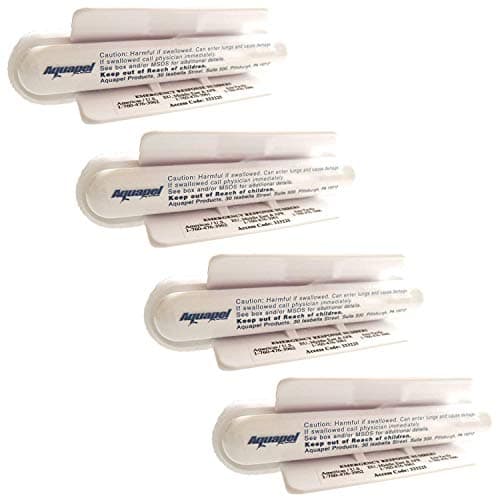
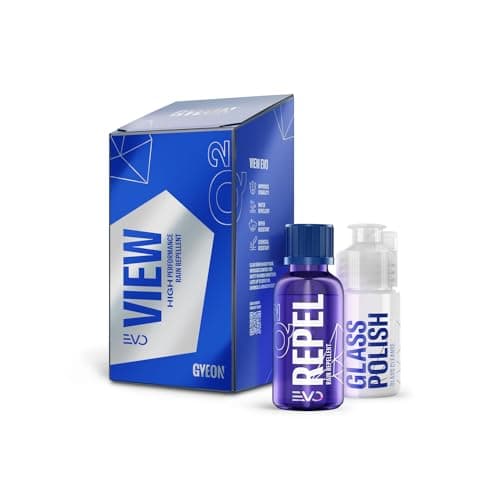
Buy Aquapel Glass Treatment if you want the honest best answer for most drivers: four sealed single-use applicators, five minutes of work per windshield, and a published claim of up to six months — which is months longer than anything you spray from a bottle. If you are keeping the car and willing to polish the glass first, buy Gyeon View EVO: it carries the longest published life in this field, up to 24 months on a windshield and up to 36 months on side glass.
The reason this page exists is that a windshield is the one piece of glass on the car where a coating does something you can feel at 60 mph, and it is also the piece almost nobody treats. Coat the paint and you get beading you admire in the driveway. Coat the glass and rain starts leaving the screen on its own above roughly 40 mph, oncoming headlights stop starring through the water film, and bugs and ice come off with less scraping. It is the highest-value coating on the car per dollar spent.
Two different chemistries, sold side by side
Everything in this category falls into one of two groups, and the price difference between them makes no sense until you know which is which.
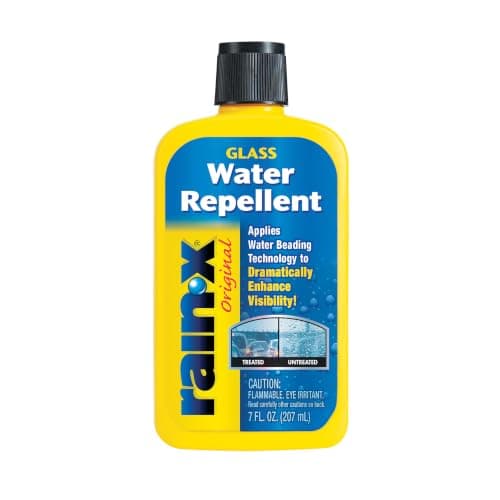
Silicone-based repellents — Rain-X being the original and still the benchmark — lay a sacrificial hydrophobic film on the glass. They work immediately, cost almost nothing, and wear off in a couple of months. As they wear they can also smear under the wipers, which is genuinely worse at night than leaving the glass untreated.
Bonded coatings — the ceramic and graphene products, plus Aquapel, which bonds chemically to the glass rather than sitting on it — create a durable layer measured in months or years instead of weeks. They cost more up front, several of them want the glass polished first, and they are what you buy if the appeal of this whole exercise is not having to think about it again.
How we ranked these
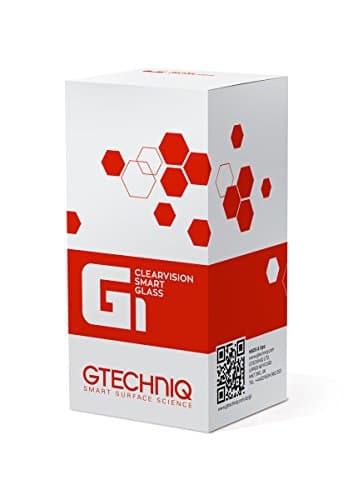
- Published durability, with the units the maker used. Gtechniq rates G1 at one to two years or around 30,000 miles, and that second figure is the one that tells the truth: a glass coating dies by wiper passes, not by calendar. Products that publish a specific claim rank above products that publish “long lasting.”
- Rain visibility, which is the actual job. How low the speed is at which water starts leaving the screen on its own, and whether the film smears as it wears. This is why the cheapest option is not simply the best buy.
- How much prep the claim assumes. The two-year coatings assume decontaminated, polished glass. If you are not going to do that, you will not get the rated life, and a product that does not need prep is the better real-world purchase.
- Cost per windshield per year. A $9 bottle reapplied six times a year is not cheaper than a $40 coating that lasts two — and a $66 bottle you use a tenth of is not good value either, however good the coating is.
The field, in one table
| Pick | Type | Maker's durability claim | Prep needed |
|---|
| Gyeon View EVO | Ceramic glass coating | Up to 24 months (36 on side glass) | Decontaminate + polish |
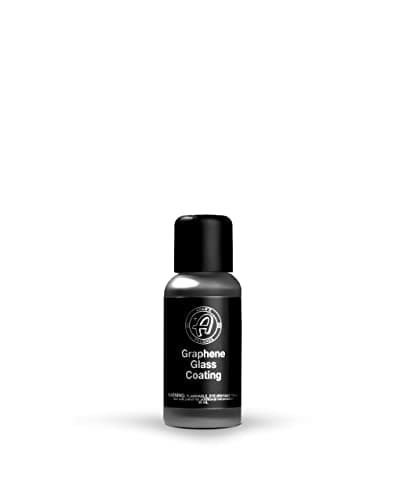
| Adam's Graphene Glass Coating | Graphene glass coating | 9-12 months | Decontaminate + polish |
| Aquapel Glass Treatment | Chemically bonded treatment | Up to 6 months | Clean glass only |
| Gtechniq G1 Smart Glass | Ceramic glass coating | 1-2 years or ~30,000 miles | Decontaminate + polish |
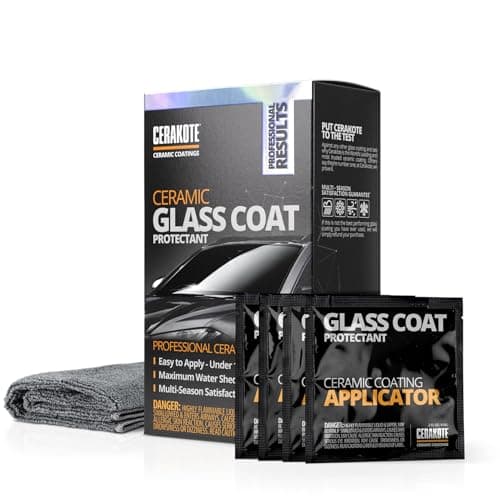
| Cerakote Ceramic Glass Coat | Ceramic wipes | Several months | Clean glass only |
| Rain-X Original | Silicone repellent | Roughly 2-3 months | Clean glass only |
Why wiper blades, not weather, decide the life
A coating on your hood gets rained on. A coating on your windshield gets scraped by two rubber blades under spring pressure, thousands of times a year, always in the same arc. That is why Gtechniq publishes a mileage figure alongside the time figure, and why Gyeon quotes a shorter life on the windshield than on the side windows of the same car — side glass has no wipers, so the same coating lasts a year longer there.
The practical consequences are worth knowing before you spend. Old, hardened blades will chew through a new coating noticeably faster, so replace them first if they are due. Running the wipers dry on a coated screen is the fastest way to wear the arc clean while the rest of the glass still beads, which is the odd half-worn look people report after a few months. And if you do most of your miles in a dry climate, a coating's calendar claim is more achievable than it is for someone driving a wet commute every day.
The prep step that decides everything
Glass feels smooth and is not. It carries bonded road film, baked-on bug residue, water spots etched into the surface, and in a lot of cases old silicone repellent. A ceramic coating applied over any of that bonds to the contamination rather than the glass, and fails in weeks rather than years.
Two things fix it. Clay the glass exactly as you would clay paint — the method is the same one in how to clay bar a car — and then polish it. Glass takes a dedicated cerium-oxide glass polish, not a paint compound, and this is also the step that removes the fine wiper scratches and etched water spots a coating would otherwise lock in. If you are dealing with mineral etching rather than deposits, the diagnosis is in how to remove water spots from car paint, and the same fingertip test applies to glass.
If that sounds like more work than you want to do for a windshield — a completely reasonable position — buy Aquapel or the Cerakote wipes. Both are designed to go onto clean glass with no polish step, and a treatment that actually gets applied beats a coating that sits in a cupboard.
Do the side glass and the rear screen too
Almost everyone treats the windshield and stops, which leaves the two pieces of glass where a coating lasts longest and arguably helps most. Side windows have no wipers at all, which is why Gyeon quotes up to 36 months there against 24 on the windshield — the same product, the same car, a year of extra life because nothing is scraping it.
The benefit on side glass is different from the benefit on the screen. At speed, a treated door window clears itself in rain, which is what lets you see the mirror and the lane beside you without dropping the glass and getting wet. On a car without heated mirrors, treating the mirror glass is the same thirty-second job and makes a disproportionate difference in a downpour. The rear screen is worth doing for the same reason, especially on a hatchback or SUV where the wiper covers a small arc and the rest of the glass stays streaked.
Two cautions. Keep any coating off the inside of the glass — the interior face is a different problem, usually film and off-gassing residue rather than water, and a hydrophobic coating there just smears. And on a tinted window, the film is on the inside, so coating the outside is safe; it is the ammonia-based cleaners that damage tint, not the coating.
What not to put on your windshield
Do not use a paint coating or a graphene paint spray on the glass. It is the single most common mistake here, it is easy to make because the bottle says “all exterior surfaces,” and the result is a film the wipers tear into streaks that smear badly under headlights. Paint coatings are formulated to be left alone; glass coatings are formulated to be abraded twice a second in the rain. The ones ranked in best graphene coating belong on your paint, and the ones on this page belong on your glass.
Also skip the household glass cleaners with ammonia on the way in. They attack the tint film on the inside of side windows and leave a residue that interferes with bonding on the outside. Use a dedicated automotive glass cleaner, or isopropyl alcohol diluted with distilled water, as the last wipe before any coating goes on.
Applying a glass coating properly
Replace tired wiper blades first
A new coating under old, hardened rubber is money spent on the wrong half of the system. Blades are cheap and they are the thing that will wear the coating out, so change them before you coat rather than three months after.
Do the whole screen, then mask nothing
Unlike paint coatings, glass products do not need the trim masked — but they do want to be kept off painted and rubber surfaces, where they can leave a stain that is awkward to remove. Work from the middle out and wipe the cowl and A-pillar rubber if you get product on them.
Cross-hatch, then level
Apply in overlapping horizontal passes, then vertical ones, so there are no missed lanes — an uncoated stripe is invisible dry and obvious the first time it rains. Then level with a clean microfiber before the product hazes, which on a warm screen can be under a minute.
Let it cure before the wipers move
The bonded coatings need a cure window with no water and no wiper contact. Running the blades over an uncured coating is the fastest way to ruin an expensive application, so park it overnight and resist the urge to test it with the washers.
Wash with the glass in mind
Automatic car washes with brushes are hard on a glass coating, and so is washing with a dirty mitt — the arc where your wipers sit is already the weakest part of the film. The two-bucket method in how to wash a car without scratching it protects the glass as much as the paint.
Judge it by behavior, not by date
A glass coating is finished when water stops leaving the screen on its own at speed, or when the wiper arc starts smearing while the corners still bead. That is the moment to clean the glass back and reapply — not the anniversary of the last application.