Ask this question in any car forum and you will get two confident answers that contradict each other: "wax it today" and "wait three months." Both are correct. They are answers to different questions, and nobody ever says which one they are answering.
- A brand-new car from the dealer. Wax it whenever you like, including the day you bring it home. Factory paint is applied and then force-cured in ovens at the assembly plant; it is chemically finished long before the car reaches a showroom. There is nothing left to outgas.
- A panel that has just been repainted at a body shop. Wait. The usual guidance is 30 to 90 days, and where a shop has used solvent-borne or 2K clear coats the longer end — 60 to 90 days — is the safer assumption. Ask the shop that sprayed it, because they know which system they used.
If you are in the first group, you are done, and the only remaining question is which wax — our new-car wax picks answer that directly. If you are in the second group, the rest of this page is the reasoning and the workaround.
Why fresh refinish paint has to breathe
Paint that is dry to the touch is not paint that has cured. Surface dryness means solvents have flashed off the very top layer and dust will no longer stick — it says nothing about what is happening underneath. In a fresh refinish, solvent continues to migrate out of the film and the clear coat continues to cross-link for weeks. That process is what detailers and body shops call outgassing.
A wax, a sealant or a ceramic coating is, by design, a barrier. Put one over paint that is still releasing solvent and you trap the solvent under it. The failure modes people report are hazing, blushing, a soft or blotchy finish, and in the worst cases a clear coat that never reaches its intended hardness. None of those are easy to fix afterward — the remedies range from a machine polish to a respray.
This is also why the rule applies to coatings far more strictly than to wax. A carnauba wax that goes on early is a mistake you can wash off in a few weeks. A ceramic coating applied over uncured paint bonds to it for years, which is a genuinely expensive error. If a coating is the plan, it belongs firmly at the end of the waiting period, after a proper polish and panel wipe — how to polish a car before a ceramic coating covers that sequence.
What you can safely do during the wait
Waiting does not mean neglecting. Fresh paint is at its softest and most vulnerable in exactly this window, so the goal is gentle care rather than no care.
- Wash it, by hand, gently. Hand washing with a pH-neutral shampoo and plenty of lubrication is fine and encouraged. Avoid automatic brush washes entirely — soft paint plus stiff brushes is the worst combination on this list.
- Rinse off anything acidic quickly. Bird droppings, bug remains and tree sap etch cured paint and etch fresh paint faster. Take them off the same day with a quick detailer and a plush towel rather than letting them sit.
- Keep it out of strong sun where you can. Shade and a cover help. Heat accelerates a lot of things you would rather have happen slowly.
- Do not polish or compound it. Fresh refinish is softer than cured paint and marrs easily; correcting it before it has hardened creates defects you then have to correct again later.
- No wax, no sealant, no coating, no wax-infused shampoo.The last one catches people out — plenty of "wash and wax" shampoos leave a protective polymer behind, which is the exact thing you are trying to avoid. Read the bottle.
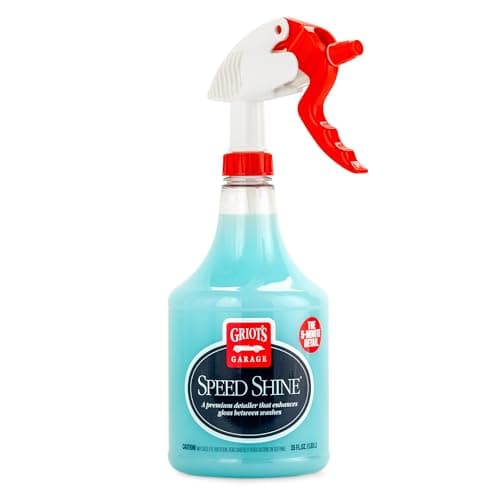
A plain quick detailer is the one product that is genuinely useful in this period. It lubricates a wipe-down, takes off fresh contamination before it etches, and leaves no durable barrier behind — which is why one is included in the picks below alongside the waxes you will want at the end of the wait.
Knowing when the wait is over
There is no home test that proves a refinish has fully cured, and we are not going to invent one. What there is, is a reliable source of truth: the shop that sprayed the panel knows which primer, base and clear system they used and what its published cure schedule says. Ask them for a date rather than guessing from a forum, and if they say 30 days on a waterborne system with a baked clear, that is better information than a general rule.
When the window closes, treat it as a fresh start: wash, decontaminate, assess whether the panel needs any correction now that it has hardened, then protect. If the repaired panel does not quite match its neighbors for gloss, that is a polishing question rather than a waxing one, and hard paint vs soft paint is worth reading first — refinish paint usually sits at the softer end and wants a gentler combination than the rest of the car.
What to put on it when the time comes
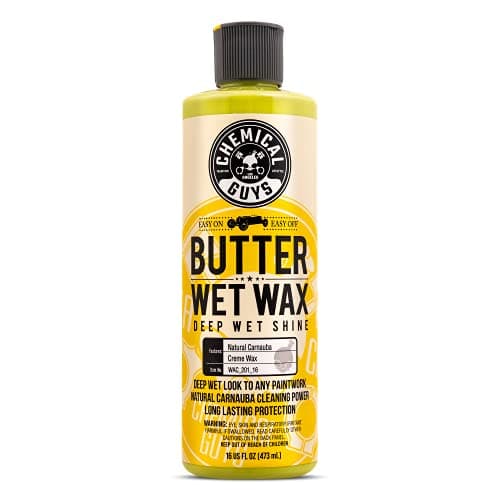
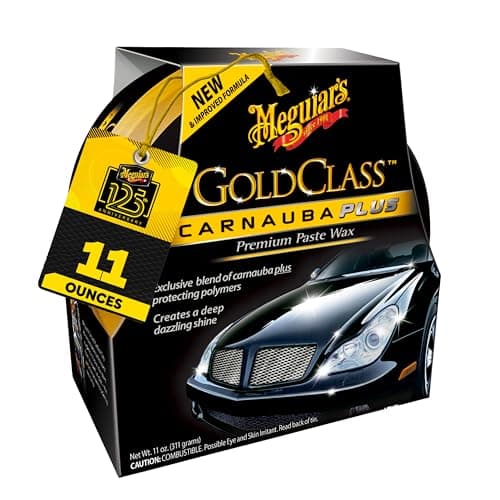
A traditional carnauba is the conventional first protection on a fresh repaint, for a practical reason: it is the easiest layer to remove if anything about the panel needs revisiting, and it makes no long-term commitment. Once the panel has been through a season and you are confident in it, there is no reason not to move up to a sealant or a coating. The four picks below are ordered for that sequence — the waxes for the end of the wait, and the detail spray for during it. Prices are live and date-stamped.
Buying for a fresh repaint
Buy the detail spray now and the wax later
The only thing you need in week one is something that lets you remove contamination safely without leaving a barrier behind. A plain quick detailer does that. Buy the wax closer to the end of the window, when you will actually use it, rather than having a tin sit on a shelf tempting you.
Prefer a pure carnauba for the first application
Not because carnauba is gentler on paint in some chemical sense — it is not — but because it is the least committal option. A carnauba layer washes off within a couple of months on its own, so if the panel turns out to need attention you are not stripping a bonded sealant first. Our full carnauba ranking is on best carnauba wax.
Avoid cleaner waxes and all-in-ones on a fresh panel
Cleaner waxes contain mild abrasives, which is exactly what you do not want on paint that has not finished hardening. Save the wax-and-polish category for the rest of the car, and use a straight, non-abrasive wax on the repaired panel.
Check your shampoo for polymers
Wash-and-wax shampoos deposit protection by design, which defeats the whole point of waiting. During the outgassing window use a plain pH-neutral shampoo with nothing added — our soap picks flag which ones are plain and which ones leave something behind.
Get the date in writing from the shop
Systems differ. Waterborne bases with baked clears cure faster than air-dried solvent systems, and a shop with a proper bake oven may be comfortable at 30 days where another would say 90. The published cure schedule for the actual products used beats any general rule on the internet, including this one, so ask.