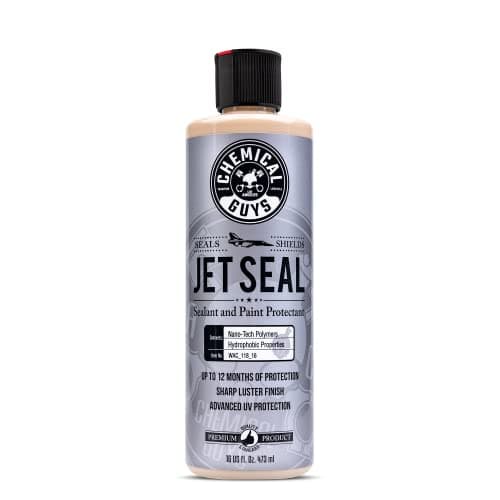
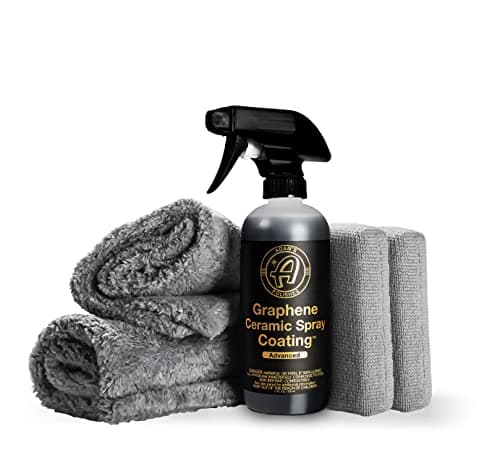
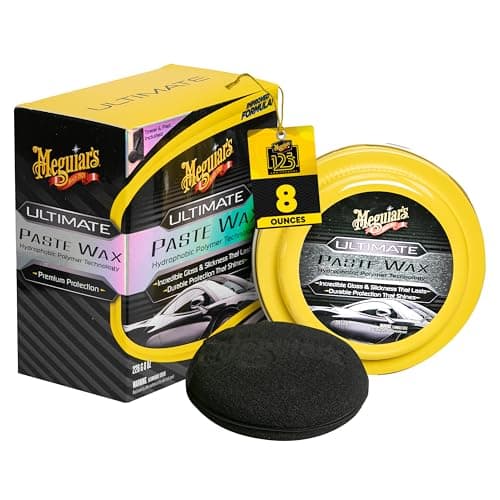
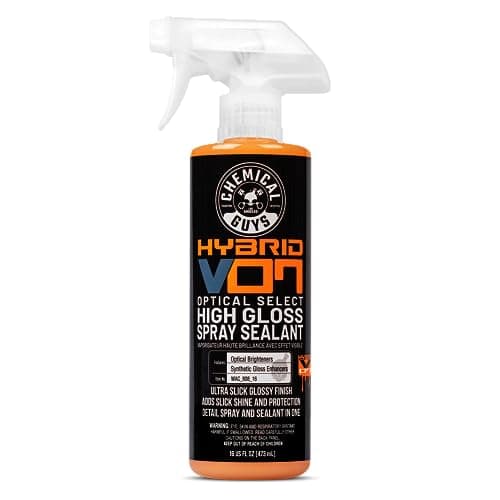
Every other use case on this site is a question about appearance. Winter is a question about damage. AAA put the cost of rust caused by road de-icing methods at roughly $3 billion a year in the United States — about $15.4 billion over five years, affecting 22 million motorists at an average of around $500 per repair — and roughly 70% of US drivers live where snow and ice are treated. That is the context a winter wax sits in. It is not going to stop rust on brake lines or in body seams, but it is the difference between salt film sitting on your clear coat for a week and salt film rinsing off on Saturday.
The chemistry matters more than people expect. Plain rock salt dries out; the liquid brines that have largely replaced it do not. Magnesium chloride in particular stays in solution as long as ambient humidity is above roughly 27%, which means it clings to painted surfaces, plastic and rubber and keeps working on them for days. A protective layer does two useful things against that: it gives the brine less to bond to, and it makes the washes that actually remove the brine far more effective.
What makes a wax a winter wax
Three things, in this order.
- Durability measured in months, not weeks. A traditional show carnauba can be gone in three or four weeks of ordinary use. In winter you are reapplying in freezing conditions, so a product that lasts a whole season is worth far more than one that looks slightly warmer for a month.
- It has to be applicable when it is cold. Most waxes and sealants want roughly 50 to 90 degrees Fahrenheit and a dry surface. A product you cannot apply in December is a product you have to apply in November, which is fine if you plan for it and useless if you do not.
- Release, not just beading. What you want is grime that lets go under a pressure rinse. Beading is a proxy for that, and an imperfect one, but a slick surface genuinely shortens every winter wash.
Gloss is not on that list, and that is deliberate. Winter is when the synthetic side of the category earns its keep — which is also why several picks below are sealants rather than waxes in the strict sense. If you want the family distinction argued properly, carnauba vs synthetic wax covers it, and our paint sealant picks rank the synthetic field on durability alone, all year round.
Apply it before you need it
The single most useful piece of winter advice has nothing to do with which bottle you buy. Apply protection in autumn, while it is still warm and dry enough for a wax or sealant to bond properly, on paint that has been decontaminated first. Protection applied over a layer of bonded iron fallout and road film is protection applied over contamination, and it fails early. That means an iron remover and, if the paint feels rough, a clay bar before the wax goes on — see our iron remover picks and the clay bar shortlist.
If you have missed the warm window, the practical order is: wash and dry the car thoroughly in a heated garage or on the warmest afternoon you get, let the panels come up to room temperature, and use a product that does not demand a long cure. The spray picks below exist for exactly that scenario.
Layering is allowed, and it is the right answer
A durable synthetic sealant as the base layer and a spray as the top-up through the season is the setup most experienced people run in a salt state. The sealant does the work; the spray keeps the surface slick between washes and takes two minutes after drying the car. You do not need to strip and redo anything mid-winter — you just keep topping.
What layering cannot fix is a car that never gets washed. Salt left on paint for months will find a way through any product here. Wash through the winter, even when it feels pointless, and rinse the underside when you can. AAA's own advice after publishing that rust figure was, bluntly, to keep washing the car.
Prices below are live from the retailer and stamped with the date we verified them. Where we have no verified price we show none rather than a stale one.
Buying for a salt season
Durability claims are the maker's, and we label them that way
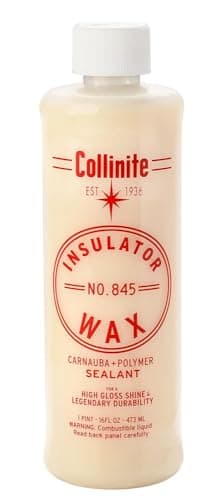
Collinite rates 476S at 7 to 10 months and its 845 liquid at 4 to 7 — those are Collinite's published figures, not our measurements, and they assume thin coats on clean paint. Most other manufacturers publish nothing at all, and where that is the case we say so on the product rather than inventing a number. Treat every durability figure on this page as a manufacturer claim under favorable conditions; a car parked outside in a salt state will do worse than a garaged one.
Thin coats, especially on the hard pastes
The Collinite products in particular are notorious for being miserable to buff off if you lay them on thick, and thick application does not protect better — it just leaves more product to remove. A thin, even film that hazes lightly is the whole technique. If the panel fights you on removal, you used too much.
Temperature is a hard constraint, not a preference
Waxes and sealants need the surface warm enough to flow and bond. Applying at near-freezing temperatures gives you a layer that smears, refuses to haze, and protects poorly. If the garage is cold, warm the car by driving it, work one panel at a time, and prefer a spray product that is designed to be wiped on and off immediately rather than cured.
Do not confuse a coating with immunity
A ceramic coating is genuinely better at this job than a wax — it lasts years, it releases grime well, and it makes winter washes easier. It is still not armor against salt, and it still requires washing. If you are weighing that upgrade, the ceramic coating shortlist and how to maintain a coating are the two pages to read, and the honest note in both is that maintenance is what decides the outcome.
Keep washing, with the right soap
Winter washing is what actually removes salt; the wax is what makes it easy. Use a pH-neutral shampoo so you are not stripping the protection you just applied every time you clean the car — our soap picks cover that, and how to wash a car without scratching it matters more in winter than at any other time, because winter grit is coarser and there is more of it.
Do not forget the parts that actually rust
Everything on this page protects paint. The components AAA's figure is mostly about — brake lines, fuel tanks, exhaust, subframes — are underneath the car and no wax reaches them. A rinse of the underbody and wheel wells when the temperature allows is worth more to the car's structure than any amount of wax on the hood.