Skip to content
Pad & Polish

HUB 01 · Machine Polishers

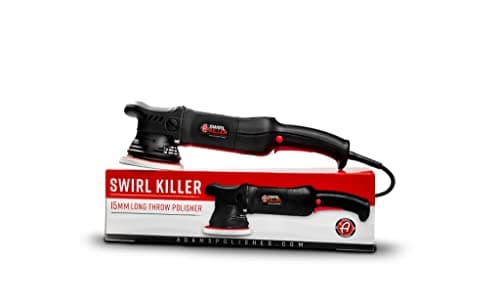
Adam's Swirl Killer 15 Review

The long-throw dual-action for people correcting whole cars rather than single panels — and the honest case for buying a smaller orbit instead.

By Stephen V.Updated How we research
#ad

We earn a commission when you buy through our Amazon links, at no extra cost to you. It never affects our rankings, and we say so when the cheaper product is the better buy. How this works.

Almost every "which polisher" recommendation on the internet points at an 8 mm dual-action, and for a first machine that advice is right. The Adam's Swirl Killer 15 is the machine you buy when that advice stops fitting — when you are correcting whole cars rather than tidying one, and the limiting factor has become how long the job takes rather than how safe the tool is.

The disclosure first, because it changes how you should read everything below: we have not stripped a Swirl Killer down or run it against a paint depth gauge. We do not operate a testing lab and will not pretend to. What follows is built from Adam's published specifications, the mechanics those specifications imply, and the consistent patterns in aggregated owner reporting. The method is written out on how we research.

What 15 mm of throw actually changes

Throw — or orbit — is the diameter of the circle the head carries the pad through. An 8 mm machine moves the pad through a small circle very quickly; a 15 mm machine moves it through a circle nearly twice as wide. The pad still free-spins on its bearing in both cases, so the safety mechanism is identical. What changes is coverage: a wider orbit sweeps more paint per second, which is why a long-throw machine clears a hood in fewer passes than a short-throw one running the same compound.

That is the entire argument for this tool, and it is a real one. On a single door it is barely noticeable. Across a full sedan — hood, roof, boot, four doors, two quarters, two bumpers, twice over for a compound-then-polish sequence — it is the difference between an afternoon and a weekend. The trade-off is covered in full in our dual-action polisher roundup, which ranks short and long throw side by side.

Where the long throw works against you

A wider orbit needs more flat panel to sit on. On a mirror housing, a narrow A-pillar, a sculpted bumper corner or the tight radius above a wheel arch, a 15 mm machine has nowhere to put its swing — it hops, the pad edge catches, and you end up lifting the machine off and finishing the area by hand. Short-throw owners simply do not have that problem, and it is the reason plenty of experienced people own both a long-throw machine for panels and a mini polisher for everything the big one cannot reach.

Weight and balance follow from the same physics. Moving a pad through a larger circle requires a larger counterweight, and you feel that in your forearms on a vertical panel by the third hour. This is a tool that rewards a job with a plan, not casual use.

The digital readout is more useful than it sounds

The Swirl Killer 15 carries a digital speed readout rather than a numbered dial, and the practical value of that is repeatability. Machine polishing is a process you are trying to reproduce panel after panel — the same speed, the same pressure, the same number of passes — and a dial marked one through six leaves you guessing whether you are actually back where you were after an interruption. A displayed number removes that guess. It is a small feature that quietly makes your results more consistent.

Correction ability, in context

A polisher does not correct anything. The pad and the compound loaded onto it remove the defects; the machine's only job is to keep that combination moving under controlled pressure without stalling. What a strong long-throw machine buys you is headroom — the motor keeps the pad turning when you lean into a panel, which is where cheap dual-actions quietly stop working and their owners blame the compound.

So the honest framing is that the Swirl Killer 15 will not out-correct an 8 mm machine on a given square foot of paint. It will get through far more square feet in the same time. If your paint has defects a dual-action cannot clear at all, the answer is a more aggressive pad and compound pairing, or a rotary — not a longer throw.

Who should buy something else

If this is your first machine, buy an 8 mm tool. Not because the long throw is dangerous — the free-spinning head makes both equally forgiving — but because your first correction will be slow, awkward and full of restarts regardless of the machine, and a smaller orbit is easier to keep flat while you learn. The beginner shortlist is the better starting point.

If you only ever intend to spread a spray coating or a liquid wax, no correcting dual-action is a sensible purchase at all. An orbital waxer does that job for a small fraction of the money and cannot hurt anything.

What to buy alongside it

Long-throw machines are harder on pads than short-throw ones — more travel means more flex and more heat in the foam, and a thin pad built for an 8 mm tool collapses under it. Buy pads rated for a long orbit, and buy more of them than you think you need, because a saturated pad stops cutting well before it looks used. Start with the DA pad picks, match a compound to the defects you actually have, and read how to polish a car step by step before the first pass.

The verdict

The Swirl Killer 15 is a specialist that looks like a generalist. Bought for the right reason — correcting entire cars, repeatedly, and wanting the job to end — it is excellent value for the time it saves. Bought as a first polisher because bigger sounds better, it is a heavier, less nimble version of a tool you would have preferred. The two machines ranked below it here are both short-throw, and both are the right answer for a different buyer.
The short answer

Quick picks

#ProductBest forScorePrice
01
Adam's Polishes Adam's Swirl Killer 15 mm Polisher
Adam's Swirl Killer 15 mm Polisher

A long-throw 15 mm DA that covers ground fast, so a full-car correction takes fewer passes — the tool to reach for when the whole car needs work, not just a panel.

Correcting a whole car in fewer passes
8.3
$237.99Amazon
02
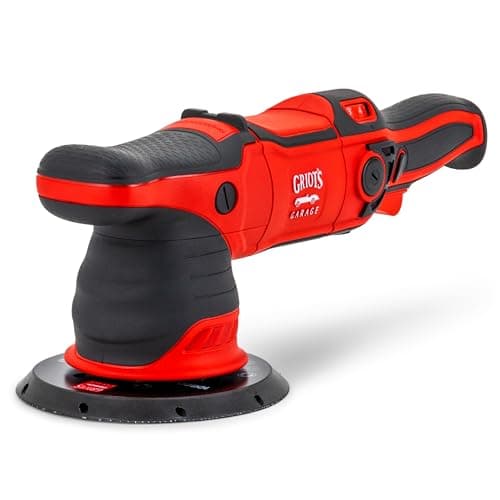
Griot's Garage Griot's Garage G9 Random Orbital Polisher
Griot's Garage G9 Random Orbital Polisher

The dual-action most enthusiasts would tell a beginner to buy: a smooth 9 mm orbit, a strong motor and a lifetime warranty, so it corrects real defects without the wobble cheaper units get under pressure.

A first polisher you won't outgrow
8.8
$179.99Amazon
03
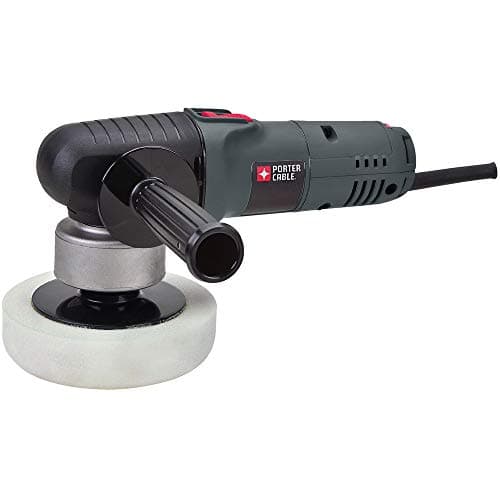
PORTER-CABLE PORTER-CABLE 7424XP Variable-Speed Polisher
PORTER-CABLE 7424XP Variable-Speed Polisher

The budget classic that taught a generation to machine polish — decades of tutorials use this exact tool, so every mistake you can make already has a video fix.

The lowest-risk way to learn machine polishing
8.3
$159.00Amazon

#ad · Live prices from the Amazon Product API, as of Sep 4, 2026. Where we have no verified live price, we show none — we would rather leave a gap than print a number that has rotted.

In detail

The picks, in full

01
Adam's Polishes Adam's Swirl Killer 15 mm Polisher

Correcting a whole car in fewer passes

Adam's Swirl Killer 15 mm Polisher

15 mm long throwVariable speedDigital readoutFull-size DA
8.3/10

A long-throw 15 mm DA that covers ground fast, so a full-car correction takes fewer passes — the tool to reach for when the whole car needs work, not just a panel.

Ergonomics
8
Correction power
9
Beginner-safe
8
Value
8

Pros

  • Large 15 mm orbit clears defects over big panels quickly
  • Digital speed readout makes repeatable results easy
  • Strong correction for a consumer tool

Cons

  • Long throw is less nimble on tight/curved panels than an 8 mm
  • Overkill for pure spray-coating application

Don't buy this if…

you mostly work small, contoured areas — an 8 mm tool is easier to control there.

$237.99View on Amazon

Price as of Sep 4, 2026. Prices change — Amazon's is the one that counts.

#ad · we may earn a commission from this link to Adam's Swirl Killer 15 mm Polisher

02
Griot's Garage Griot's Garage G9 Random Orbital Polisher

A first polisher you won't outgrow

Griot's Garage G9 Random Orbital Polisher

9 mm orbit1000 W motor6-speed dialLifetime warranty
8.8/10

The dual-action most enthusiasts would tell a beginner to buy: a smooth 9 mm orbit, a strong motor and a lifetime warranty, so it corrects real defects without the wobble cheaper units get under pressure.

Ergonomics
8.8
Correction power
8.6
Beginner-safe
9.2
Value
8.4

Pros

  • Enough torque to hold speed under pad pressure, where budget DAs bog down
  • Longer 9 mm orbit corrects faster than the old 5 mm entry tools
  • Griot's lifetime warranty is genuinely lifetime

Cons

  • Heavier than a bare-bones DA
  • Pads and compounds sold separately

Don't buy this if…

you only ever want to apply a spray coating — a cheaper spot polisher is plenty.

$179.99View on Amazon

Price as of Sep 4, 2026. Prices change — Amazon's is the one that counts.

#ad · we may earn a commission from this link to Griot's Garage G9 Random Orbital Polisher

03
PORTER-CABLE PORTER-CABLE 7424XP Variable-Speed Polisher

The lowest-risk way to learn machine polishing

PORTER-CABLE 7424XP Variable-Speed Polisher

6-inch pad2,500–6,800 OPM8 mm orbitVariable speed
8.3/10

The budget classic that taught a generation to machine polish — decades of tutorials use this exact tool, so every mistake you can make already has a video fix.

Ergonomics
7.8
Correction power
7.6
Beginner-safe
8.8
Value
8.8

Pros

  • The most-documented DA polisher ever made — endless tutorials
  • Cheap enough to learn on without fear
  • Huge aftermarket of backing plates and pads

Cons

  • Less torque than modern long-throw tools
  • Bare tool — no pads or compound included

Don't buy this if…

you want to correct a whole car quickly — a 15 mm long-throw finishes faster.

$159.00View on Amazon

Price as of Sep 4, 2026. Prices change — Amazon's is the one that counts.

#ad · we may earn a commission from this link to PORTER-CABLE 7424XP Variable-Speed Polisher

How we picked

We do not run a testing lab

We compiled published specifications, manufacturer data sheets and aggregated owner reviews, computed the cost of ownership from real sizes and coverage, then scored each product against a published rubric. The scores are judgments from documented research — they are not measurements we took, because we do not own a lab and we are not going to pretend we do. Where a number came from someone else, we name them and link them in Sources.

Questions

Frequently asked

Is a 15 mm polisher better than an 8 mm polisher?
Not better — faster over large flat panels, and worse on tight, curved ones. A 15 mm orbit sweeps more paint per pass, so a full-car correction takes less time. An 8 mm orbit stays flat on mirrors, pillars and bumper corners where a long throw hops.
Is the Adam's Swirl Killer 15 safe for a beginner?
Mechanically yes — the pad free-spins and stalls under pressure exactly like any other dual-action, so it will not burn paint the way a rotary can. It is simply heavier and less nimble than a short-throw machine while you are still learning to keep a pad flat.
What pad size does the Swirl Killer 15 use?
It is a full-size dual-action, so it runs the standard 5.5-inch pad on a matching 5-inch backing plate. Buy pads rated for a long-throw machine — thin pads designed for 8 mm tools flex and overheat under a 15 mm orbit.
Can the Swirl Killer 15 apply wax and ceramic coatings?
It can spread a liquid wax or sealant on a soft finishing pad, but it is far more machine than that job needs. If applying protection is the only thing you want a tool for, a cheap orbital waxer does it for a fraction of the price.
Do I need a second, smaller polisher as well?
Many owners of long-throw machines end up with a 3-inch mini polisher for pillars, mirrors and bumper corners. It is not mandatory, but it is the most common second purchase, because those areas are exactly where a 15 mm orbit is least comfortable.

Keep reading

Receipts

Sources

We do not run a testing lab, and we do not pretend to. Where a measured number came from someone else's lab, we name them and link them. Where we could not verify something, we say so on the page rather than quietly leaving it out. Read our full method.