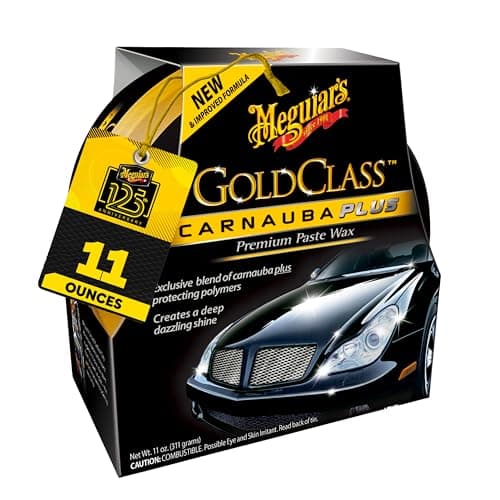
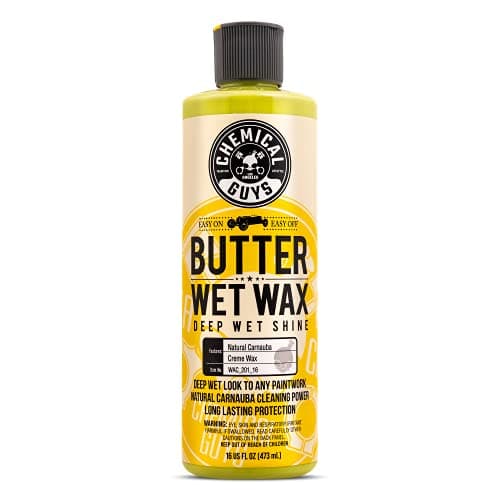
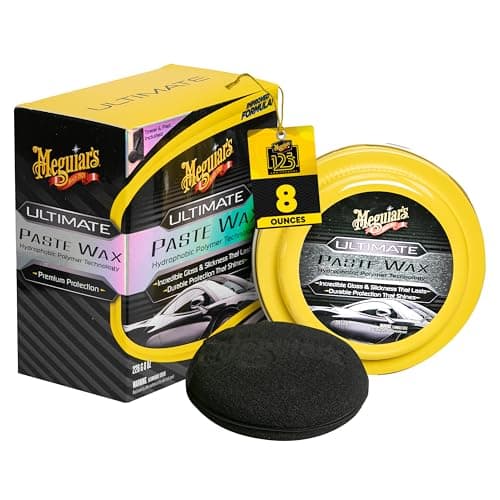
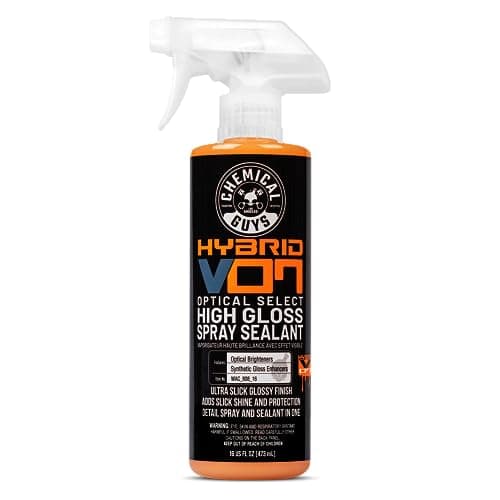
For most red cars the best wax is Collinite No. 476S Super DoubleCoat — a hard paste carnauba whose whole reputation is built on how long it survives sun and weather, which is exactly the variable that decides whether a red car still looks red in five years. It is the pick for a red daily driver that lives outside. If the car is garaged and you care more about how deep the red looks on a Sunday than how long the coat lasts, Griot's Best of Show is the show-wax answer; if you want maximum UV screening from a synthetic rather than a natural wax, Meguiar's Ultimate Paste Wax is further down the list.
Prices below come from the live price layer and carry the date we verified them. Where we have no verified price we show none rather than an old one.
Why red fades and silver does not
The common explanation — that red paint is "softer" or "cheaper" — is wrong. The clear coat over red is the same clear coat the manufacturer sprays over every other color on the same line. What differs is the pigment underneath it.
Many of the bright reds used on cars are organic pigments. Organic pigment molecules are held together by carbon bonds that ultraviolet light is energetic enough to break; when they break, the molecule stops absorbing the wavelengths that made it look red, and the panel drifts toward pink and then toward a chalky orange. Metallic silvers and greys, by contrast, get most of their appearance from aluminium flake and inorganic pigments, which UV does essentially nothing to. Two cars parked side by side for ten years are not being treated differently; one of them simply has a color that UV can destroy and the other does not.
That single fact sets the whole buying criterion for this page. On a black car you are mostly fighting visible swirls, which is why our black-car page ranks on filling and dark-paint clarity. On a white car you are mostly fighting yellowing and contamination. On a red car you are fighting UV reaching the pigment, and everything else is secondary.
What that means for the product you buy
| What people usually rank on | Why it matters less on red | What to rank on instead |
|---|
| Depth and darkness of the shine | Red shows gloss readily; almost any wax looks good on fresh red | How much UV the film blocks, and for how many weeks |
| Swirl hiding | Mid-tone red hides fine marring far better than black does | Durability through rain, heat and wash cycles |
| Ease of removal | Convenient, but it is not what the paint is losing | Whether you will realistically reapply it often enough |
| Water beading on day one | Every product on this page beads on day one | Whether it still beads at week ten |
The honest consequence of that table is uncomfortable for a wax page: a thin film of wax is a modest UV screen, not a sunblock, and the single most protective thing you can do for red paint is park it out of the sun. Wax does real work — it absorbs and reflects some UV, it keeps the clear coat itself from degrading, and it stops the acidic road film and bird etching that open the door to deeper damage — but it works by being present. A mediocre wax reapplied every eight weeks protects a red car better than a superb wax applied once a year, and that is the reason durability and realistic reapplication sit at the top of our criteria instead of peak gloss.
Already pink? Wax is the wrong aisle
There is a line that matters here, and getting it wrong wastes money. Run your hand and your eye over the panel in bright light:
- Red but flat, slightly hazy, water no longer beads. This is oxidation and road film on the clear coat. It polishes out, and then wax restores the look. Start with a finishing polish or a cleaner wax.
- Visibly pink, chalky, and a dry white towel picks up color. The pigment layer itself is degrading — on a clear-coated car that means the clear has already failed and is letting UV through, and on an older single-stage red it means the color film is dying. No wax reverses this. See our single-stage compound page for what can still be rescued and what cannot.
- Clear coat peeling or cloudy in patches. Paintwork, not detailing. Nothing in this hub fixes delamination.
If the paint is sound but dull, correct it first and protect it second — that order never changes. A finishing polish will bring the color back in a way no wax can fake, and how much clear coat polishing actually removes is worth reading first if the car is old enough that you are nervous about it.
Carnauba, synthetic, or coating on red?
All three are defensible, and the right answer depends on how the car lives rather than on the color.
Natural carnauba gives red a warmth and a liquid depth that is genuinely visible, particularly on non-metallic reds, and a hard paste carnauba like the one topping this list is also among the most weather-durable products in car care. The trade-off is heat: carnauba softens, and a red car that sits in summer sun on a black driveway is a hard environment for it. Synthetic sealants and paste waxes hold up better to heat and typically last longer per application, with a cooler, glassier look that some people prefer on bright red and others find flat. Our carnauba vs synthetic comparison takes that argument apart properly.
A ceramic coating is the honest long-term answer for a red car that has to live outdoors, because it is a harder, thicker, far more durable film than any wax and it stays on the paint for years rather than weeks — and continuous presence is the thing that protects pigment. We are a wax page and we will still say it: the daily-driver coating shortlist is the better purchase for an outdoor red car than any bottle here, and wax vs sealant vs coating lays out the whole trade. Wax remains the right choice for a garaged car, a project car, anyone who enjoys the process, and anyone who does not want to commit to the prep a coating demands.
How to wax a red car so it stays red
Reapply on a calendar, not on appearance
Red paint looks fine long after the wax has stopped working, because gloss and protection fail at different rates. Put it on a schedule instead: every six to eight weeks for a carnauba on an outdoor car, every three to four months for a synthetic, and stop trying to judge it by eye. How often to wax a car has the full schedule, including the water-behavior test for when you want a second opinion.
Two thin coats beat one thick one
A thick layer of wax does not screen more UV; it just takes longer to remove and leaves streaks in the red that are very easy to see. Apply thin enough that you can read the paint through it, let it haze, remove it, and if you want more protection apply a second thin coat an hour later. Hand-application media matters more than people think on red, because a dirty applicator drags grit across a color that shows every mark — our applicator picks cover it.
Wash technique protects pigment too
Every swirl you wash into red paint is a scattering site that makes the color read lighter and duller, and the micro-scratches also give UV more surface area to work on in the clear. A pH-neutral soap, two buckets, and a clean mitt do more for a red car over five years than any upgrade in wax — how to wash a car without scratching it is the method, and the soap shortlist is the shopping half.
Park with the pigment in mind
It is free and it outperforms every product on this page. A garage, a carport, a shade tree on the side the afternoon sun comes from — anything that cuts total UV hours cuts fade proportionally. If the car has to sit outside and it is red, that is the strongest possible argument for a coating plus a topper rather than wax alone.
Do not use a filling glaze to hide fade
Glazes and heavy-oil waxes can make faded red look temporarily rich by filling the micro-texture of a dying surface. It washes off in a month and you have learned nothing about the actual condition of the paint. If you want to know what you really have, panel-wipe a test section with diluted isopropyl and look at it dry, then decide between polishing and repainting.