Skip to content
Pad & Polish

HUB 04 · Ceramic Coatings

Best Ceramic Coating for a Daily Driver

Not the hardest coating or the longest warranty — the one that survives being applied in your driveway and maintained by a person with a job.

By Stephen V.Updated How we research
#ad

We earn a commission when you buy through our Amazon links, at no extra cost to you. It never affects our rankings, and we say so when the cheaper product is the better buy. How this works.

For most daily drivers the right coating is CarPro CQuartz UK 3.0 — the version of CQuartz reformulated specifically for cool, damp climates and cooler application temperatures, which is the single most common reason a driveway coating fails. It is the pick for someone correcting and coating their own car over a weekend in a garage or carport that is not climate controlled, and who wants years from the job rather than months. If you want something far easier that still earns its keep, 303 Graphene Nano Spray Coating is the no-panic route; if you want the longest leveling window of anything here, Optimum Gloss-Coat is the most forgiving film to work with.

Prices are read live from the retailer at page load and stamped with the date we verified them. Where we have no verified price we show none rather than an old one.

A daily driver is a different brief

Most coating roundups — including our own general one — rank on hardness, gloss and claimed durability. Those are the right criteria for a car that gets coated once in a clean, heated, well-lit bay by someone who does this for a living. They are the wrong criteria for a car that is also your transport to work.

The brief for a daily driver has four constraints the professional brief does not.

  1. You are applying it where the car lives. A driveway, a carport, a garage with the door open. Temperature and humidity are whatever the weekend gives you, and a coating formulated to flash at 70°F in 50% humidity behaves very differently at 48°F in drizzle.
  2. The car has to be usable soon. Most coatings want several hours before they can see water and a longer window before they are fully hardened. A product that needs the car dry and untouched for 48 hours is a product most people cannot actually use.
  3. The prep will not be perfect. You will not get every swirl out of every panel, and the panel wipe will not be laboratory clean. A coating that only looks right over flawless paint is a coating that will disappoint you.
  4. Maintenance has to fit a real life. Coatings do not fail on the calendar; they fail because they get washed with dish soap, run through a brush tunnel, and never topped up. The maintenance plan is part of the product choice.

So the ranking below is on cure conditions, leveling window, tolerance of imperfect prep, and whether the upkeep is realistic — not on who claims the highest pencil hardness.

The three honest options, by how much Saturday you have

RouteTime to applyRealistic lifeWho it suits
Bonded coating, after a correctionA weekend: wash, decontaminate, polish, panel wipe, coat, cureYears, per the maker's own claims, with correct washingOwners keeping the car, willing to do the prep once
Bonded coating, over decontaminated but uncorrected paintAn afternoon: wash, clay, iron remover, panel wipe, coatSame chemistry, same life — it just seals the swirls inNewer cars and anyone who can live with the defects they have
Spray or hybrid coatingUnder an hour, wet or dry depending on the productMonths, per the maker's claims, then reapplyLeases, winter cars, and anyone who hates committing

The middle row is the one most people should read twice. Coating over uncorrected paint is not a mistake — it is a legitimate trade. You keep the swirls you already have, and in exchange you get a hydrophobic, chemically resistant surface for an afternoon's work instead of a weekend's. What you must not do is skip the decontamination half: a coating over embedded iron and bonded contamination will fail early and unevenly, and removing it costs more time than claying would have. Our iron remover vs clay bar comparison explains which of the two your car actually needs, and the panel wipe page covers the step immediately before you open the bottle.

Temperature is the variable nobody warns you about

Silica coatings cure by a chemical reaction that needs warmth and the right humidity to proceed properly. Apply one in the cold and it stays soft for far longer than the instructions suggest, which means it gets rained on before it has hardened and ends up patchy, streaky or simply thin. Apply one in direct summer sun on a hot panel and it flashes almost instantly, leaving high spots you cannot level and have to polish off.

That is why the coating at the top of this list is specifically the cool-climate formulation rather than the standard one. It is also why, if the forecast is marginal, a spray coating now and a bonded coating in the spring is a better plan than forcing a bonded coating into bad conditions. The same logic governs polishing in the heat — see can you polish a car in the sun — and the full application sequence is on how to apply a ceramic coating.

The maintenance plan is part of the product

A coated daily driver needs three habits and no more. Wash it with a pH-neutral shampoo rather than a cleaner designed to strip wax — which is why a bottle of the right soap sits on this list alongside the coatings. Keep it out of brush tunnels, because a coating resists chemicals and UV but not nylon bristles dragging grit. And top it up: a hybrid ceramic spray after a wash every month or two restores the beading and the slickness, and it is the difference between a coating that looks new at year two and one you are disappointed by at month eight. Our maintenance guide is the full routine, and how long ceramic coating lasts is honest about what the durability claims mean in a driveway rather than in a brochure.

One thing a coating does not do is make a daily driver scratch-proof. It raises chemical and UV resistance substantially and it makes washing easier, which indirectly prevents swirls, but a coated car washed badly still swirls. If you want the real expectations set out plainly, is ceramic coating worth it makes the case both ways.

The short answer

Quick picks

#ProductBest forScorePrice
01
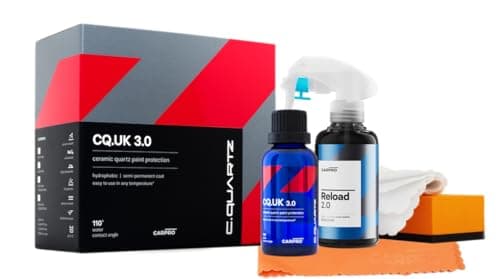
CarPro CarPro CQuartz UK 3.0 Ceramic Coating
CarPro CQuartz UK 3.0 Ceramic Coating

The prosumer favorite: a genuine SiO2 quartz coating reformulated to cure in cooler, humid conditions, which is exactly why DIYers who fear a bad cure reach for it — but it rewards careful prep.

An experienced DIYer chasing the hardest, longest-lasting finish
8.4
$92.99Amazon
02
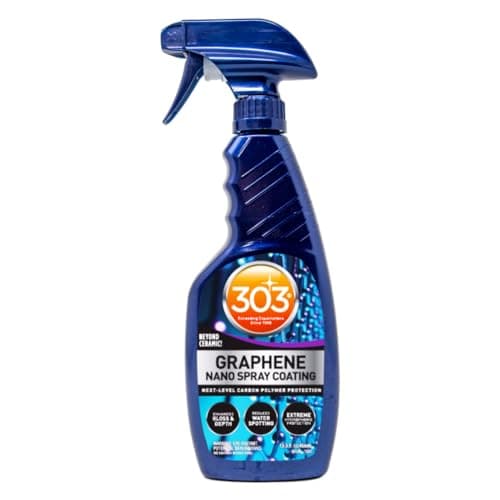
303 303 Graphene Nano Spray Coating (15.5 oz)
303 Graphene Nano Spray Coating (15.5 oz)

The longest claim of any sprayable graphene we could verify — 303 rates it up to 12 months — from a brand whose entire business is UV protection, which is the part of a graphene claim that actually matters.

The longest-rated graphene spray
8.5
$18.63Amazon
03
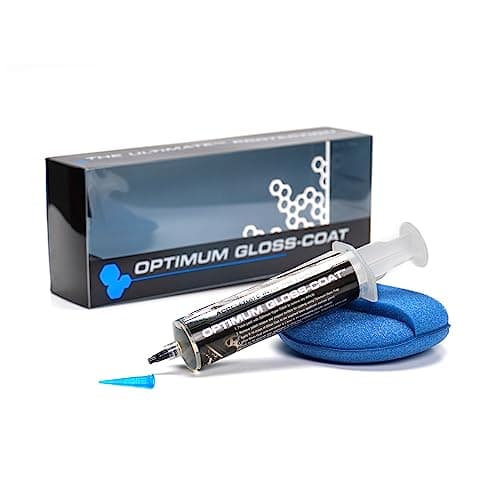
Optimum Polymer Technologies Optimum Gloss-Coat Ceramic Coating (20 cc, Two-Vehicle Kit)
Optimum Gloss-Coat Ceramic Coating (20 cc, Two-Vehicle Kit)

The retail relative of Opti-Coat Pro, from the company that sells the installer-only version: a polymer-ceramic coating Optimum's listing rates at three years, sold in a 20 cc kit sized for two vehicles, and safe on paint, wheels, trim, aluminum and chrome — but not glass.

Two cars from one kit, from an installer brand
8.2
$99.99Amazon
04
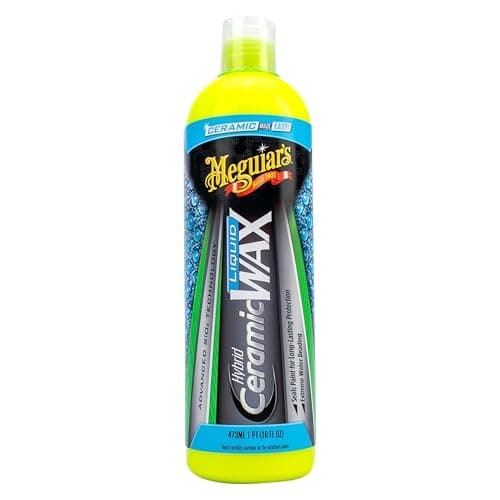
Meguiar's Meguiar's Hybrid Ceramic Liquid Wax
Meguiar's Hybrid Ceramic Liquid Wax

The no-technique beading spray: hose the car, spray while wet, rinse. It's the easiest way to get real SiO2 water behavior, at the cost of the shortest durability on this list.

A total beginner who wants beading with zero technique
8.2
$22.51Amazon
05
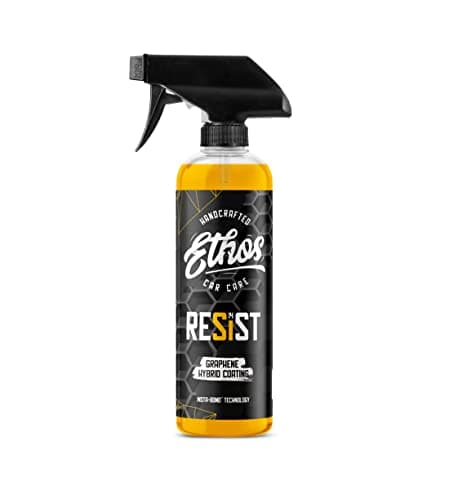
Ethos Ethos RESIST Graphene Spray Coating (16 oz)
Ethos RESIST Graphene Spray Coating (16 oz)

The graphene spray that reads like a real coating rather than a wax with a buzzword on the label: a reduced-graphene-oxide and SiO2 hybrid Ethos rates at 6+ months standing alone, in a bottle big enough to do a car several times.

A graphene topper you can trust for a season
8.4
$27.95Amazon
06
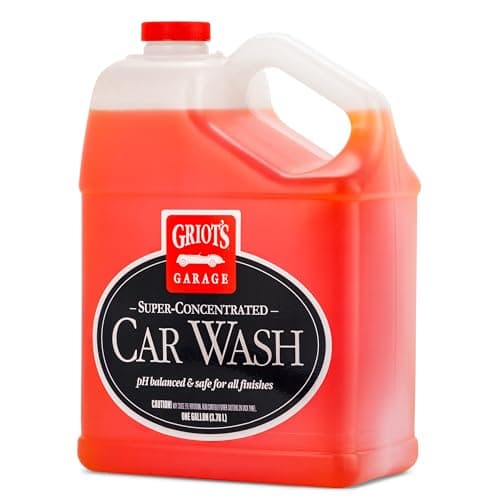
Griot's Garage Griot's Garage Super-Concentrated Car Wash (1 Gallon)
Griot's Garage Super-Concentrated Car Wash (1 Gallon)

Griot's states outright that it will not strip waxes, sealants or ceramic coatings, and it dilutes far enough that a gallon becomes an absurd number of washes — the coated-car shampoo.

Maintaining a ceramic-coated car without degrading it
8.6
$44.99Amazon

#ad · Live prices from the Amazon Product API, as of October 11, 2026. Where we have no verified live price, we show none — we would rather leave a gap than print a number that has rotted.

In detail

The picks, in full

01
CarPro CarPro CQuartz UK 3.0 Ceramic Coating

An experienced DIYer chasing the hardest, longest-lasting finish

CarPro CQuartz UK 3.0 Ceramic Coating

SiO2 quartzHumid-cure formula18–24 mo real-world (CarPro)50 mL kit w/ Reload
8.4/10

The prosumer favorite: a genuine SiO2 quartz coating reformulated to cure in cooler, humid conditions, which is exactly why DIYers who fear a bad cure reach for it — but it rewards careful prep.

Durability
9.2
Ease of application
7
Gloss & beading
9
Value
8.2

Pros

  • Reformulated to flash and cure more forgivingly than the original UK
  • Strong detailer reputation for hardness and durability
  • A little covers a lot per panel

Cons

  • Punishes rushed or poor prep
  • Short working window demands a plan

Don't buy this if…

…this is your first coating in a driveway — a graphene coating gives a longer wipe-off window.

$92.99View on Amazon

Price as of October 11, 2026. Prices change — Amazon's is the one that counts.

#ad · we may earn a commission from this link to CarPro CQuartz UK 3.0 Ceramic Coating

02
303 303 Graphene Nano Spray Coating (15.5 oz)

The longest-rated graphene spray

303 Graphene Nano Spray Coating (15.5 oz)

Graphene + SiO215.5 oz bottleMaker claims up to 12 monthsSpray and wipe
8.5/10

The longest claim of any sprayable graphene we could verify — 303 rates it up to 12 months — from a brand whose entire business is UV protection, which is the part of a graphene claim that actually matters.

Durability
8.4
Gloss
8
Ease of application
9
Value
8.6

Pros

  • 303 publishes an up-to-12-month claim, the longest we could verify on any sprayable graphene product
  • 303 has sold UV protectants for decades, so the failure mode these sprays are sold against is the thing this brand has the longest record on
  • Widely stocked, which keeps the price honest and makes a refill easy to find

Cons

  • An “up to” figure assumes garage parking and gentle washing; a daily driver in the sun will not see 12 months
  • Needs genuinely clean, decontaminated paint to bond — sprayed over old wax it behaves like a gloss enhancer
  • Sold as a marine product in some pack sizes, so check you are buying the automotive bottle

Don't buy this if…

…your paint has not been decontaminated — any SiO2 or graphene layer only lasts as long as what it bonded to.

$18.63View on Amazon

$21.9915% off

Price as of October 11, 2026. Prices change — Amazon's is the one that counts.

#ad · we may earn a commission from this link to 303 Graphene Nano Spray Coating (15.5 oz)

03
Optimum Polymer Technologies Optimum Gloss-Coat Ceramic Coating (20 cc, Two-Vehicle Kit)

Two cars from one kit, from an installer brand

Optimum Gloss-Coat Ceramic Coating (20 cc, Two-Vehicle Kit)

3 years (Optimum listing)20 cc — two vehiclesPaint, wheels, trim, chromeNot for glass
8.2/10

The retail relative of Opti-Coat Pro, from the company that sells the installer-only version: a polymer-ceramic coating Optimum's listing rates at three years, sold in a 20 cc kit sized for two vehicles, and safe on paint, wheels, trim, aluminum and chrome — but not glass.

Durability
8.4
Ease of application
8.4
Gloss & beading
8
Value
8

Pros

  • The 20 cc kit is explicitly sized for two vehicles — the best per-car cost on this page
  • Optimum lists paint, wheels, plastic trim, bumpers, aluminum and chrome as approved surfaces
  • Same company as the installer-only Opti-Coat Pro, so the consumer formula has a professional lineage

Cons

  • Optimum explicitly does not recommend it on glass — you need a separate glass product
  • Durability copy is inconsistent across retailers: the current listing says three years, older copy says two
  • Optimum publishes little on flash time or cure schedule, so you are relying on the box instructions

Don't buy this if…

…you want the hardest, glossiest finish here — Gloss-Coat is pitched on protection and ease, not on depth.

$99.99View on Amazon

Price as of October 11, 2026. Prices change — Amazon's is the one that counts.

#ad · we may earn a commission from this link to Optimum Gloss-Coat Ceramic Coating (20 cc, Two-Vehicle Kit)

04
Meguiar's Meguiar's Hybrid Ceramic Liquid Wax

A total beginner who wants beading with zero technique

Meguiar's Hybrid Ceramic Liquid Wax

SiO2 sprayApply on wet paintNo buffingFrequent top-ups
8.2/10

The no-technique beading spray: hose the car, spray while wet, rinse. It's the easiest way to get real SiO2 water behavior, at the cost of the shortest durability on this list.

Durability
6.6
Ease of application
9.4
Beading
8
Value
8.6

Pros

  • Genuinely foolproof — spray on wet paint, rinse
  • Real SiO2 beading and sheeting
  • Cheap enough to reapply often

Cons

  • Shortest-lived here; needs frequent reapplication
  • Beading fades faster than a wipe-on ceramic

Don't buy this if…

…you want to protect and forget for months — a graphene spray lasts much longer.

$22.51View on Amazon

Price as of October 11, 2026. Prices change — Amazon's is the one that counts.

#ad · we may earn a commission from this link to Meguiar's Hybrid Ceramic Liquid Wax

05
Ethos Ethos RESIST Graphene Spray Coating (16 oz)

A graphene topper you can trust for a season

Ethos RESIST Graphene Spray Coating (16 oz)

rGO + SiO2 hybrid16 oz bottleMaker claims 6+ monthsNo cure time
8.4/10

The graphene spray that reads like a real coating rather than a wax with a buzzword on the label: a reduced-graphene-oxide and SiO2 hybrid Ethos rates at 6+ months standing alone, in a bottle big enough to do a car several times.

Durability
8.2
Gloss
8.4
Ease of application
9
Value
8

Pros

  • Ethos publishes a specific standalone figure (6+ months) instead of a vague “lasts longer” claim, which is rarer in this category than it should be
  • 16 oz covers a full car several times over, so cost per application lands well below the small-bottle graphene coatings
  • Sprays and wipes like a detail spray — no panel-by-panel cure window and no high-spot anxiety

Cons

  • Costs roughly double a supermarket graphene spray for a protection gap you cannot see on day one
  • A spray still cannot reach a real coating's multi-year life — it is a maintenance layer, not a substitute
  • Smaller brand, so there is less independent long-term feedback than for Adam's or Turtle Wax

Don't buy this if…

…you want one application to last years — that is a wipe-on coating with a cure time, not any spray.

$27.95View on Amazon

Price as of October 11, 2026. Prices change — Amazon's is the one that counts.

#ad · we may earn a commission from this link to Ethos RESIST Graphene Spray Coating (16 oz)

06
Griot's Garage Griot's Garage Super-Concentrated Car Wash (1 Gallon)

Maintaining a ceramic-coated car without degrading it

Griot's Garage Super-Concentrated Car Wash (1 Gallon)

1 gallonSuper concentratedpH balancedCoating safe
8.6/10

Griot's states outright that it will not strip waxes, sealants or ceramic coatings, and it dilutes far enough that a gallon becomes an absurd number of washes — the coated-car shampoo.

Cleaning power
8
Foam & lubricity
8.6
Coating safety
9.4
Value
8.4

Pros

  • Explicitly formulated not to strip coatings, which most shampoos only imply
  • Dilution ratio makes the gallon last through years of weekly washes
  • Rinses cleanly, so there is little left to trap under a drying towel

Cons

  • Highest sticker price of the four, before you account for dilution
  • Over-dosing it wastes product without cleaning any better

Don't buy this if…

…you have no coating or sealant to protect — cheaper shampoos wash just as well.

$44.99View on Amazon

Price as of October 11, 2026. Prices change — Amazon's is the one that counts.

#ad · we may earn a commission from this link to Griot's Garage Super-Concentrated Car Wash (1 Gallon)

Buying a coating for a car you drive every day

Buy for the temperature you will actually have

Check the data sheet for the application temperature range and compare it honestly against your garage in the month you plan to do the work, not against the summer you are imagining. If you cannot hold the panel somewhere in the sixties or low seventies Fahrenheit with moderate humidity for the flash and the first few hours of cure, pick the cool-climate formulation or pick a spray.

Prefer a long leveling window over a high hardness claim

The failure mode for a first-time coater is high spots: streaks of unlevelled coating that cure proud of the surface and then have to be polished off. A product with a long open time gives you several minutes to spot and buff those down; a fast-flashing one gives you seconds. Pencil-hardness numbers are marketing on a daily driver — a long leveling window is the spec that saves your weekend.

Buy the maintenance products at the same time

The most common way a daily-driver coating disappoints is that nothing was bought to look after it. Order the pH-neutral shampoo and the topper with the coating itself, in one order, before the car is coated. If they arrive afterwards, they tend not to arrive at all.

Match the product life to how long you are keeping the car

A two-year coating on a car going back at the end of a 12-month lease is money spent on someone else's paint; a six-month spray on a car you plan to keep for a decade is a chore you have signed up for twenty more times. Count the years you expect to own it and buy the chemistry that matches, then read what coatings actually cost to compare the DIY and professional routes on the same basis.

Do not coat over failing paint

A coating is a transparent film; it reproduces what is underneath it with more gloss. Over sound but swirled paint that is a reasonable compromise. Over clear coat that is delaminating, oxidized past the point of polishing, or already peeling at an edge, it is just an expensive way to seal in a problem that will keep growing underneath.

Have an exit plan

Coatings come off with abrasives, not with chemicals. Before you commit, know that removing one means a machine polish — see how to remove a ceramic coating — and that this is the main practical argument for a spray on a car whose future you are not sure about.
How we picked

We do not run a testing lab

We compiled published specifications, manufacturer data sheets and aggregated owner reviews, computed the cost of ownership from real sizes and coverage, then scored each product against a published rubric. The scores are judgments from documented research — they are not measurements we took, because we do not own a lab and we are not going to pretend we do. Where a number came from someone else, we name them and link them in Sources.

Questions

Frequently asked

Is a ceramic coating worth it on a daily driver?
For a car you are keeping several years, usually yes — washing gets easier, bird droppings and road film stop etching as readily, and the paint keeps its gloss through UV exposure that would dull an unprotected finish. For a short lease or a car you are about to sell, a spray coating or a sealant gets you most of the practical benefit for a fraction of the work.
Can I apply a ceramic coating in my driveway?
Yes, and most DIY coatings are applied exactly that way. The constraints are temperature, humidity, direct sun and dust. Work in shade on a cool panel, pick a day with no rain in the forecast for the first several hours, and prefer a formulation rated for the conditions you actually have rather than forcing a warm-weather product into a cold weekend.
Do I have to polish the paint before coating a daily driver?
No, but you do have to decontaminate it. A coating locks in whatever defects are underneath, so polishing first is what makes the result look new rather than merely shiny. Skipping the polish is a legitimate trade for an afternoon instead of a weekend; skipping the clay and iron removal is not, because bonded contamination makes the coating fail early and unevenly.
How long before I can drive the car after coating it?
Check the data sheet for the specific product, because it varies widely. Typical guidance is a few hours before the surface can tolerate light handling and considerably longer before it should see rain, with full hardening measured in days. Plan the job so the car can stay dry for at least the first night.
What ruins a ceramic coating on a car driven every day?
Three things, in order: wash chemicals designed to strip protection, automated brush tunnels dragging grit across the surface, and never topping it up. None of those is about the coating's quality. A pH-neutral shampoo, hand washing or touchless, and a hybrid ceramic spray every month or two is the whole maintenance plan.
Will a coating stop my daily driver from getting swirls?
It helps and it does not prevent them. A coated surface releases dirt more easily so there is less grit to drag during a wash, and the film itself is more chemically resistant than clear coat. But a coating is microns thick and nylon brushes and dirty mitts still scratch. Wash technique remains the thing that decides whether a car swirls.

Keep reading

Receipts

Sources

We do not run a testing lab, and we do not pretend to. Where a measured number came from someone else's lab, we name them and link them. Where we could not verify something, we say so on the page rather than quietly leaving it out. Read our full method.