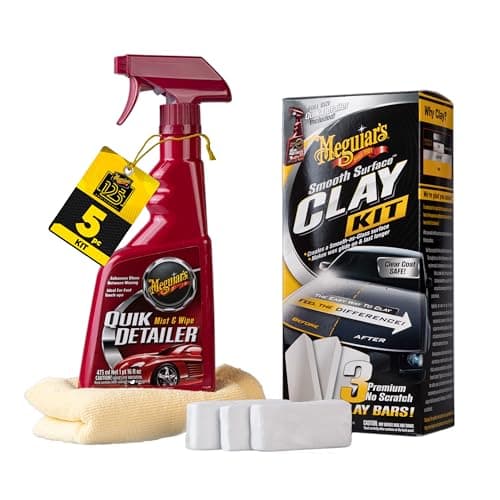
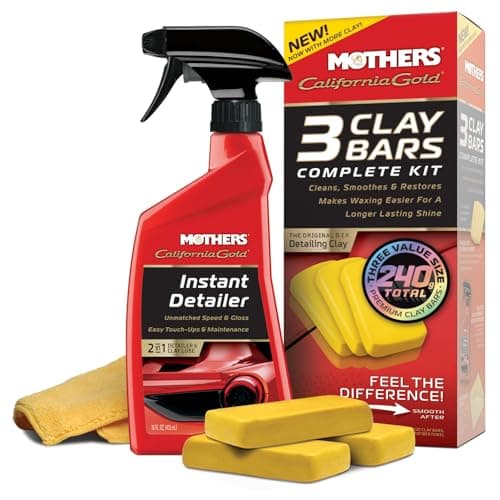
The Mothers California Gold Clay Bar System is, for a lot of people, the first product that ever made their paint feel genuinely smooth — and the first time they understood that "clean" and "decontaminated" are different words. It is the pick that wins our clay bar roundup, and this page is about why, and about who should buy something else.
As always, the disclosure: we have not run this clay against a surface profilometer or measured particle removal in a lab, because we do not have one. What follows is built from Mothers' published information, how clay decontamination works mechanically, and the consistent patterns in owner reporting. Our method is on how we research.
What clay actually does
Washing removes what sits loosely on paint. It does nothing about the particles that have embedded themselves into the clear coat — brake dust, industrial fallout, rail dust, tree sap and overspray, all of which sit partly below the surface. Detailing clay is a soft, tacky resin that shears those particles off as it is pulled across a lubricated panel.
The test is your hand, not your eyes. Put your hand in a thin plastic bag and run it over a washed, dry panel: if it feels gritty, there is bonded contamination. The full version of that test is in do you need to clay bar before polishing.
Grade is the important spec, and this one is mild
Clay is sold in grades from fine to aggressive, and the grade is the trade-off between how much it removes and how much marring it leaves behind. Aggressive clay clears heavy contamination in fewer passes and leaves fine marring that then needs polishing out. Fine clay is slower and much safer.
This system sits at the mild, forgiving end, and that is exactly right for its audience. Somebody buying their first clay bar is unlikely to also own a machine polisher to fix marring afterwards, so a clay that removes a little less and risks a lot less is the correct default. If you are claying immediately before a full correction, marring matters less and a more aggressive grade is defensible.
What is in the kit, and why it matters
It is a system rather than a bare bar: clay plus the lubricating spray, which is the part beginners most often underestimate. Clay dragged across insufficiently lubricated paint will mar it, and this is the single most common way a first clay job goes wrong. Having a lubricant supplied in the box removes the temptation to improvise with a quick-detailer that is too thin, or worse, with plain water.
The honest limitations
It does not touch iron chemically. Clay shears embedded particles off mechanically; it does not dissolve the iron deposits that make paint look dull and leave rust-colored specks. A chemical iron remover used before claying dissolves them, which means less mechanical work and less marring risk. The correct order is wash, iron remover, then clay.
Drop it and it is finished. Clay that touches the ground picks up grit that will scratch paint immediately and cannot be washed out. Throw it away — that is not over-caution, it is the standard rule, and it is the main practical argument for a clay mitt or towel instead.
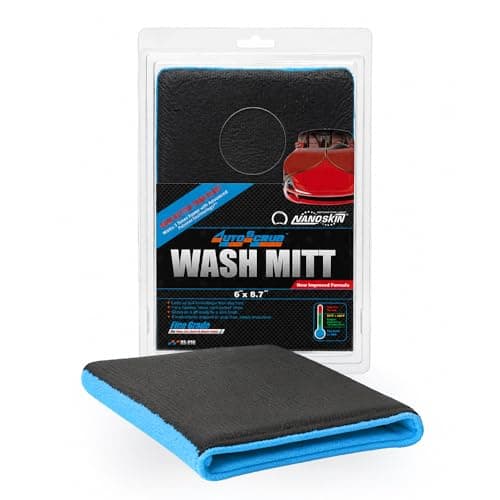
It is slower than the alternatives. A synthetic clay mitt covers a panel faster and survives being dropped. What it gives up is the last few percent of effectiveness on stubborn bonded contamination, and it costs more up front. The comparison is in clay bar alternatives.
Who should buy something else
Buy the alternative bar ranked second below if you want a slightly different kit composition from a brand you already use elsewhere in your process — the two are close enough that brand loyalty is a reasonable tiebreaker. Buy the mitt ranked third if you decontaminate cars regularly, hate the slow drag of a bar, or know yourself well enough to predict dropping it.
The verdict
For a first decontamination, this is the right buy: mild enough to be forgiving, complete enough that nothing else is needed, and cheap enough that the whole step stops being a decision. Use an iron remover first, use more lubricant than feels necessary, keep the clay off the ground, and follow with the full technique guide. The result — paint that feels like glass — is one of the most satisfying returns on twenty minutes in all of car care.