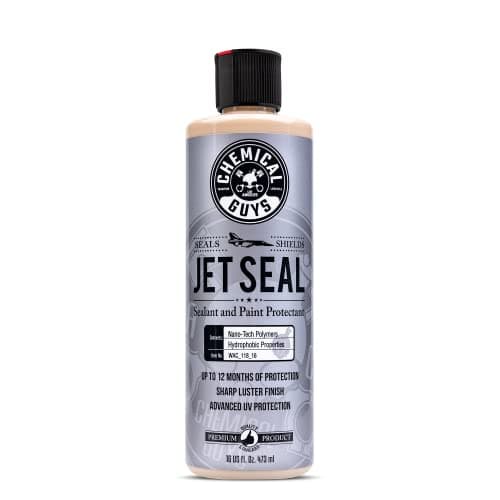
Both products do the same job: they put a sacrificial layer between your clear coat and the world, so dirt, water spots and UV attack the layer instead of the paint. The difference is chemistry, and everything else — durability, price, effort, how each one fails — follows from it.
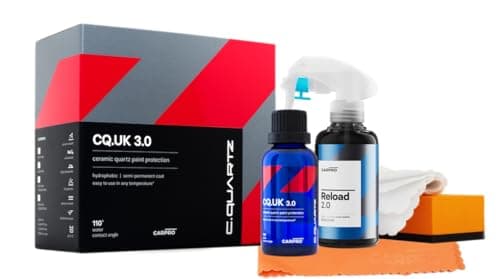
A paint sealant is a synthetic polymer. It bonds to the paint surface through a mix of chemical affinity and mechanical grip, wipes on and off like a wax, and lasts on the order of months. A ceramic coating is a silica-based liquid that cross-links as it cures into a hard, semi-permanent glass-like layer that is genuinely part of the surface rather than sitting on it, and is measured in years.
The comparison, on the axes that matter
Durability
Not close. Manufacturers quote sealants in months and coatings in years, and while real-world figures depend heavily on parking, climate and wash habits, the ratio holds. What the coating's durability is contingent on, though, is prep — a coating applied over polishing oils or a dirty panel can underperform a well-applied sealant, because it has bonded to contamination rather than to paint.
Effort
Also not close, in the other direction. A sealant is a wash, an application and a buff — an afternoon at most, no special conditions. A coating done properly means decontamination, correction, a panel wipe, careful panel-by-panel application, leveling within a working window, and then a cure period where the car cannot get wet. That is a weekend, and it is a weekend with genuine consequences for getting it wrong.
Cost per year
The arithmetic usually favors the coating, and it is simple: divide the price by the rated life. A coating kit spread over its rated years generally works out cheaper per year than a sealant re-applied several times annually — before you count the time. But that calculation assumes the coating achieves its rated life, which assumes the prep was done properly. A badly applied coating is the most expensive option on the page.
How each one fails
This is the axis nobody discusses and it matters more than durability. A sealant fades evenly — beading gets lazier, water sheets less, and one day you notice and re-apply. Nothing dramatic happens. A coating fails patchily: it lasts longest where the car is washed carefully and wears through first on the horizontal surfaces and the leading edges. Fixing it means polishing the failed areas back and re-coating, which is a real job.
Repairability
A sealant can be topped up over the top of itself with no preparation at all. A coating cannot — layering fresh coating over degraded coating gives you a poor bond. That is why coating owners maintain with an SiO2 spray on top rather than re-coating, and it is a real ongoing cost.
Which should you actually buy?
Buy a sealant if the car lives outside and is washed at a coin-op, if you lease it, if you enjoy detailing as a routine rather than a project, if you cannot guarantee a dry cure window, or if your paint has defects you are not going to correct first. Sealing over swirls is fine — it protects them and you can polish later. Coating over swirls locks them in for years.
Buy a coating if you have a garage or a dry weekend, you are willing to correct the paint first, you keep the car more than a couple of years, and you want the maintenance washing to be genuinely easier rather than just the finish to look good on day one. The best case for a coating is not gloss — it is that a coated car takes half as long to wash.
Use both if you want the honest optimum: coat the car, then maintain with an SiO2 spray sealant every few washes. The spray tops up the hydrophobics as the coating ages and buys the base layer meaningfully more life. This is what most people who have coated a car end up doing.
The hybrids in the middle
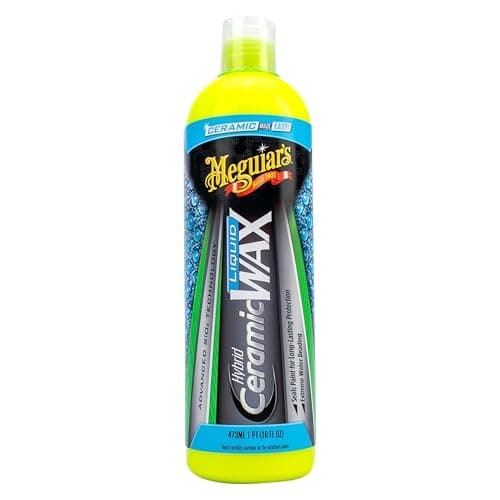
Between the two sits a growing category of SiO2-infused sealants and "ceramic" liquid waxes — sealant convenience with some of the coating's water behavior. They are not coatings, whatever the bottle says, and they should be judged as very good sealants rather than cheap coatings. One is ranked third below on exactly that basis.
If you are weighing this against wax rather than sealant, the shorter comparison is ceramic coating vs wax; the three-way version is car wax vs sealant vs coating.