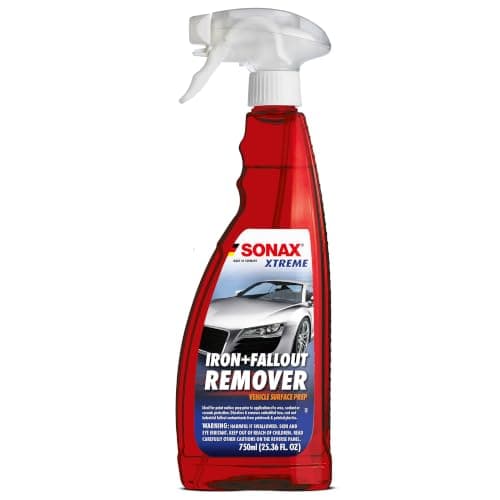
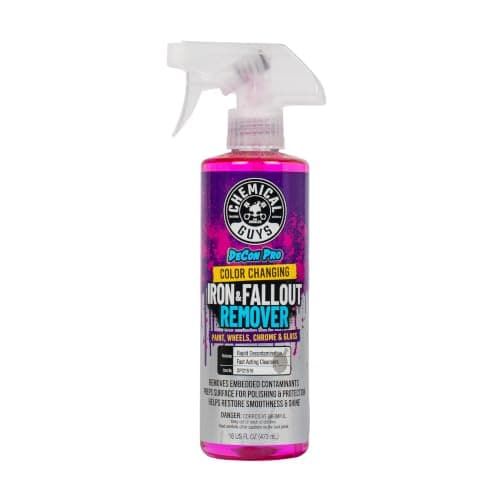
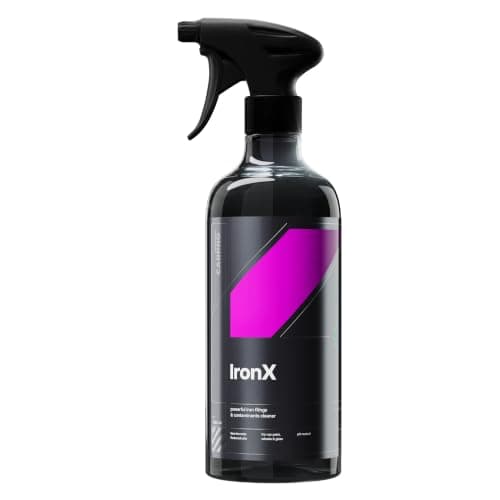
CarPro IronX is the product that made chemical decontamination visible. Spray it on a contaminated panel, wait, and the clear liquid runs purple where it reacts — which looks alarming, photographs brilliantly, and is the reason this category exists in the consumer market at all. It wins our iron remover roundup, and this page is about whether the reputation is deserved and where the cheaper options land.
The disclosure: we have not measured iron removal in a lab or run controlled panel tests, because we do not operate one. What follows comes from CarPro's published information, the chemistry the color change implies, and consistent owner reporting. Our method is on how we research.
What the purple actually means
It is a chemical indicator, not the cleaning action. IronX contains a compound that reacts with dissolved iron to produce a strongly colored complex, so the purple is a visual signal that iron is being dissolved and lifted. It is genuinely useful — it tells you where contamination is concentrated and when the reaction has finished — but the color is reporting the work, not doing it.
Worth knowing, because two things follow. A product that does not change color is not necessarily weaker; it just does not include the indicator. And a dramatic purple run does not mean your car was filthy so much as that it had the ordinary embedded brake dust every driven car accumulates.
Why iron needs a chemical, not a clay bar
Iron particles from brake dust and rail dust embed themselves into clear coat and then continue to corrode in place, which is what produces the rust-colored specks visible on white and silver paint and the general dullness on every other color. A clay bar can shear the tops off them mechanically. It cannot dissolve what is embedded.
An iron remover chemically converts the iron into a soluble compound that rinses away. That is a genuinely different action, which is why the correct order is wash, iron remover, then clay — the chemical does the work first so the clay has far less to shear off, which means less marring risk.
Using it without causing problems
- Work on cool paint, out of direct sun. Drying on the panel is the main way to get staining, and heat accelerates it.
- Do not let it dry. Keep the panel wet for the dwell time, re-misting if needed, and rinse thoroughly before it can flash off.
- Ventilate. The sulfur smell is genuinely unpleasant and is not something to work with in an enclosed garage.
- Keep it off bare metal, polished aluminum and anodized trim unless compatibility is stated. Wheels are usually fine; wheel finishes vary.
- Rinse everything, thoroughly. Including panel gaps, badge surrounds and wheel wells, where residue likes to sit.
Where it is beaten
On price, mostly. IronX carries a premium over the value alternatives, and the cheaper products dissolve iron perfectly well — the difference is concentration, dwell behavior and, in some cases, whether the indicator is present at all. For a car that gets decontaminated twice a year, the price difference is trivial. For someone working through several cars, it is not.
It is also not the right tool for wheels specifically. Wheels want a product that combines iron dissolving with cleaning power for the road film and brake residue sitting on top, and that is a different formulation — our wheel-specific picks cover it.
Who should buy something else
Buy the value alternative ranked second below if you decontaminate often enough that price per use matters, or if you simply do not need the color indicator to trust the process. Buy the combination product ranked third if you want iron removal and a fallout cleaner in one bottle and would rather carry fewer products.
And skip the category entirely if the bag test says your paint is already smooth. Iron remover on clean paint accomplishes nothing except spending money and time.
The verdict
IronX earns its reputation. The chemistry works, the indicator is genuinely informative the first few times you use it, and the step it performs is one of the highest-return twenty minutes in car care — particularly before polishing, where it removes the abrasive particles that would otherwise be dragged under a pad. It is not the cheapest way to dissolve iron, and it does not need to be your only bottle. But if you buy one iron remover and want to see it working, this is the one.